Description
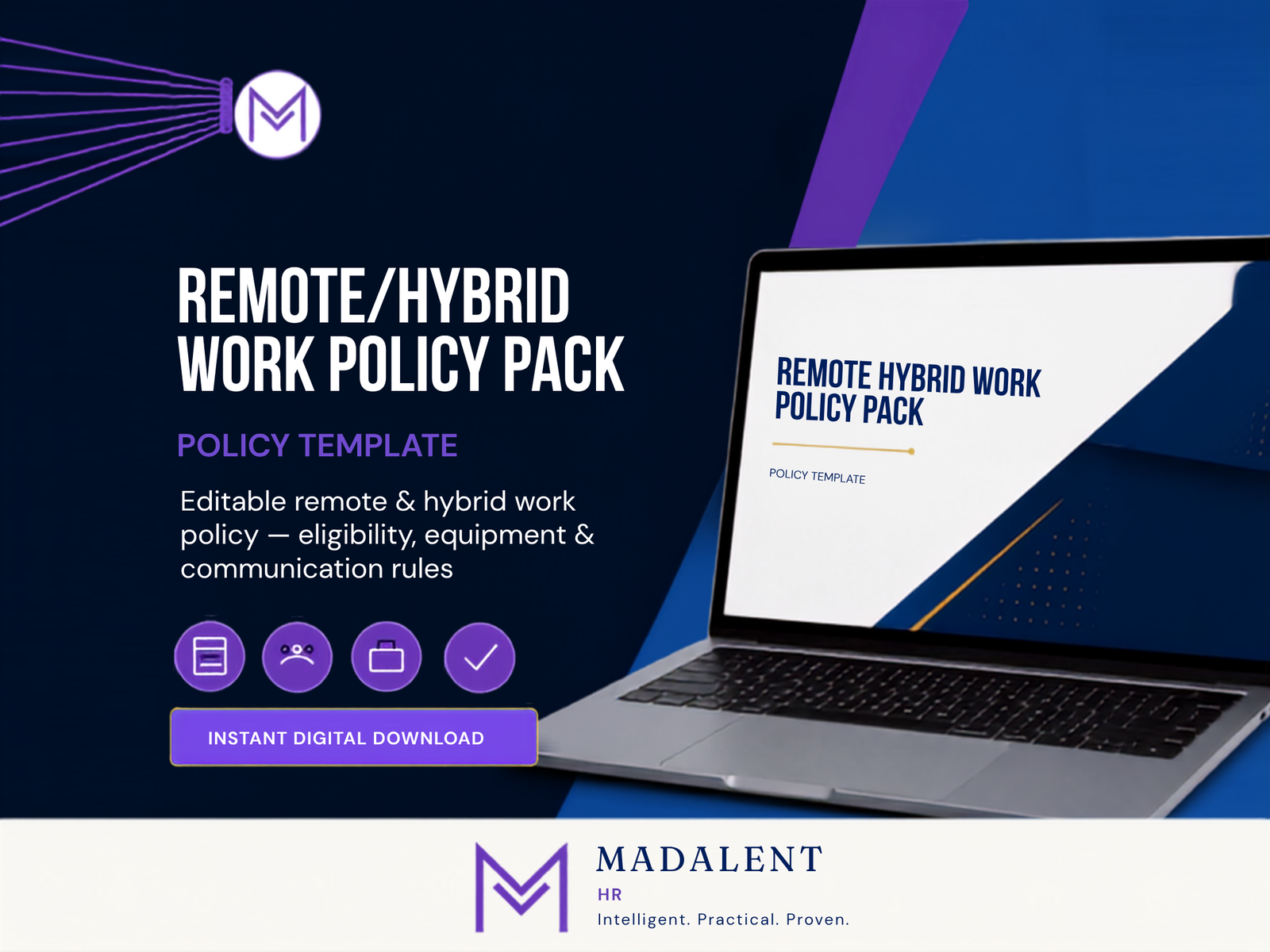
A remote hybrid work policy template saves HR teams from fielding the same ad-hoc questions over and over — who’s eligible, what equipment is provided, and what “core hours” actually means. This pack gives you a ready-to-issue set of policies that answers these questions once, in writing, instead of case-by-case over email.
Written in clear, practical language for HR and people leaders, the pack is structured so it can be customised and rolled out to staff in under a day.
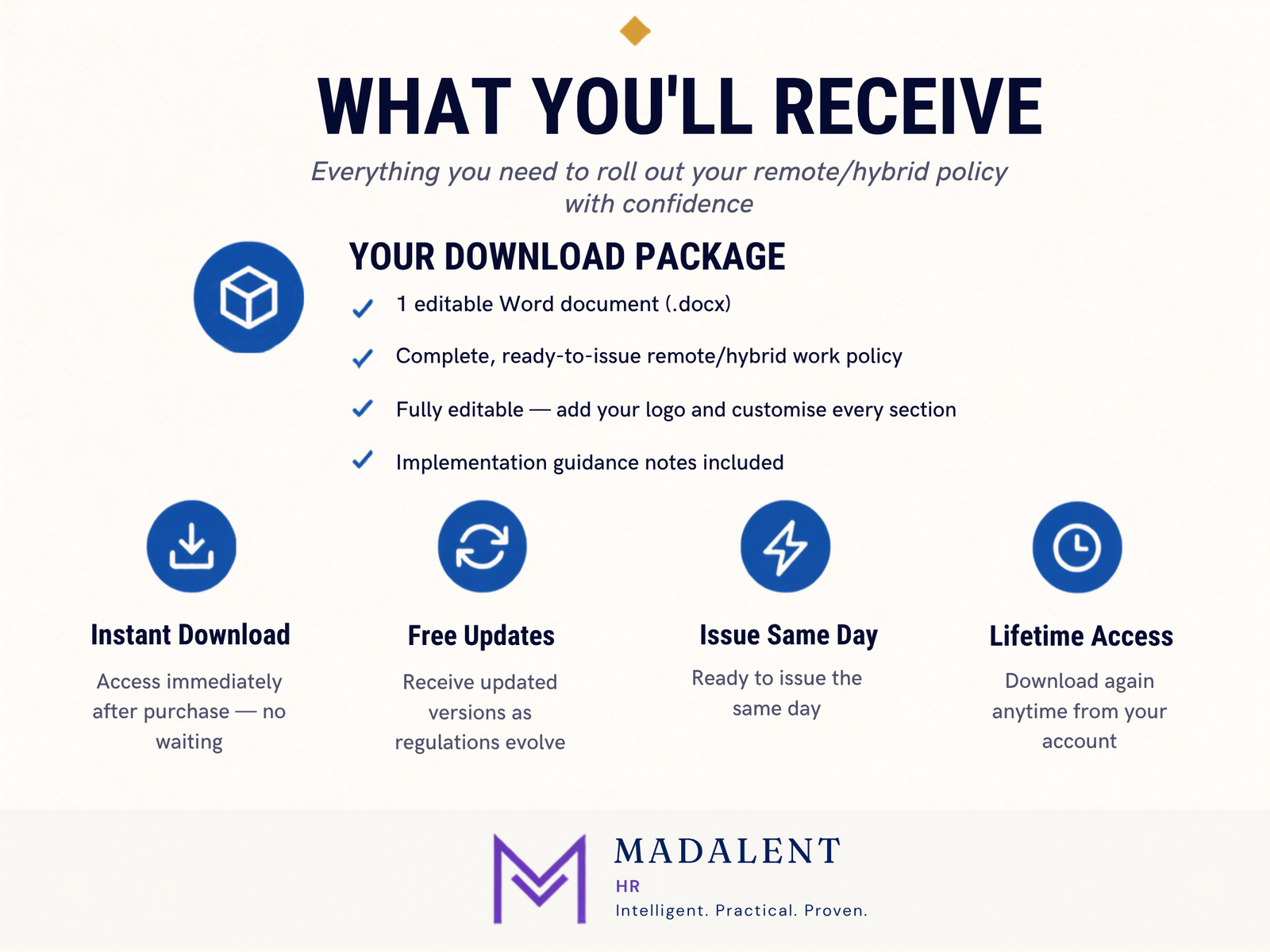
What’s included in this remote hybrid work policy template
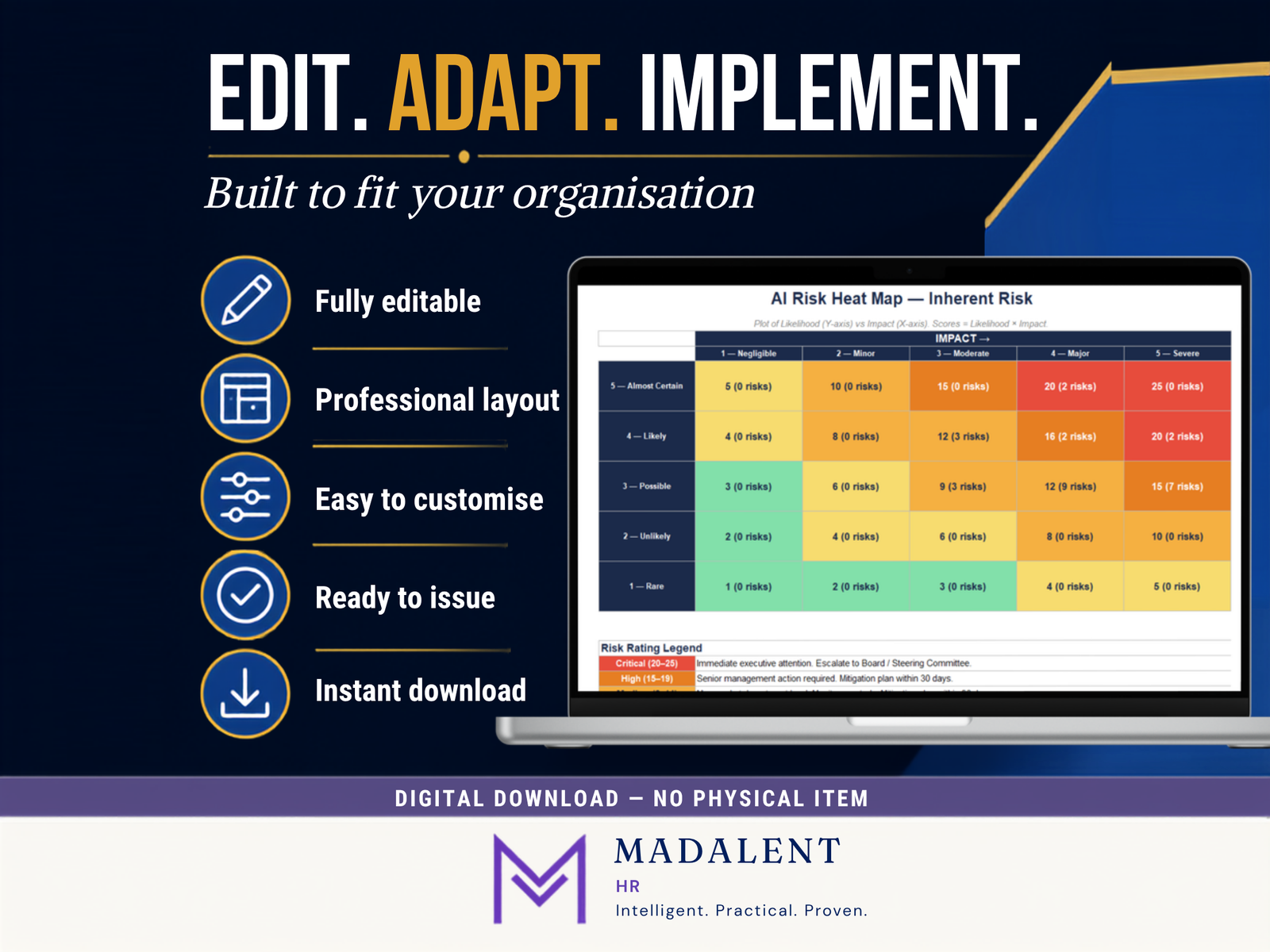
- Fully editable Word document (.docx)
- Eligibility and approval criteria for remote/hybrid arrangements
- Equipment, expenses, and home-office provisions
- Core hours, communication, and availability expectations
- Review and revocation process
Why formalise remote and hybrid arrangements now
Informal remote arrangements tend to drift — inconsistent expectations across teams, disputes over who’s entitled to what equipment, and no clear process if an arrangement needs to be reviewed or revoked. A written remote hybrid work policy template closes that gap and gives managers something consistent to point to, rather than negotiating terms individually with every employee. For AU-specific guidance on flexible working arrangements, see the Fair Work Ombudsman.
What good policy language covers
Beyond eligibility and equipment, a solid policy sets expectations around response times, which meetings require camera-on attendance, and how performance is assessed when a manager isn’t observing the work directly. Leaving these unwritten is one of the most common sources of manager-employee friction in hybrid teams — not because anyone’s acting in bad faith, but because expectations were never made explicit in the first place.
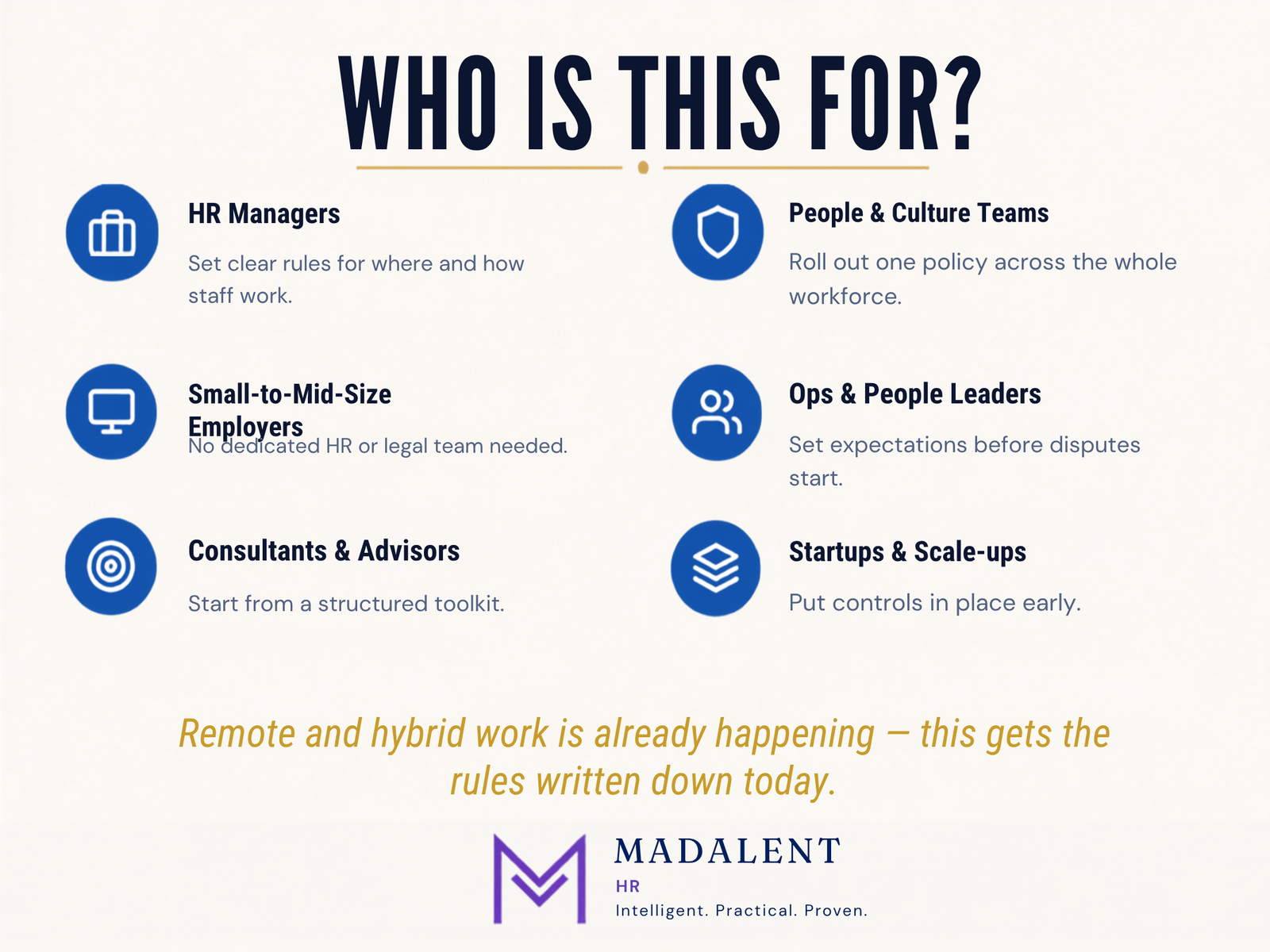
Who it’s for
HR managers and People & Culture teams at small-to-mid-size organisations formalising or updating their remote/hybrid work arrangements. Pair it with the 1:1 Meeting System to keep manager check-ins consistent across a distributed team. For distributed teams using AI tools, add the AI Use in the Workplace Policy, and if you hire or monitor staff across several US states, see the US Multi-State AI Employment Law Compliance Pack.
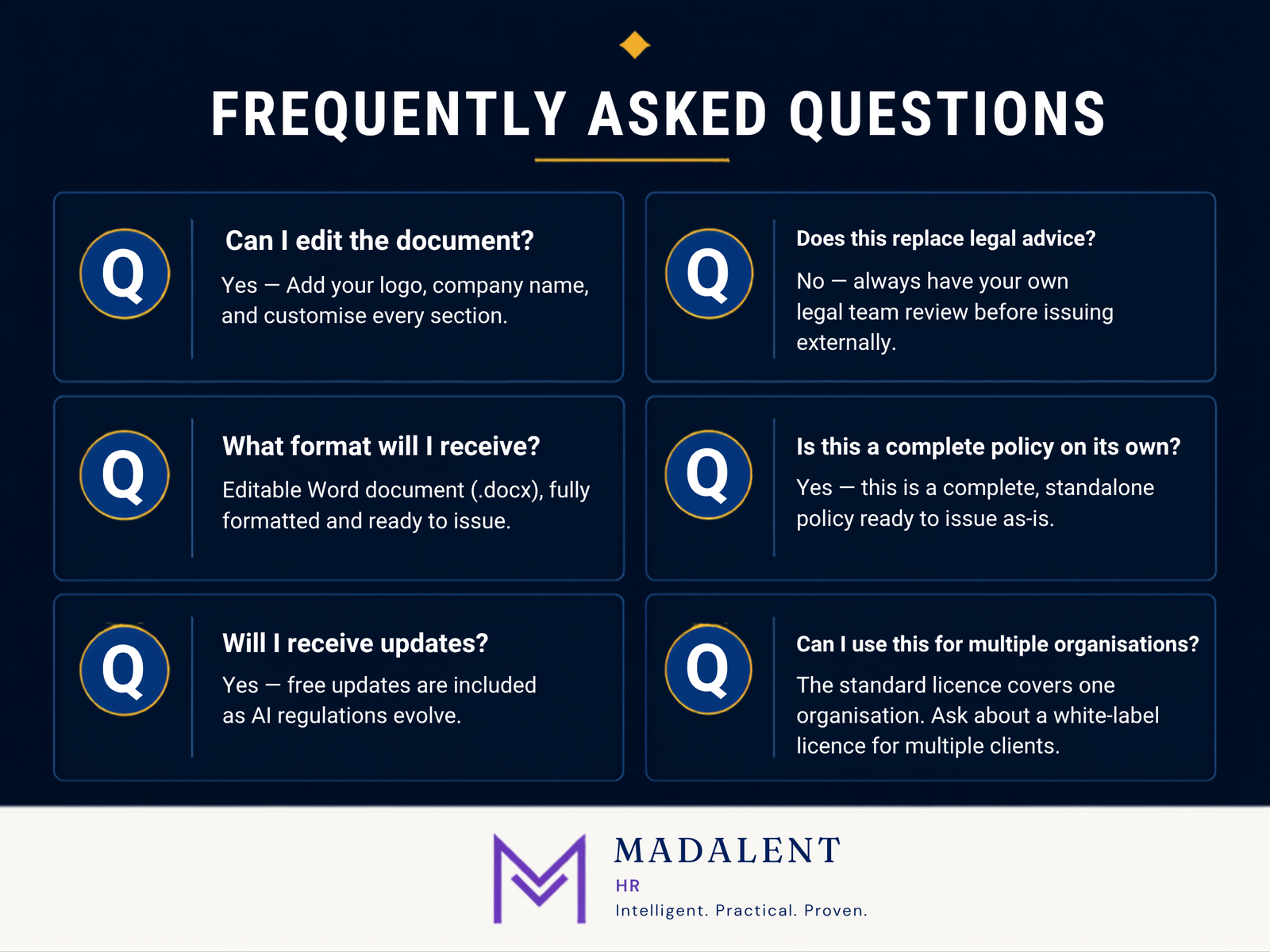
Is this suitable for fully remote companies as well as hybrid?
Yes — the pack covers both models, and sections can be removed or adapted depending on your work arrangement.
Does it cover expenses and equipment?
Yes — there’s a dedicated section for equipment provisioning and expense reimbursement guidelines.
Can I adjust the core hours section for different teams?
Yes — the core hours section is written to be edited per team or department, since expectations often differ between customer-facing and back-office roles.
Instant digital download. Delivered as an editable Word document. 7-day guarantee — if the document doesn’t fit your needs, let us know.
Rolling out your remote hybrid work policy template
Once customised, the policy works best introduced alongside a short manager briefing rather than dropped into an inbox unannounced — managers need to be ready to answer questions about how it applies to their specific team before staff start asking. Plan to review the policy annually, and sooner if your organisation’s approach to office attendance or equipment provisioning changes materially. A policy that’s reviewed regularly stays credible; one that’s issued once and forgotten quickly becomes the exception rather than the rule teams actually follow.
What happens if an employee’s circumstances change?
The review and revocation section covers exactly this — a remote hybrid work policy template should give managers a clear, documented process for revisiting an arrangement if performance, business needs, or the employee’s personal circumstances change, rather than leaving it as an awkward, undocumented conversation. Having the process written down protects both the employee and the organisation if the arrangement ever needs to be adjusted or ended. Teams that document this step upfront generally handle these conversations with far less friction than teams working it out for the first time under pressure.