Description
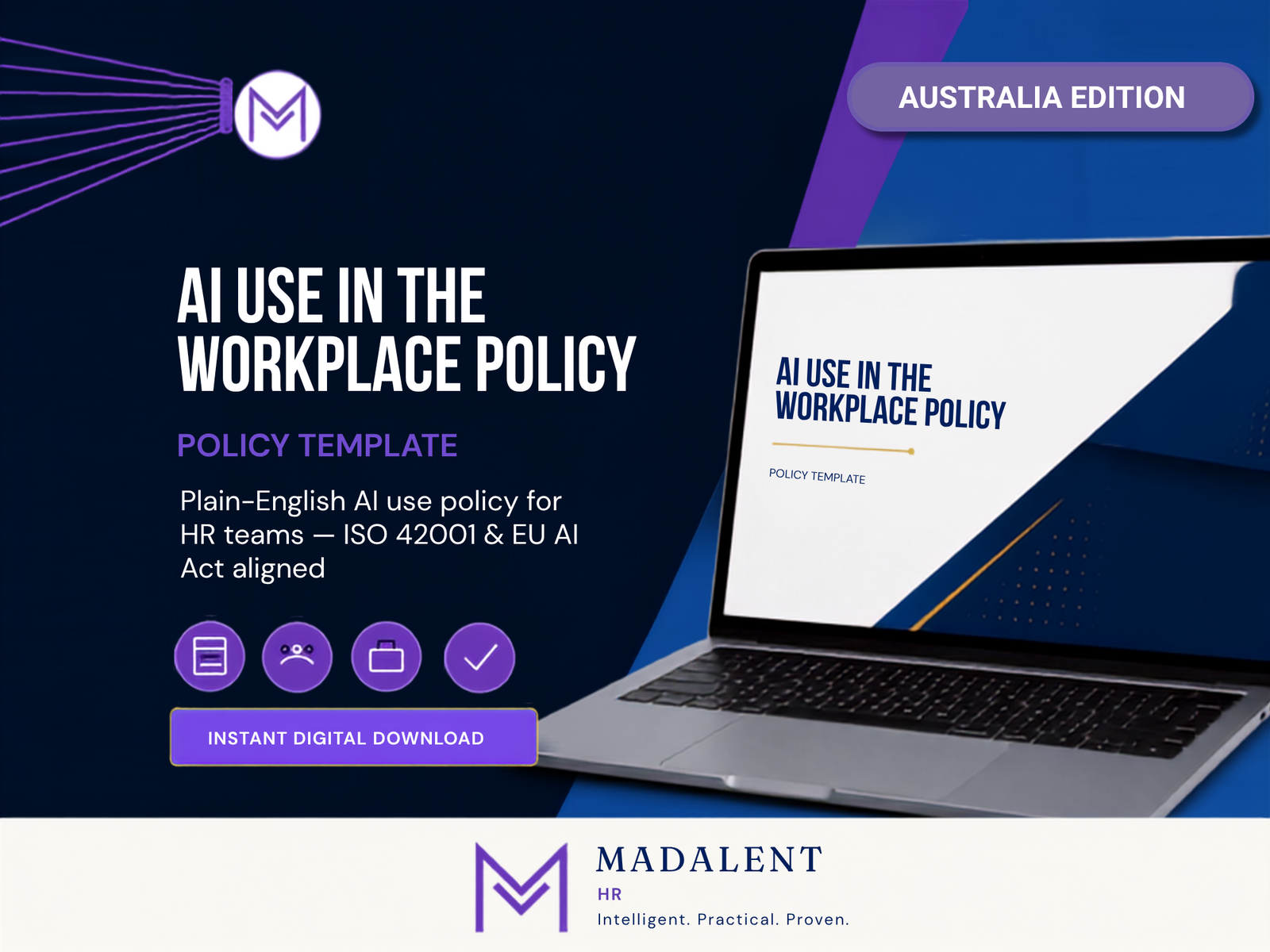
An AI use in the workplace policy is the fastest way to close the biggest gap in most companies’ AI governance right now: staff are already using ChatGPT, Claude, and Copilot daily, and almost nobody has written down what’s actually allowed. This template gives HR and people leaders a ready-to-issue AI use in the workplace policy covering how employees can use AI tools in their day-to-day roles, without waiting on legal or compliance to draft one from scratch.
Written in plain English for a general workforce audience, the policy is aligned to ISO 42001, the EU AI Act, and the NIST AI RMF, and is structured so HR can brand and roll it out to staff in under a day.
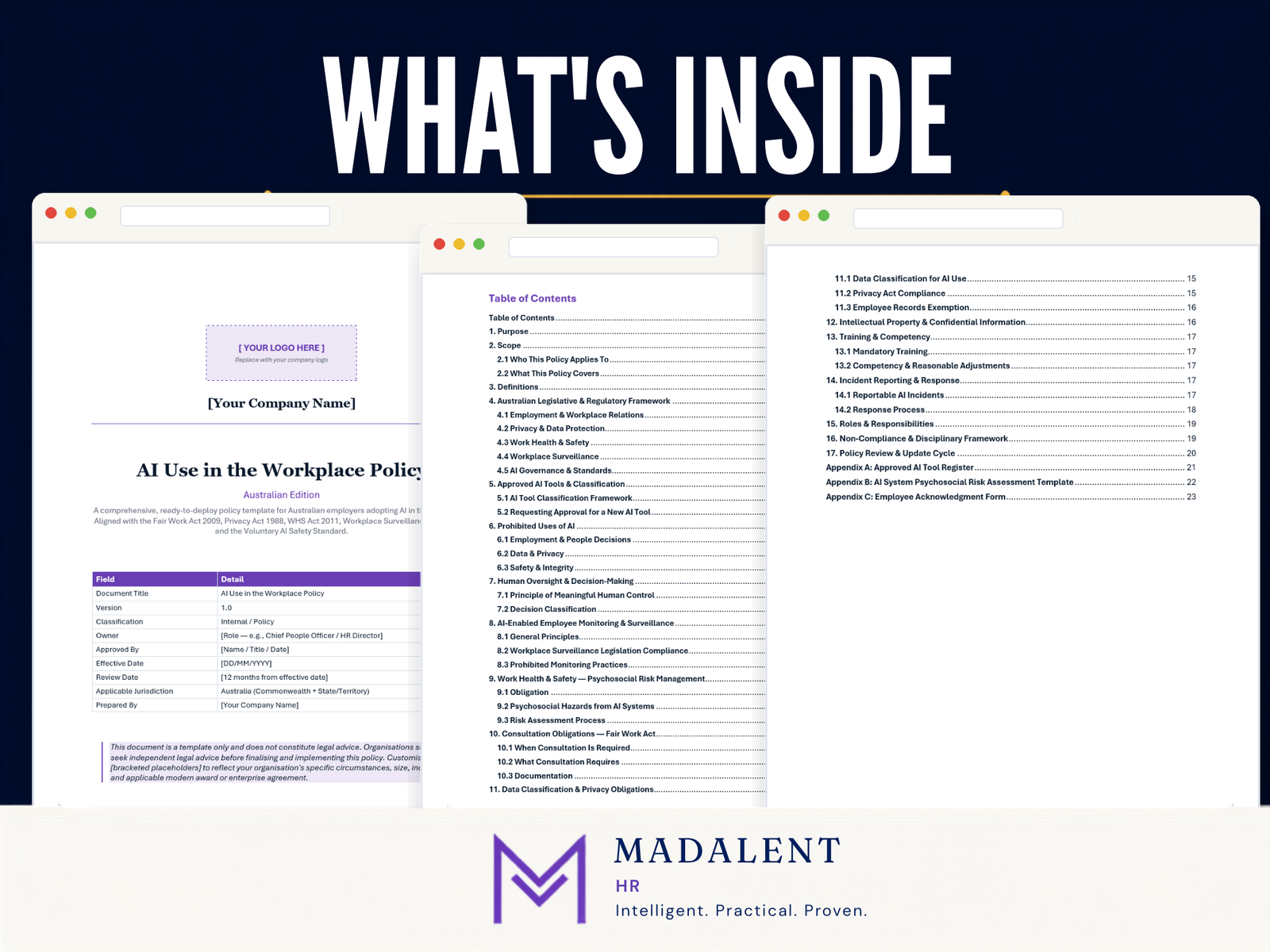
What’s included in this AI use in the workplace policy
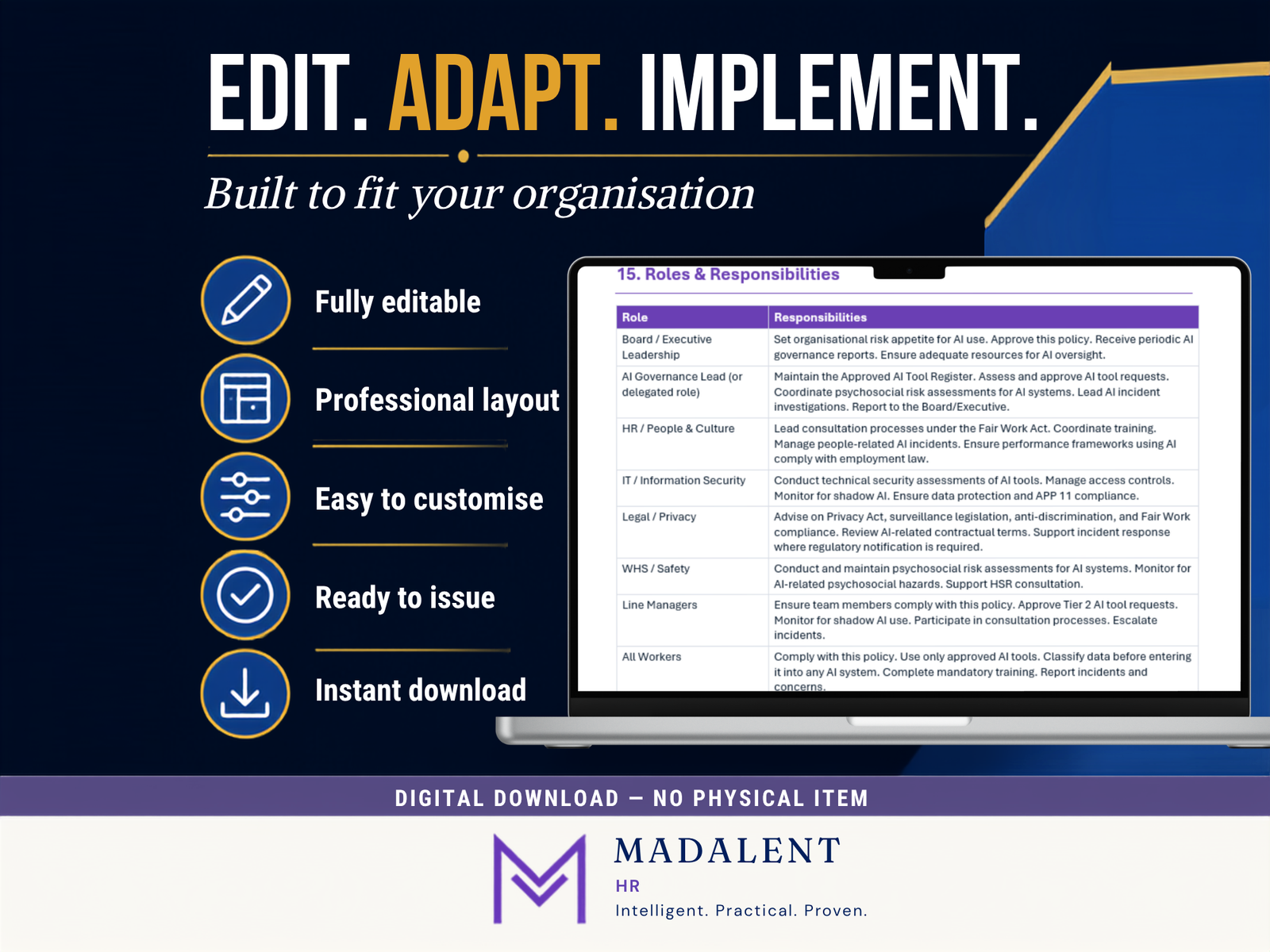
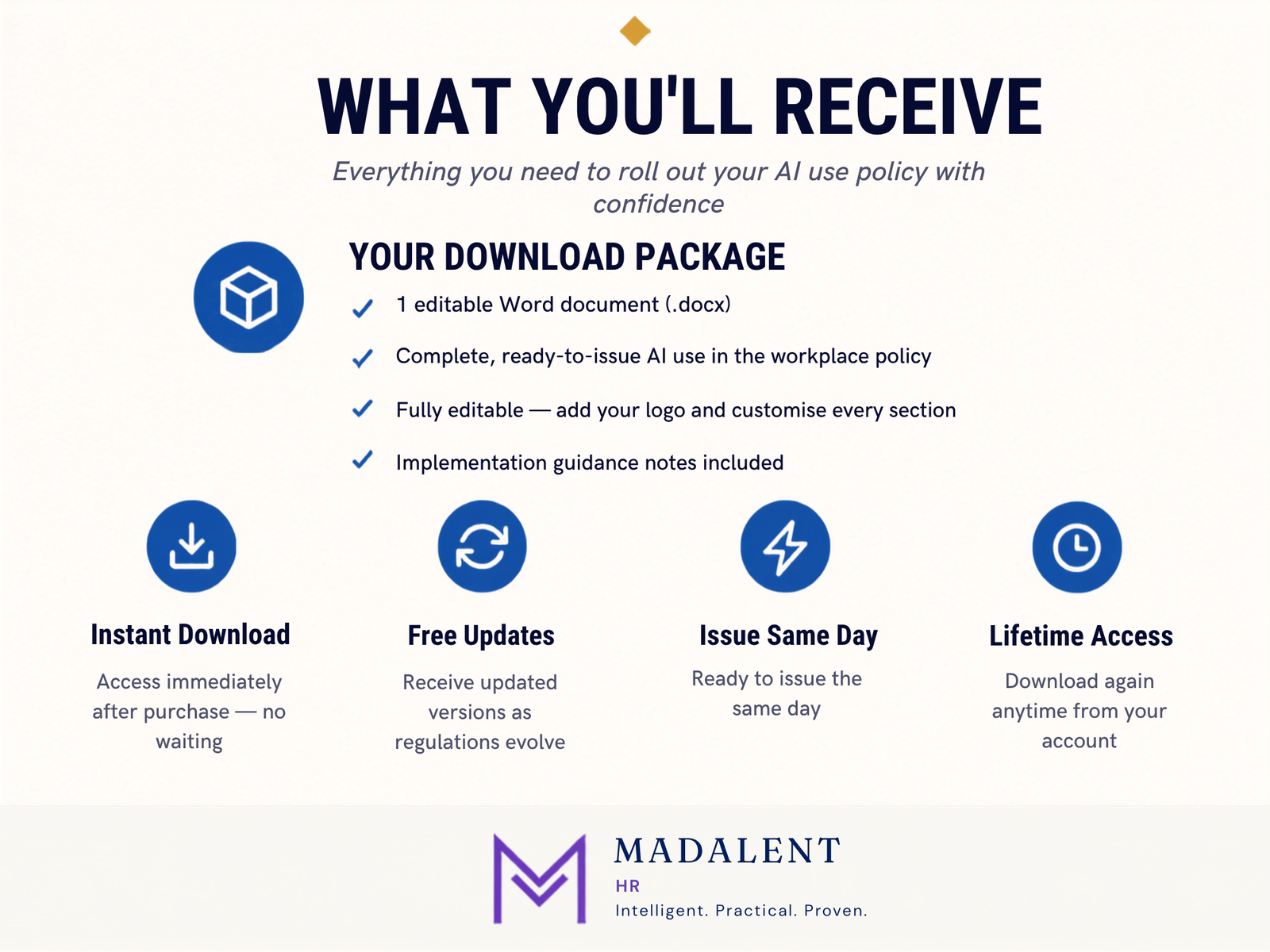
- Fully editable Word document (.docx)
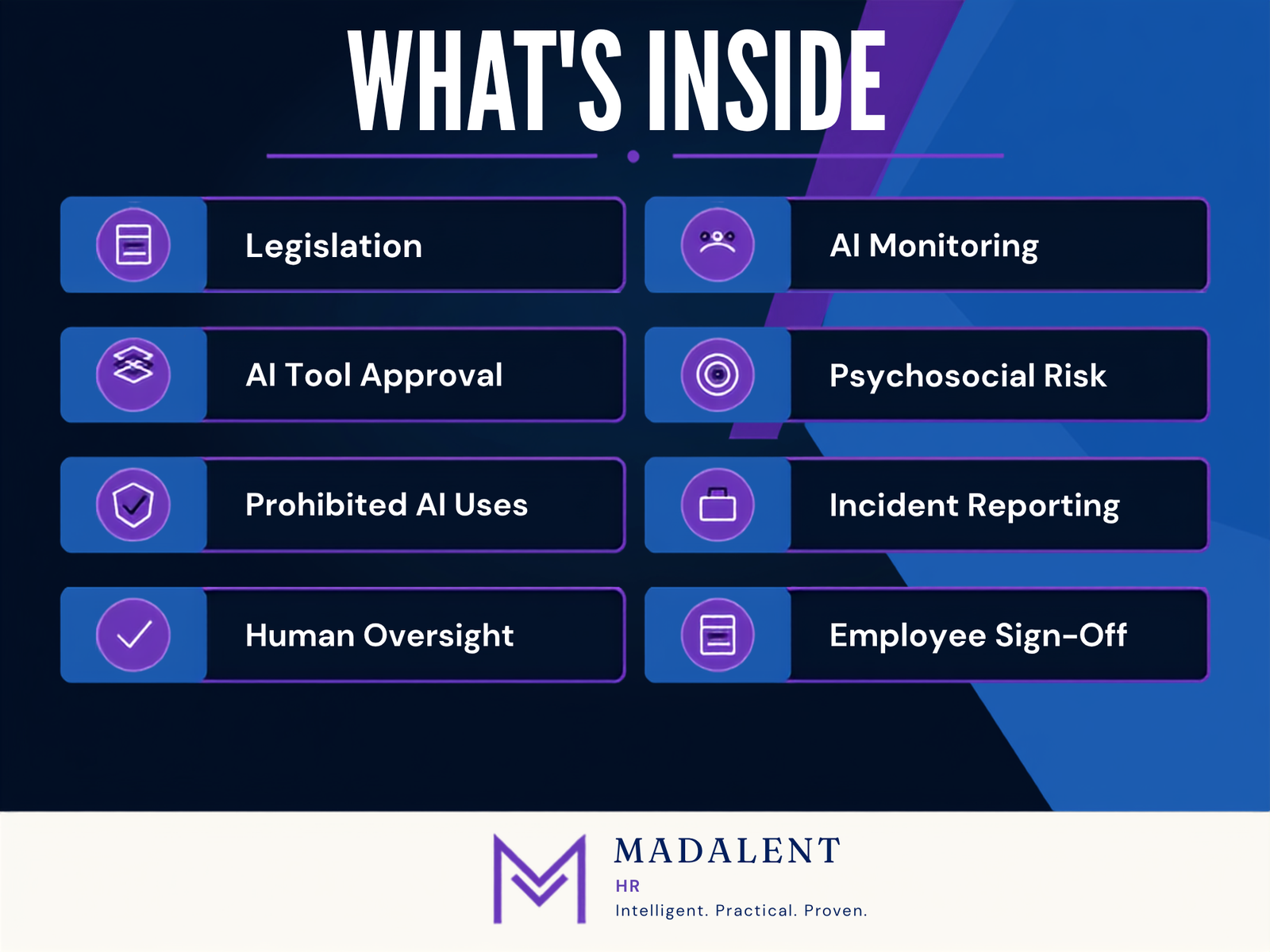
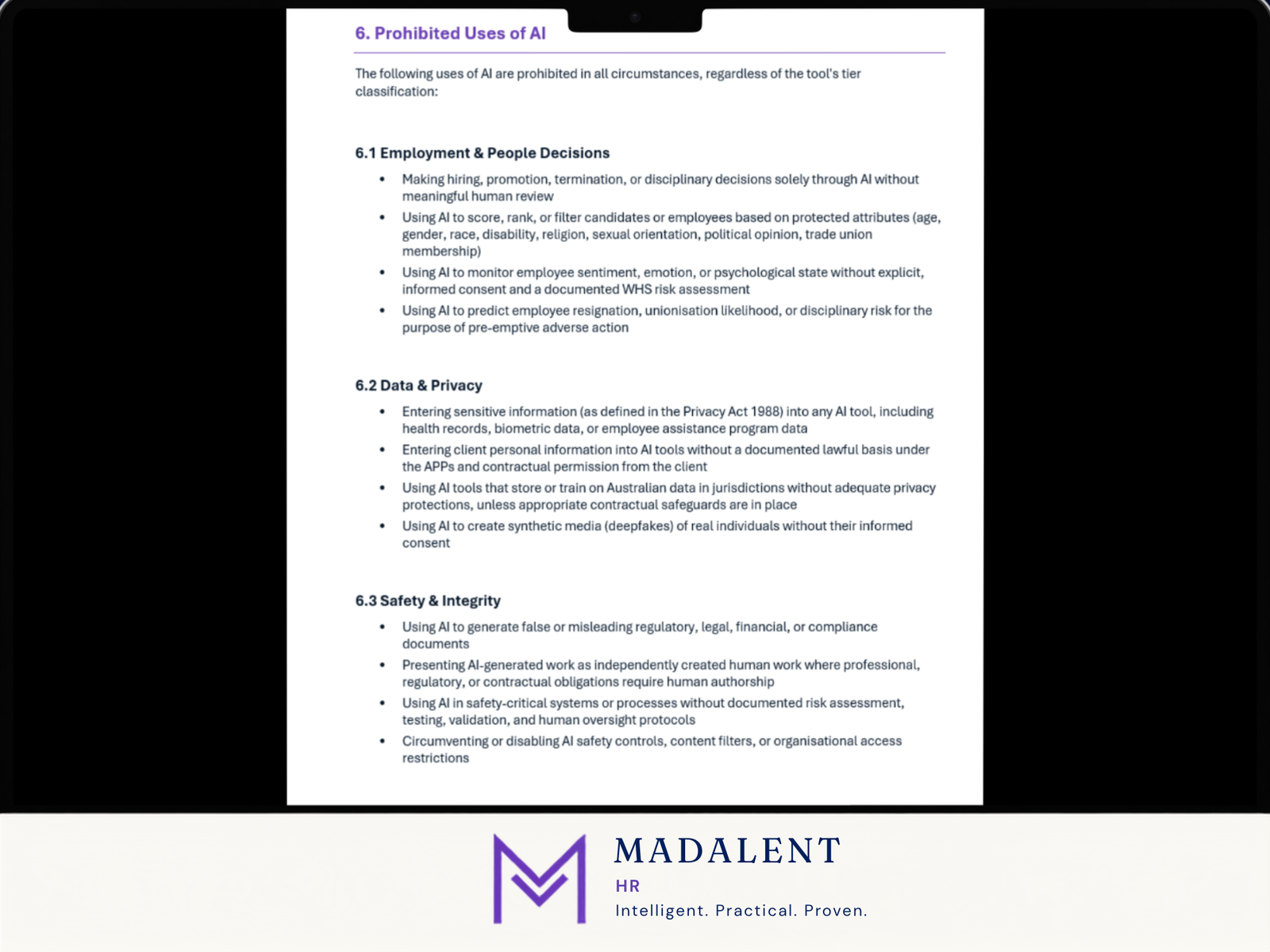
- Plain-English rules covering approved tools, data handling, and prohibited uses
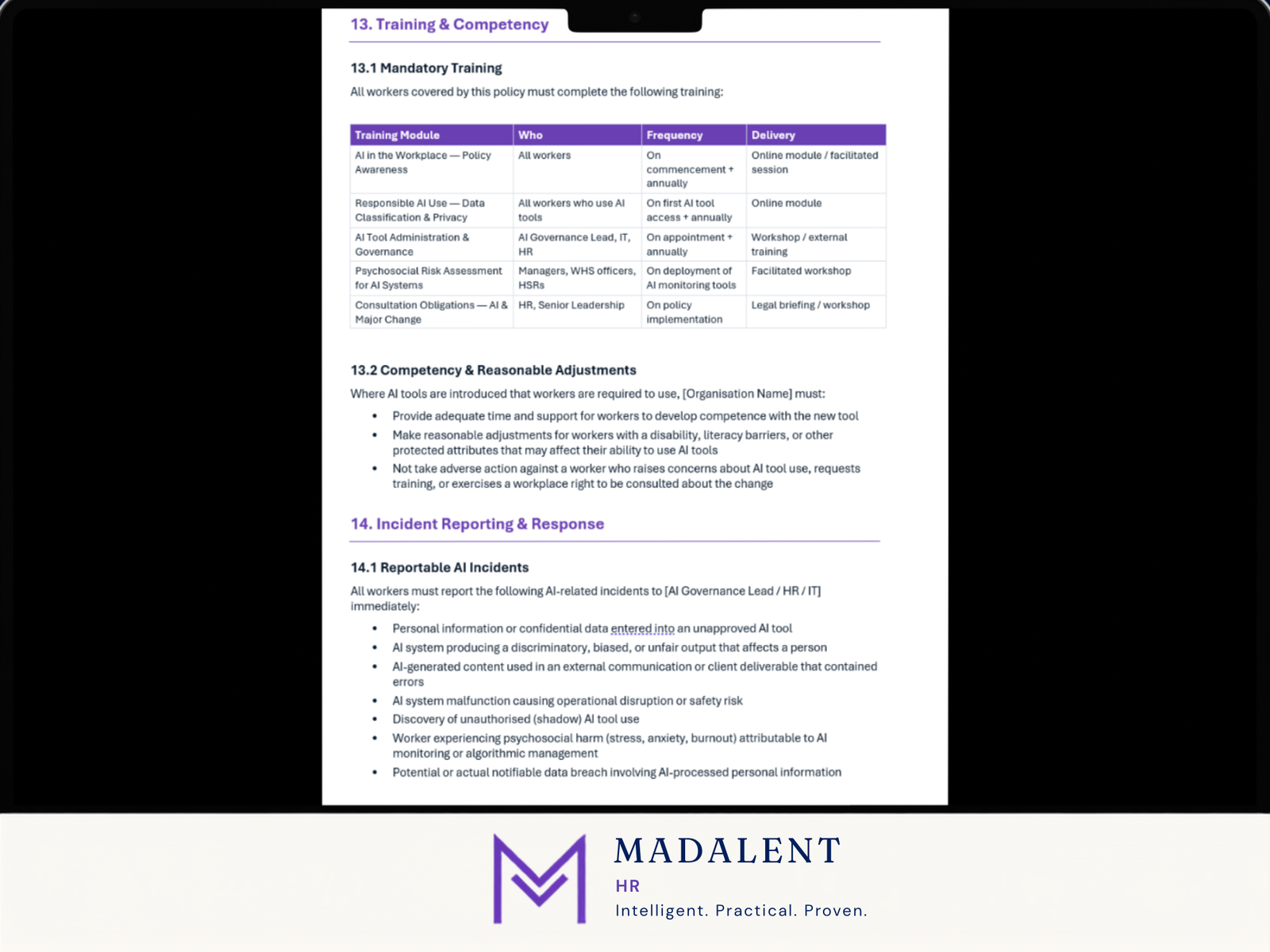
- Sections on employee responsibilities, manager escalation, and review cadence
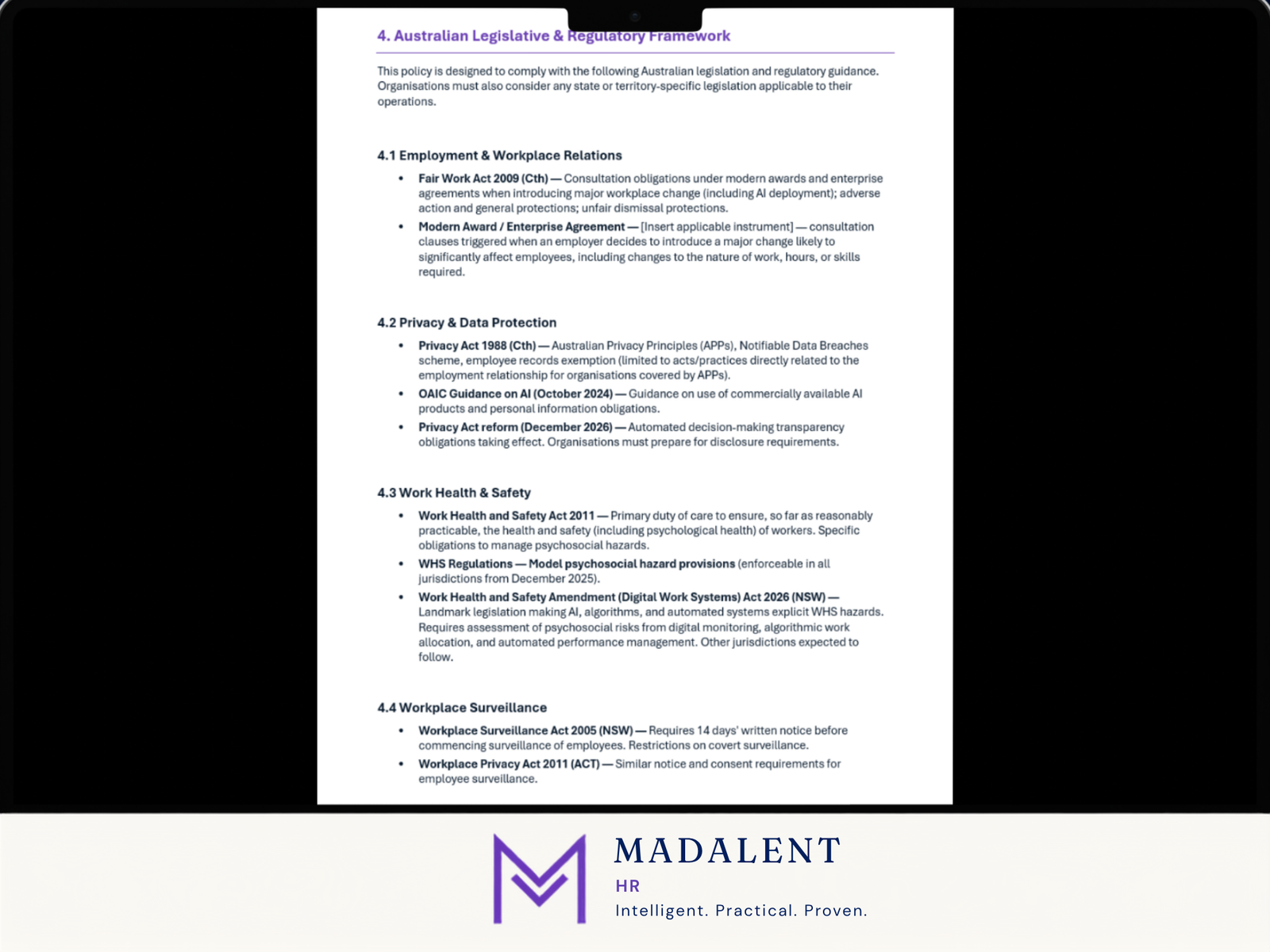
- Referenced against ISO 42001, EU AI Act, and NIST AI RMF
Why a plain-English AI use policy matters
Most AI governance templates are written for compliance officers and CTOs — dense, technical, and unreadable to the average staff member who’s actually using these tools day to day. This AI use in the workplace policy is deliberately written at a general-workforce reading level, so HR can issue it without needing a training session just to explain the document itself. For broader context on why workplace AI policy matters right now, see SHRM’s guidance on AI in the workplace.
Common gaps this policy closes
Without a written policy, staff are left guessing: is it fine to paste client data into ChatGPT? Can AI-generated content go straight into a client deliverable? Who do you tell if an AI tool produces something that looks wrong? This template answers each of those questions directly, rather than leaving managers to invent an answer on the spot the first time someone asks.
Who it’s for
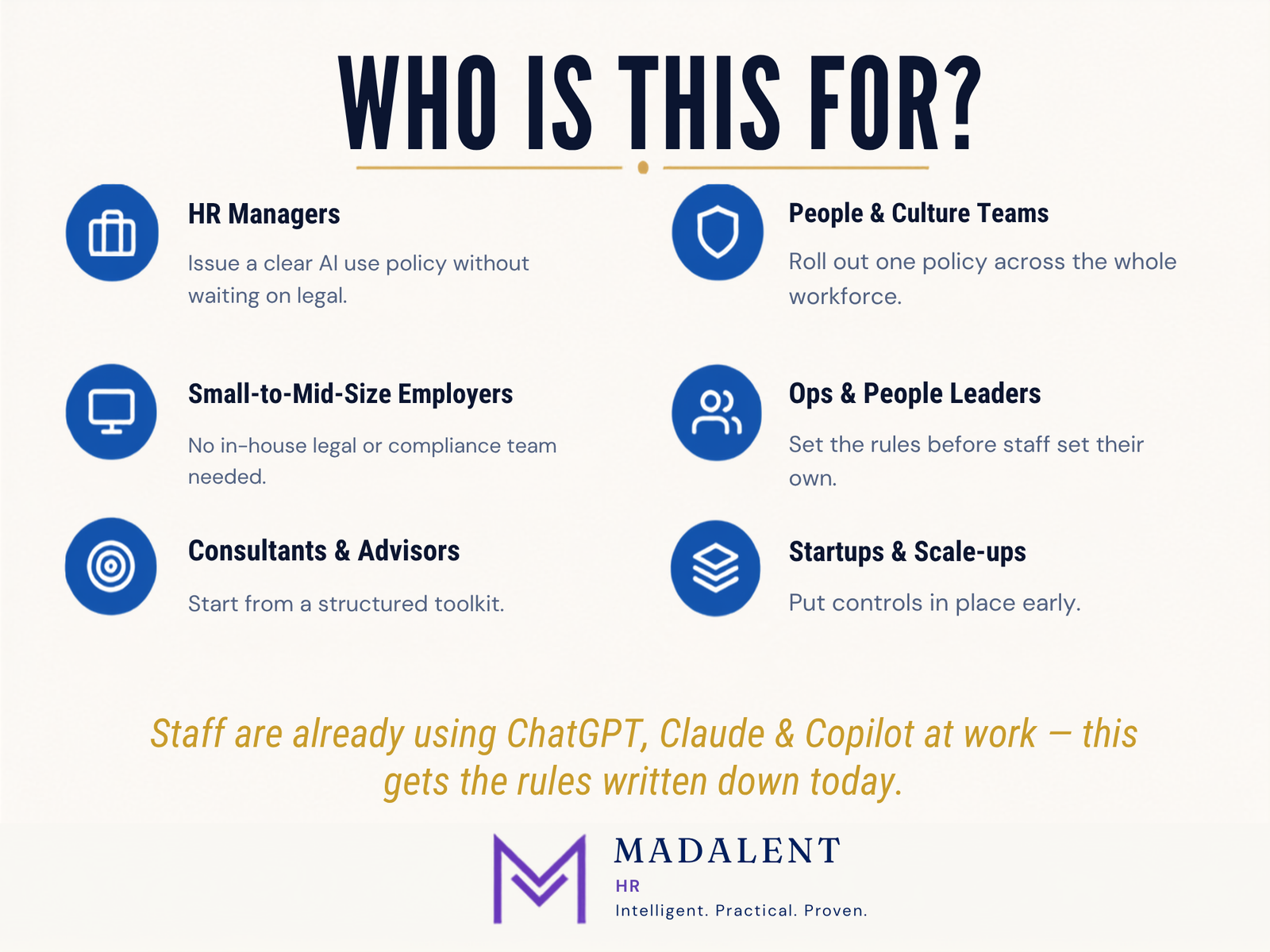
HR managers, People & Culture teams, and small-to-mid-size employers who need a defensible AI use policy for staff without engaging external counsel. Pair it with the Employee Handbook Template to fold AI rules into your core staff documentation. If your team works remotely or in a hybrid model, pair it with the Remote/Hybrid Work Policy Pack, and if AI is used in hiring or employee monitoring in the US, add the US Multi-State AI Employment Law Compliance Pack.
How is this different from a general AI Acceptable Use Policy?
This version is written specifically for a non-technical workforce and HR rollout, with simpler language and an onboarding-friendly structure — designed to be read and understood by every employee, not just technical staff.
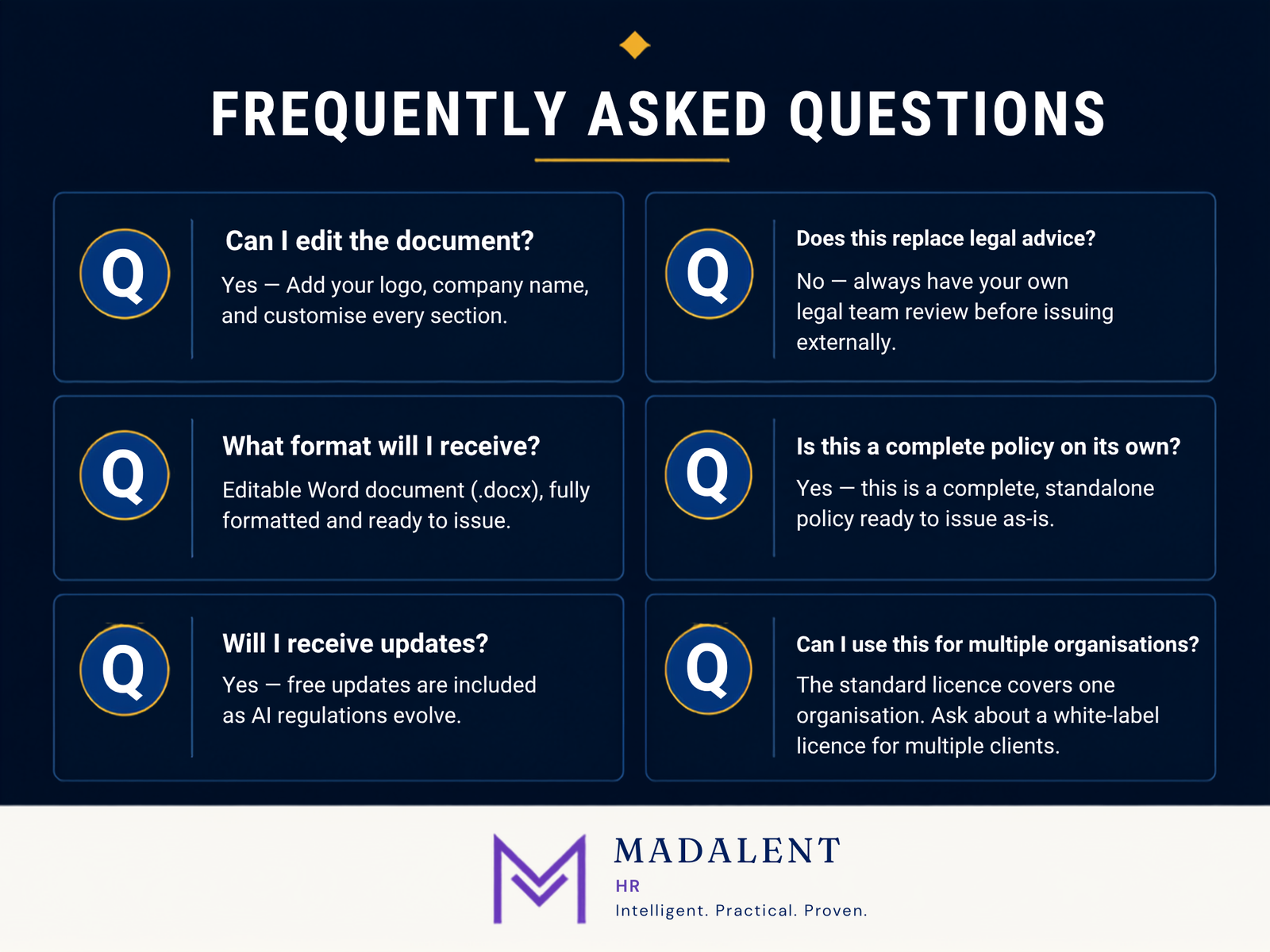
Can I customise it for my organisation?
Yes — it’s a fully editable Word document, ready to add your branding and adjust for your specific tools and internal policies.
Does this cover generative AI tools specifically?
It covers AI use broadly. For deeper coverage of generative tools like ChatGPT and Claude specifically, pair it with a dedicated Generative AI Use Policy.
Instant digital download. Delivered as an editable Word document. 7-day guarantee — if the document doesn’t fit your needs, let us know.
Rolling this AI use in the workplace policy out to staff
A written policy only works if people actually see it. The recommended rollout is short: add your branding to the document, send it with a two-line email explaining why it exists, and ask managers to confirm their team has read it as part of a regular team meeting rather than a separate mandatory training session. Revisit the policy at least annually, or sooner if your organisation adopts a new AI tool that isn’t already covered by the approved-tools section. Most organisations find a short, honest AI use in the workplace policy gets read far more often than a long legal document nobody opens.