Description
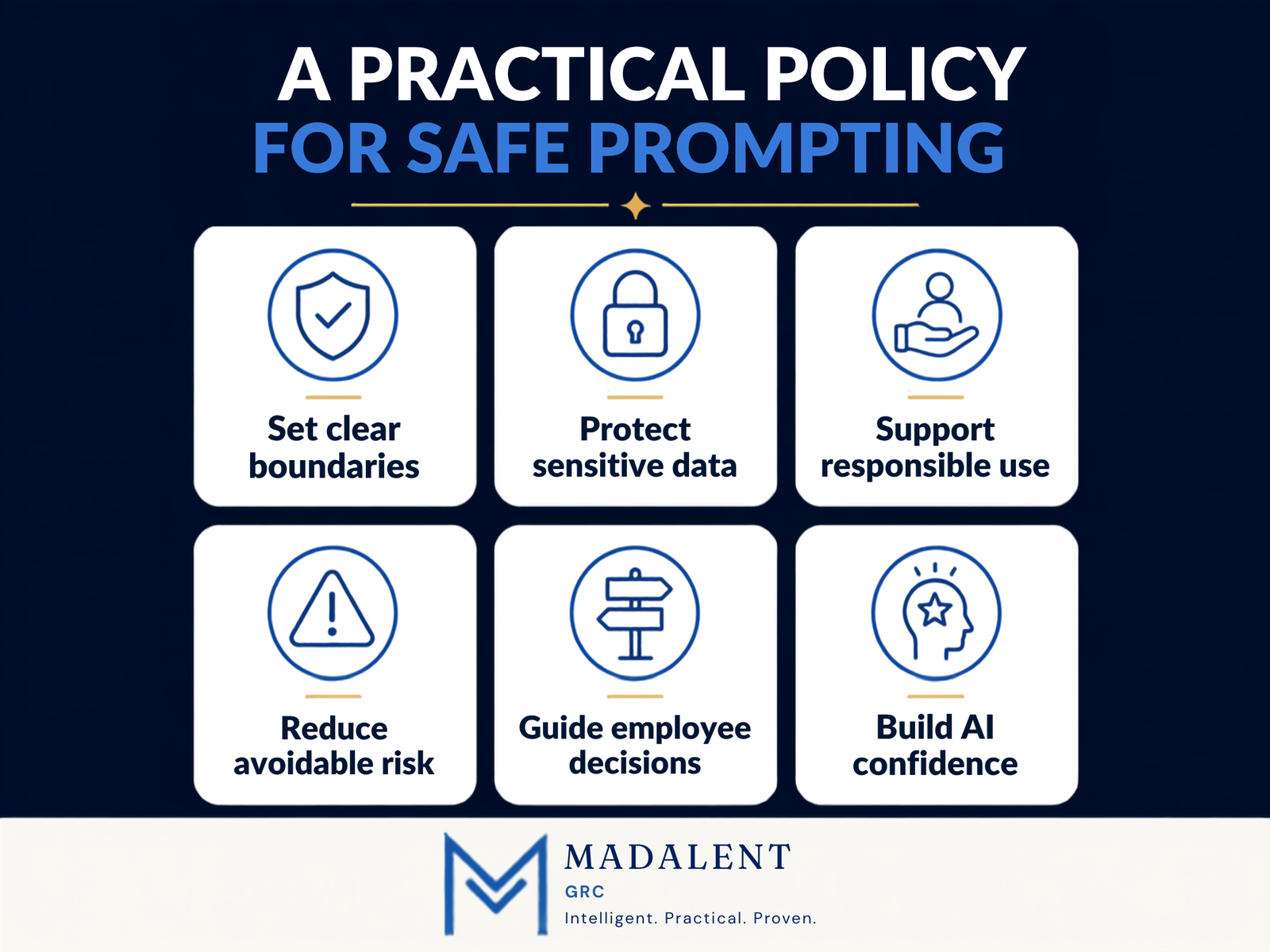
The Prompt Engineering Guidelines give staff a practical, safe way to write prompts for AI tools — covering what not to paste in, how to get reliable output, and when to double-check results — turning ad-hoc AI use into a documented practice.
Built to the standard a Big-4 advisor would deliver, this editable Word document complements your Acceptable Use Policy and Output Review & QA SOP with hands-on guidance staff can follow day to day.
What’s included
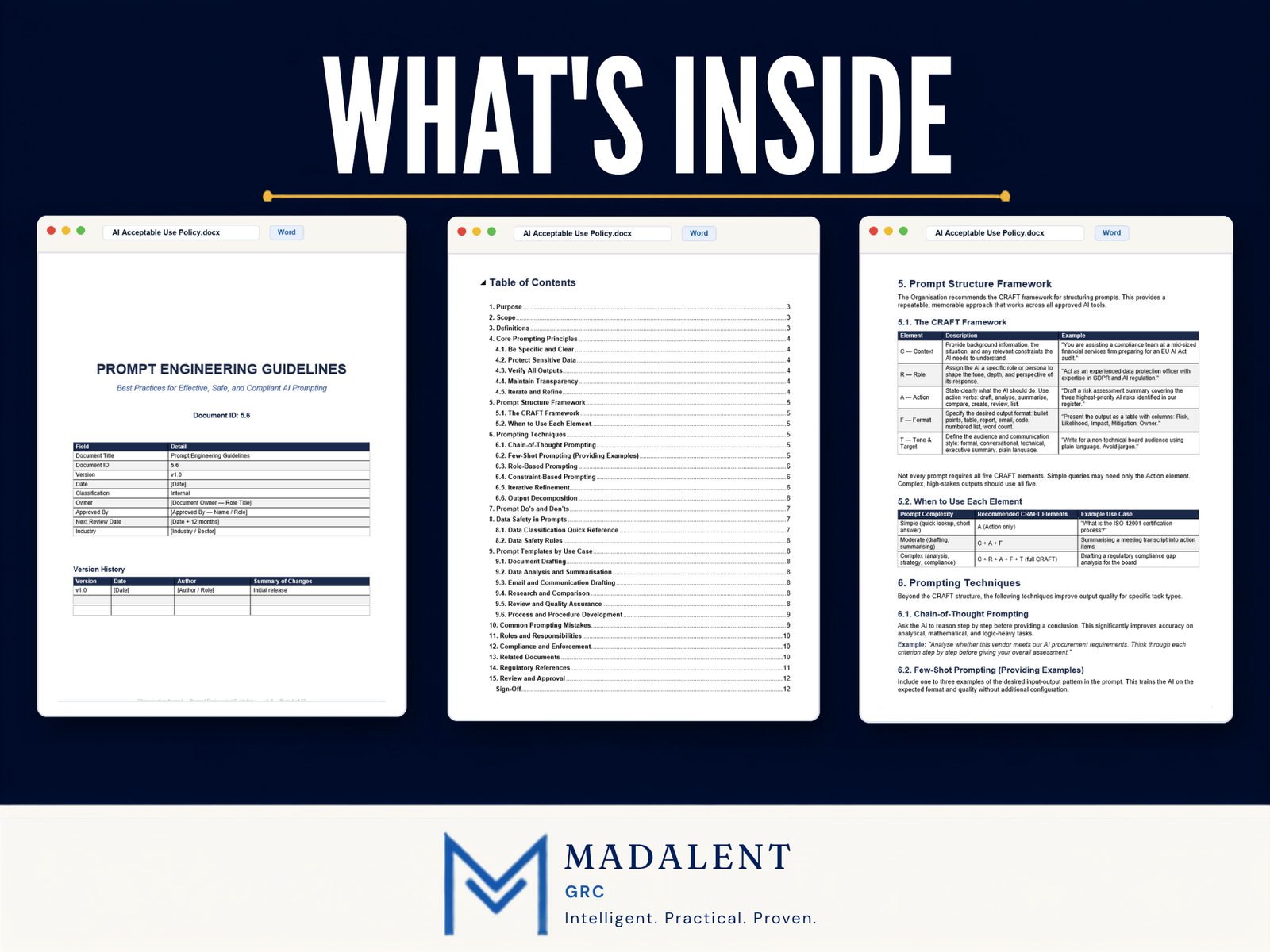
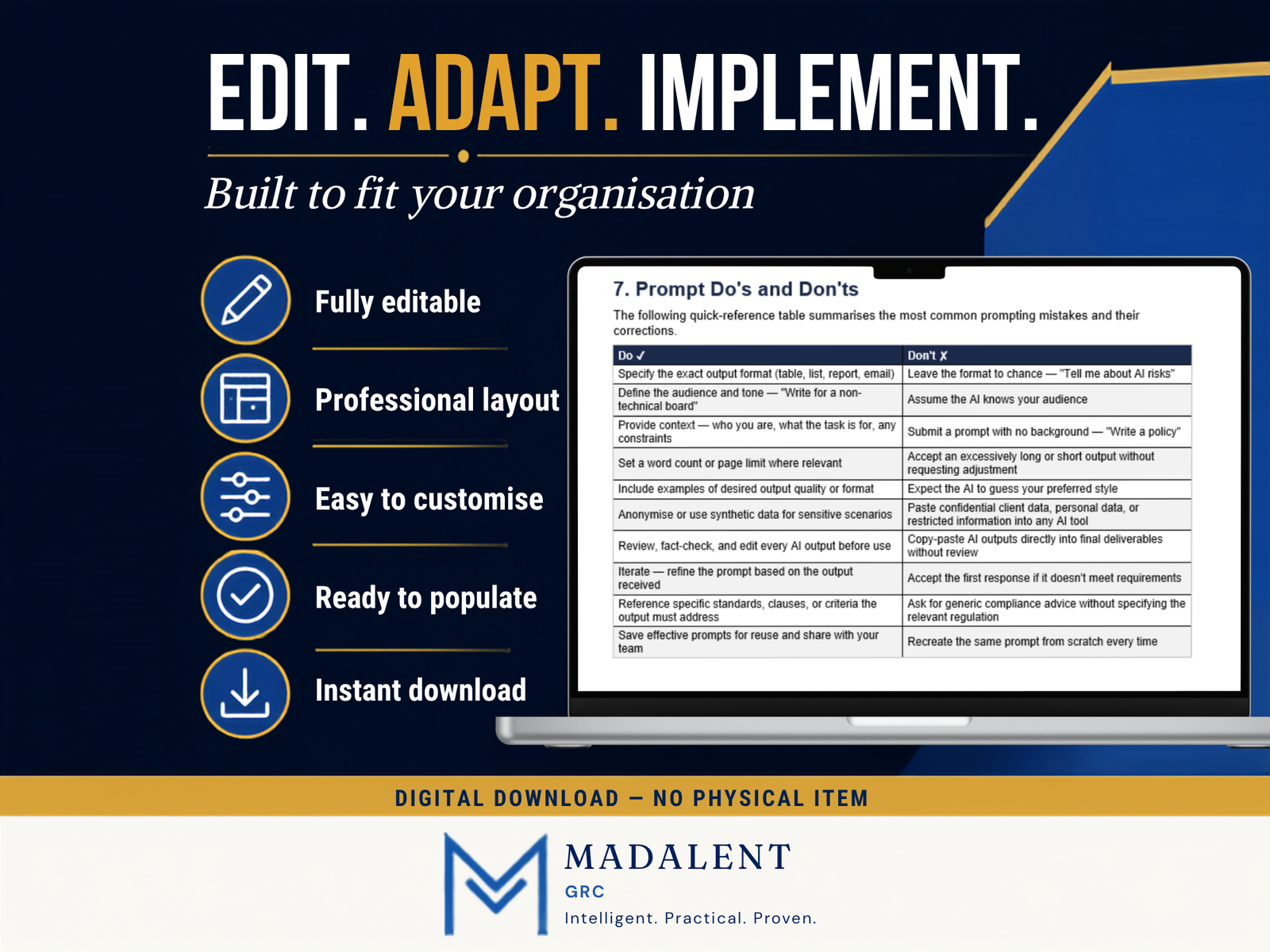
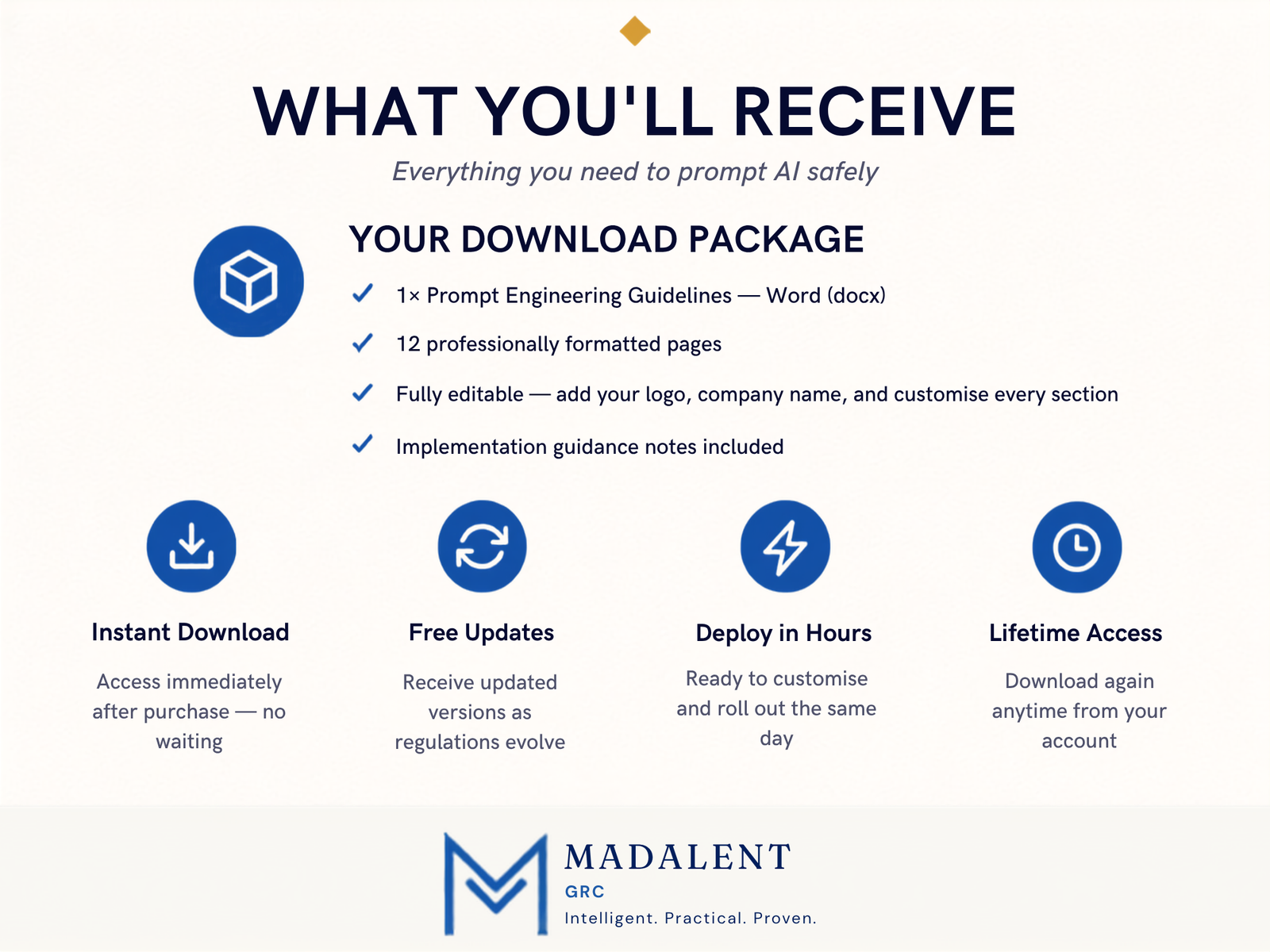
- Fully editable Word document (.docx)
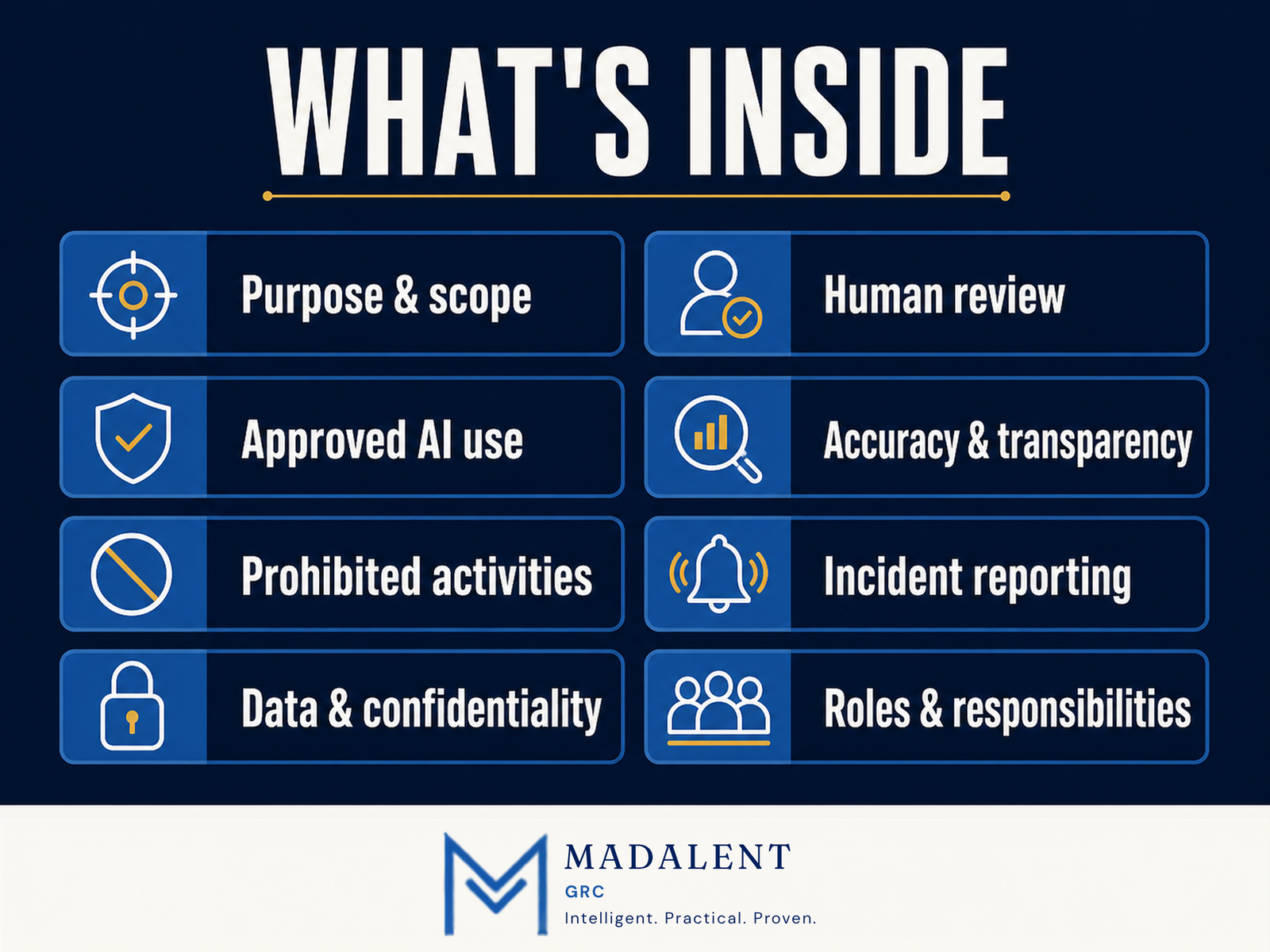
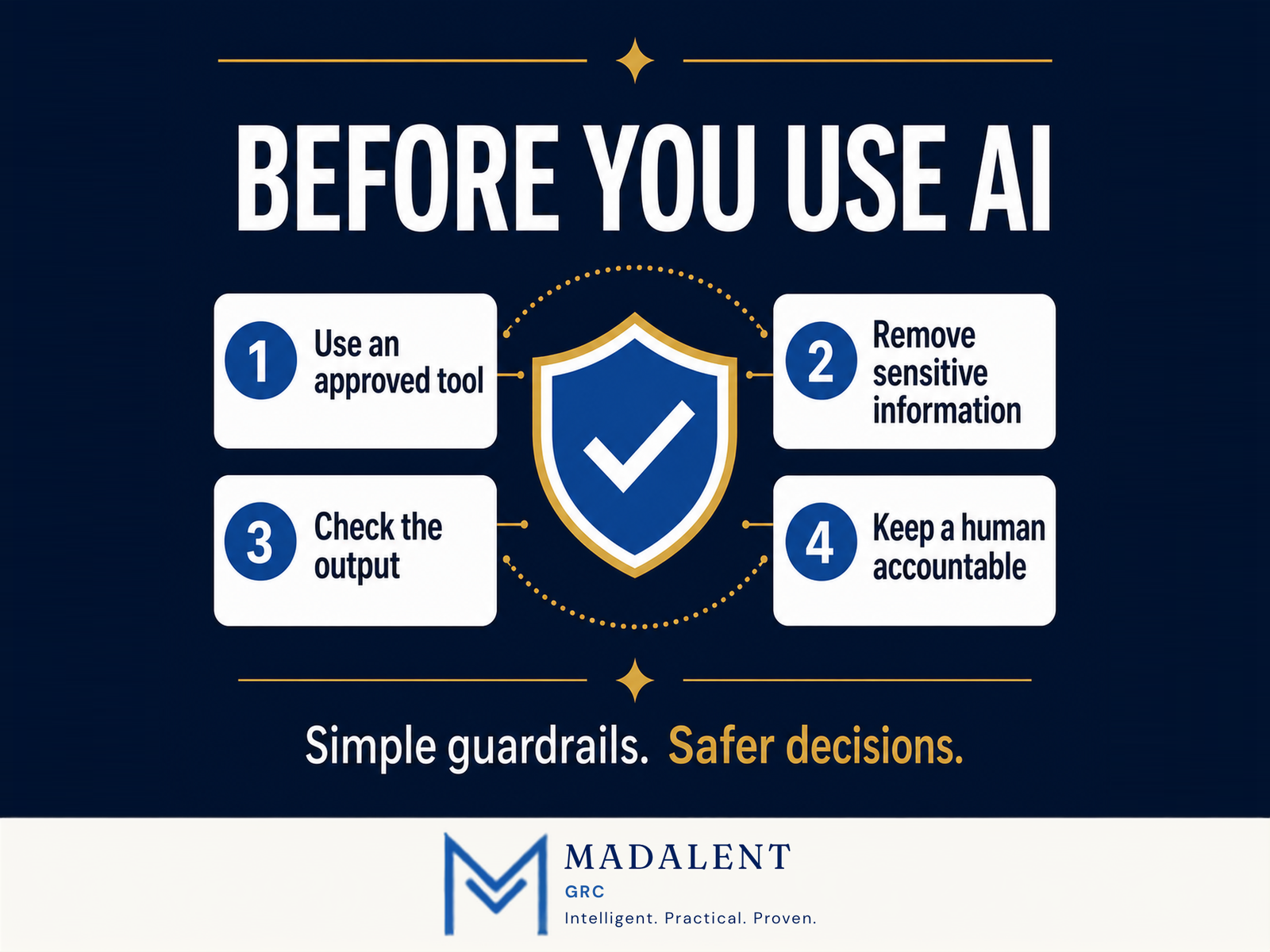
- Safe prompting practices and data-handling guardrails
- Guidance for getting reliable, checkable output
- Plain-English, staff-ready format
Who it’s for
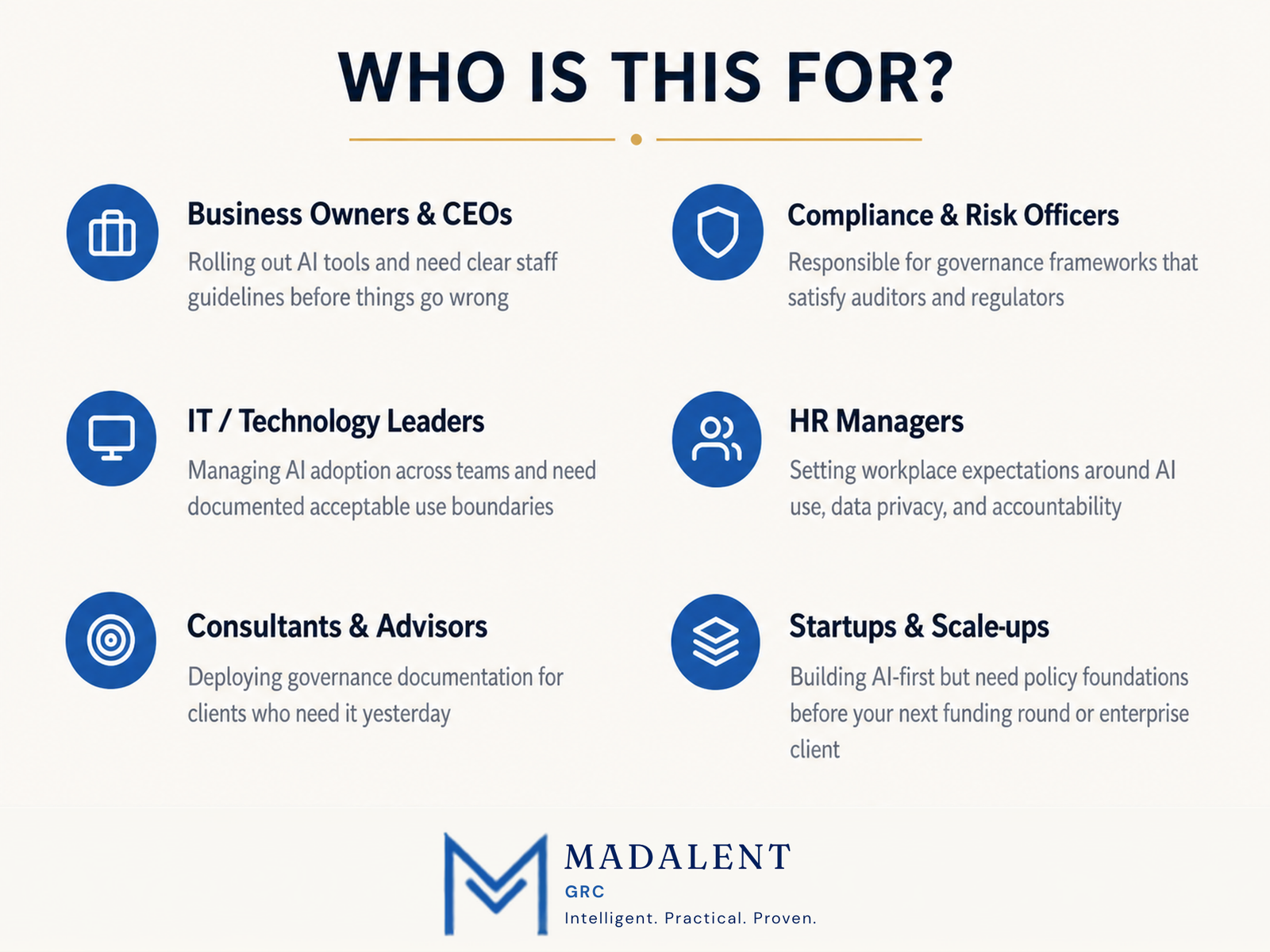
Business owners, team leads, and compliance officers who want staff using AI tools safely and consistently, without a lengthy training rollout.
Key features of these prompt engineering guidelines
Most AI policies stop at “what’s allowed” — this guide goes further, showing staff exactly how to phrase prompts so results are accurate, checkable, and free of sensitive data leakage. It’s written in plain English rather than compliance jargon, so it can be handed straight to non-technical staff without a training session.
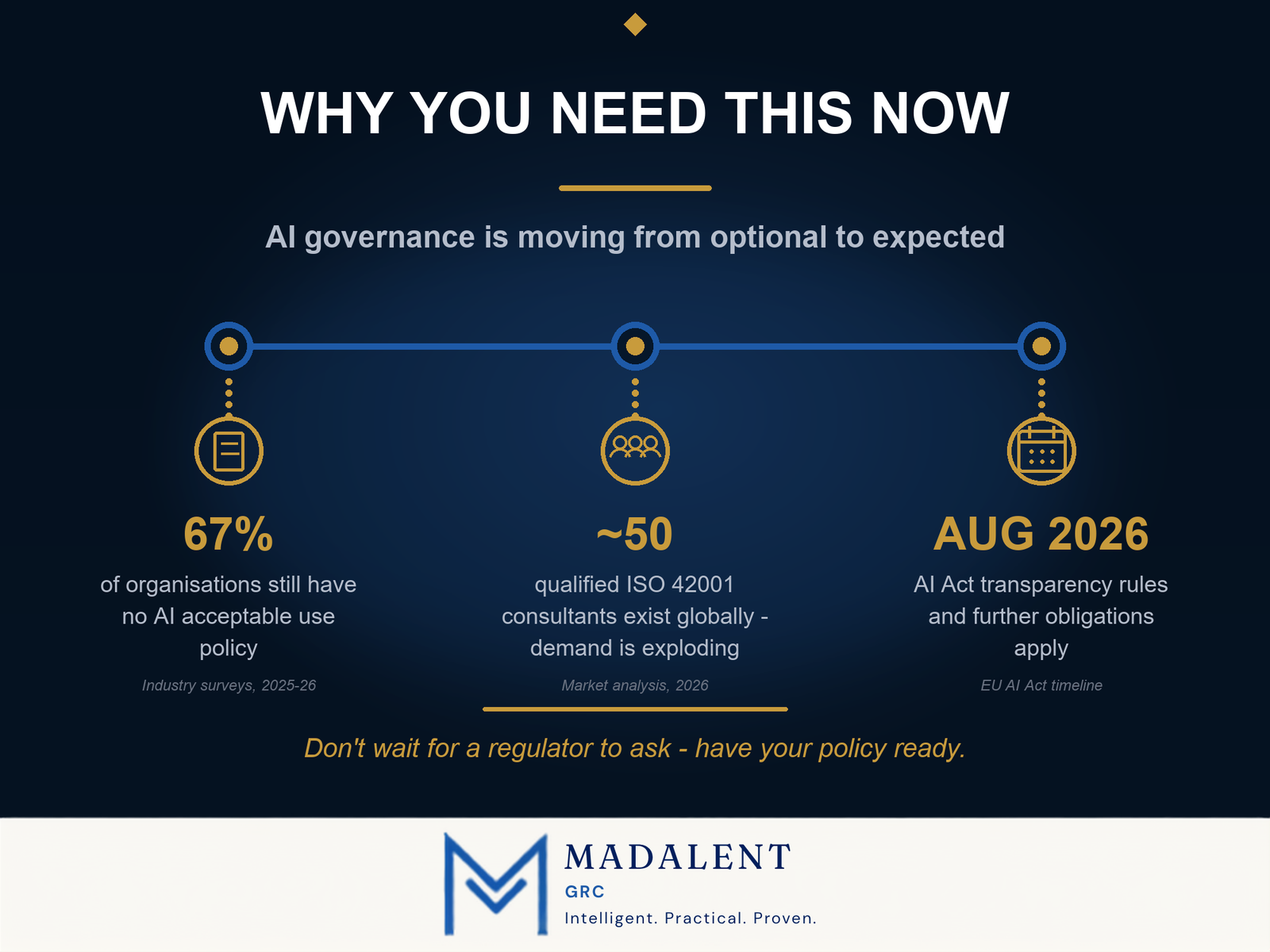
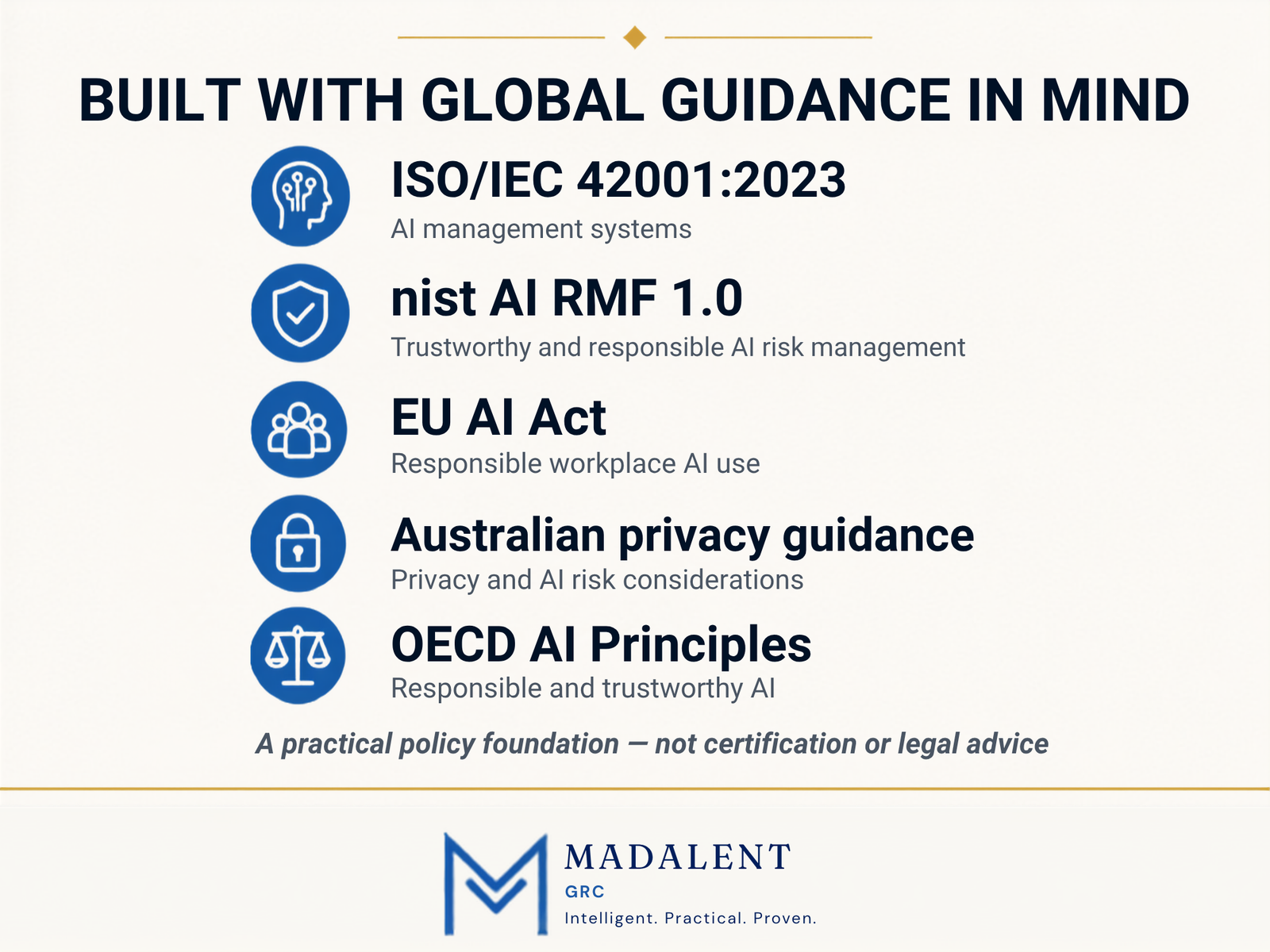
The guidance aligns with the practices referenced in ISO 42001 and the EU AI Act’s human-oversight provisions, giving you a documented, audit-ready record that staff were trained on safe AI use.
Unlike free prompt-engineering guides online, this template is scoped specifically to internal business use: what data staff can and can’t paste into a prompt, how to phrase requests for verifiable output, and when a result needs human sign-off before it’s used.
Frequently asked questions
What file format is this in?
A fully editable Microsoft Word (.docx) document, ready to add your branding and distribute to staff.
Do I need the other AI Governance documents to use this?
No — it works as a standalone guide, though it’s designed to complement the Acceptable Use Policy and Output Review & QA SOP if you have them.
Can I customise it for my industry?
Yes. The document is fully editable, so you can add industry-specific examples or restrictions relevant to your sector.
Instant digital download. Delivered as an editable Word document. 7-day guarantee — if the document doesn’t fit your needs, let us know.
Why dedicated prompt guidelines instead of leaving staff to figure it out
Most organisations that use AI tools give staff access and assume they’ll figure out good prompting on their own — which usually means inconsistent output quality, staff pasting confidential data into prompts without realising the risk, and no shared standard for when a result needs a second check before it’s used. The Prompt Engineering Guidelines turn that ad-hoc practice into a documented standard: what information should never go into a prompt, how to structure a prompt for reliable output, and when a result needs human verification before it’s relied on.
Frequently asked questions
What file format are these guidelines in?
A fully editable Word (.docx) document, ready to add your branding and issue to staff.
Is this tool-specific, or does it work for any AI tool?
The guidelines are written to apply across generative AI tools generally, rather than being tied to one vendor, so they stay relevant as your organisation’s toolset changes.
Does this cover data privacy risks in prompts?
Yes. A core section addresses what information should never be included in a prompt — client data, credentials, and other confidential material.
Instant digital download. Delivered as an editable Word document. 7-day guarantee.
Who it’s for
Any organisation issuing staff access to generative AI tools — particularly teams handling client data, confidential documents, or regulated information — that wants a documented standard for safe, effective prompting rather than relying on individual judgement.