Description
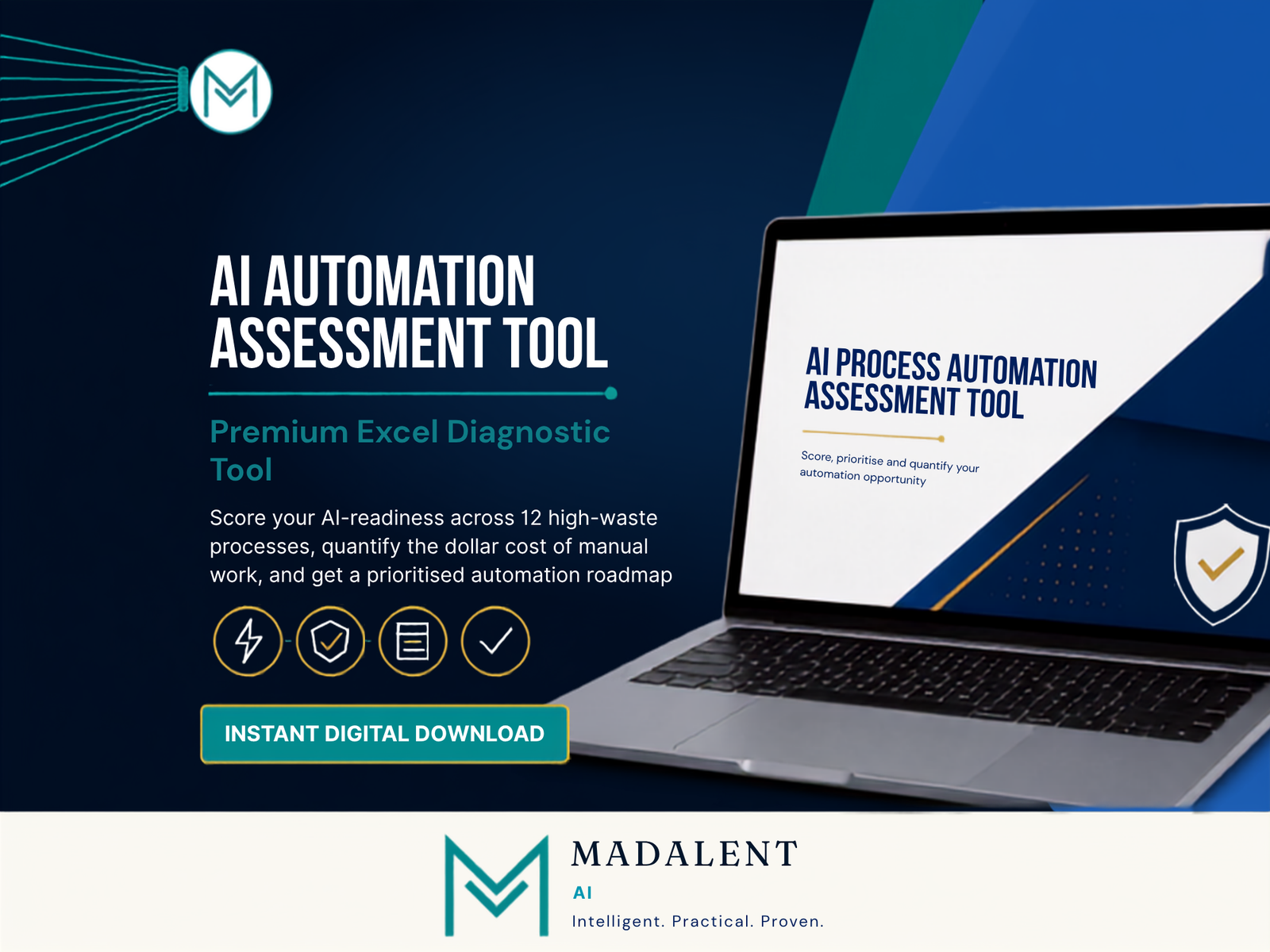
This AI automation assessment tool — a self-serve process automation assessment template — scores your business across 12 categories to show exactly where AI or automation would save the most time and money.
The AI Process Automation Assessment Tool is a self-serve Excel diagnostic built to replace the $3,000–$15,000 automation audit most consultancies charge. Walk through 12 structured process reviews and the workbook calculates your current waste, scores each process for AI-readiness, and builds a prioritised automation roadmap with estimated ROI.
The opportunity is real: research from the McKinsey Global Institute suggests a majority of current US work hours could, in theory, already be automated with technology that exists today (see McKinsey’s Agents, robots, and us research). For most SMBs the gap isn’t the technology — it’s knowing which process to tackle first. The AI Process Automation Assessment Tool is built to answer exactly that question, with numbers you can take straight to a leadership meeting.
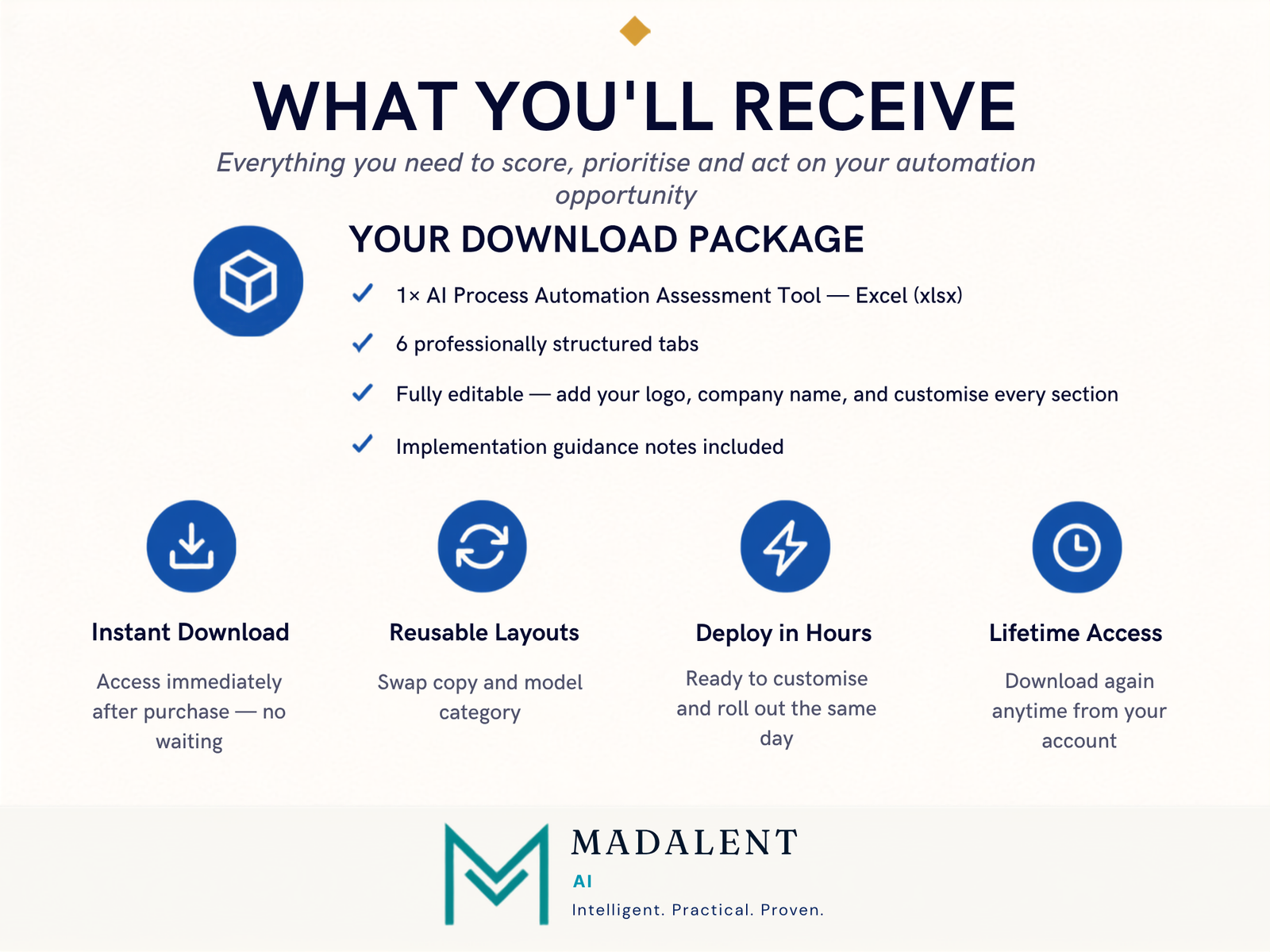
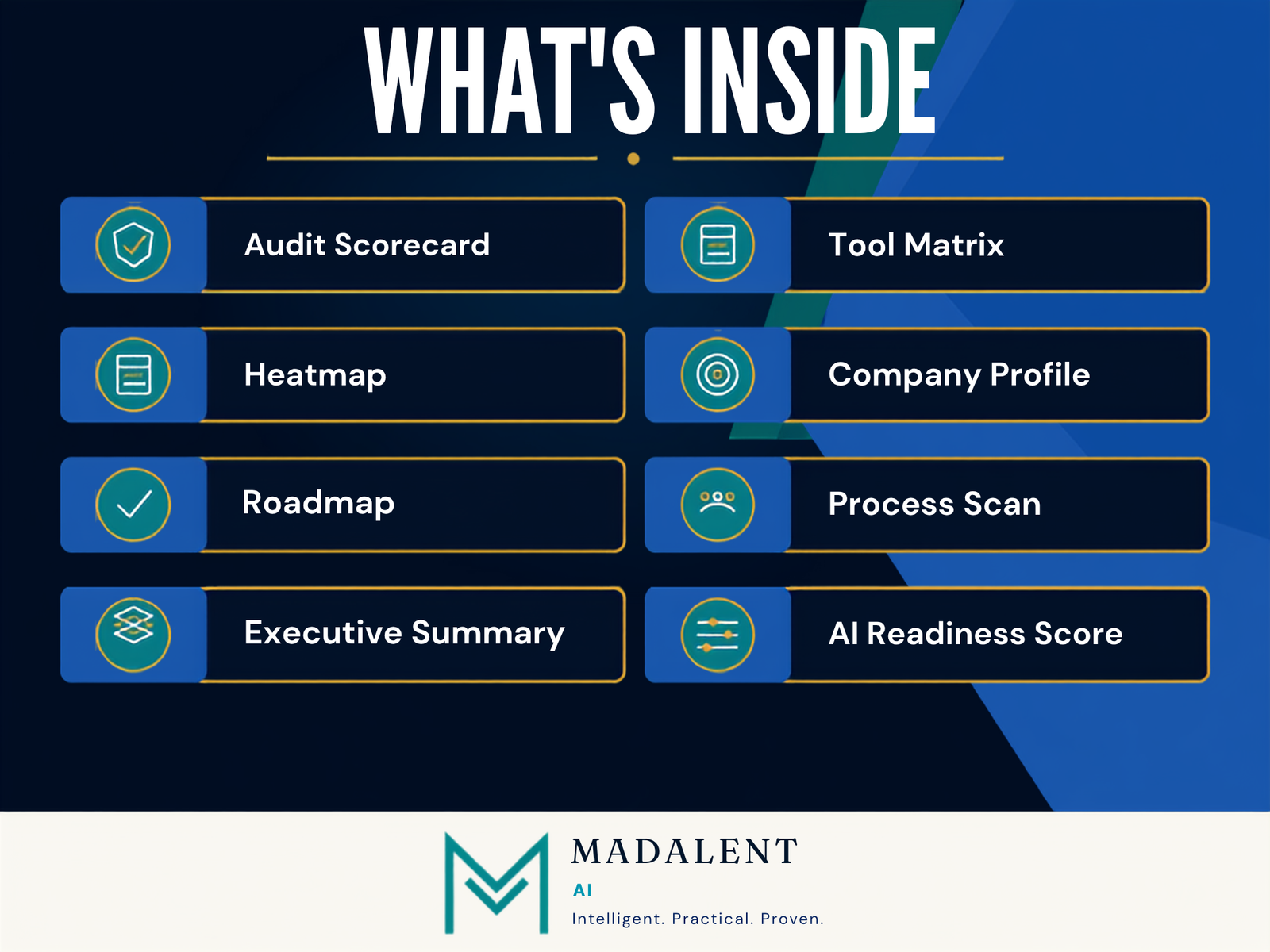
What’s included
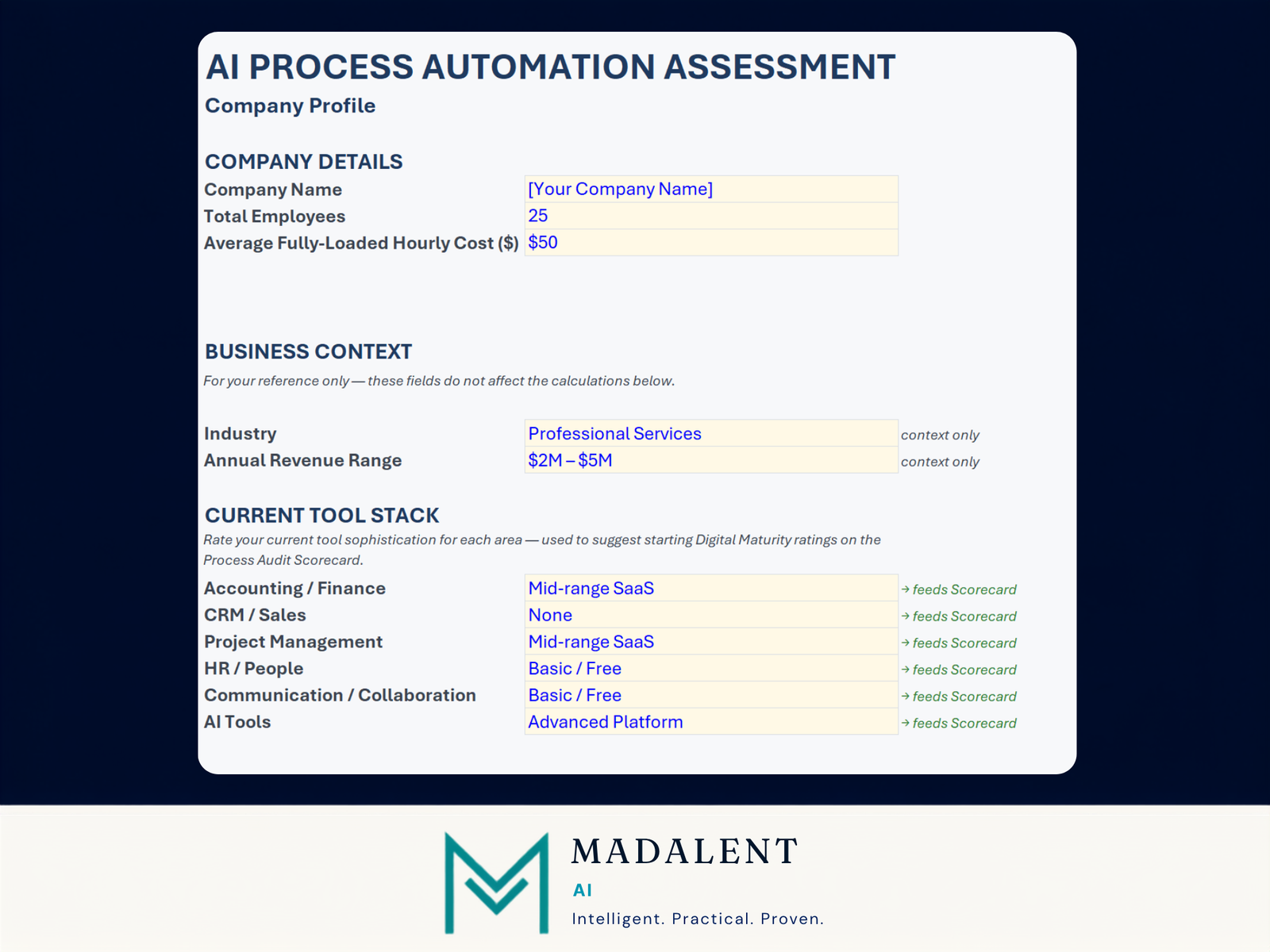
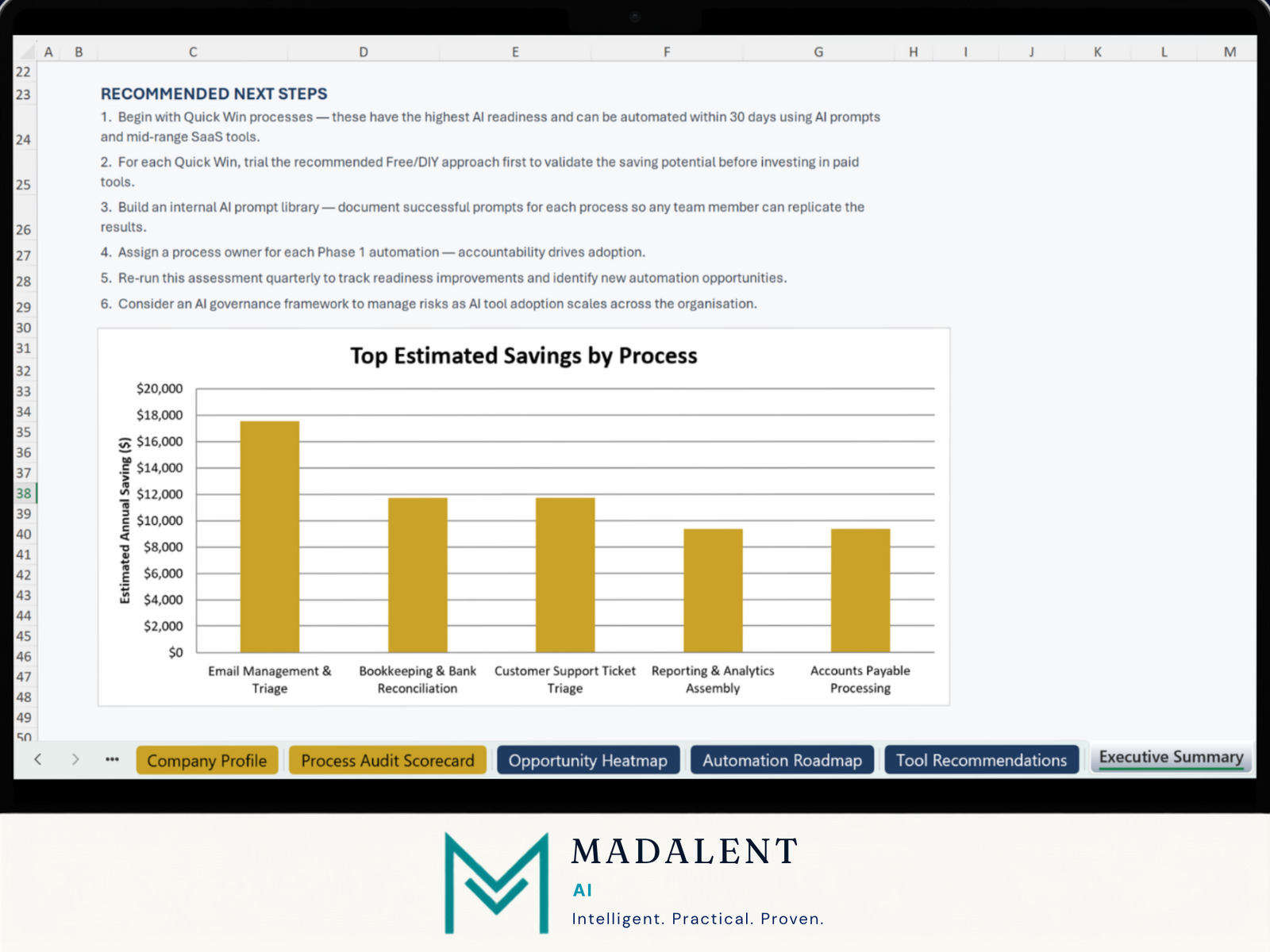
- Company Profile tab — headcount, tool stack, and cost inputs
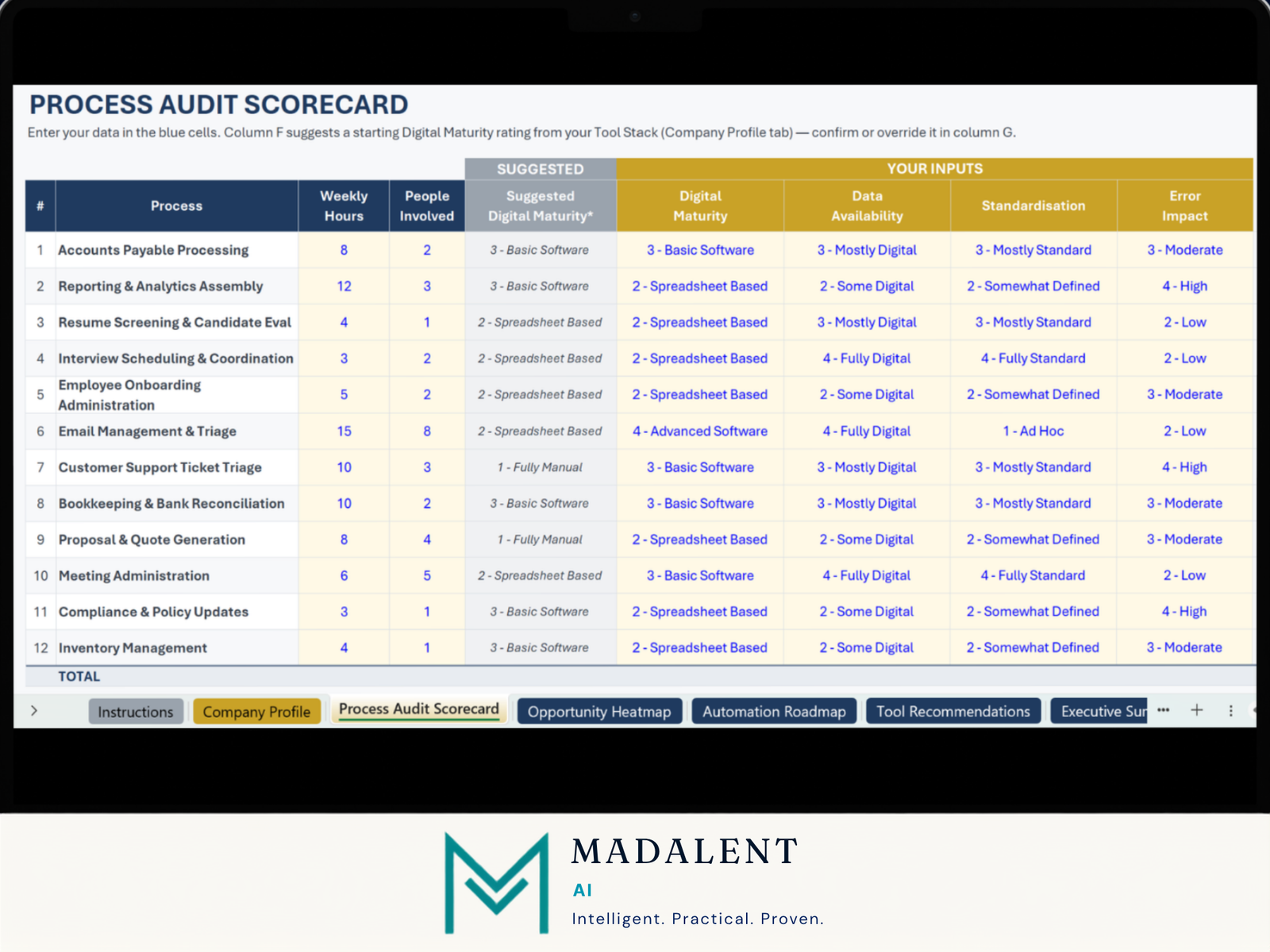
- Process Audit Scorecard — 12 processes, 5–8 diagnostic questions each, auto-scored
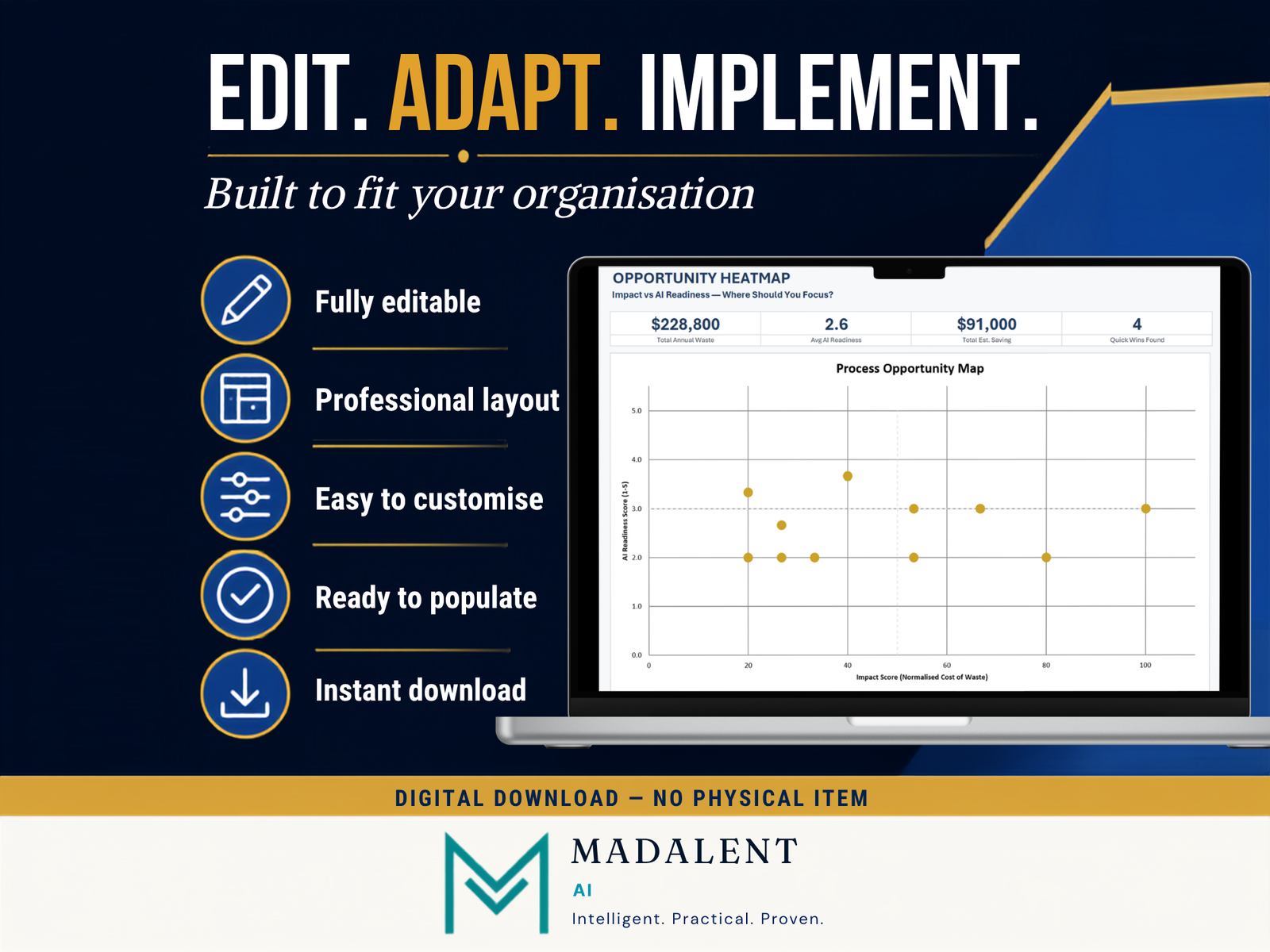
- Opportunity Heatmap Dashboard — visual impact-vs-readiness quadrant map
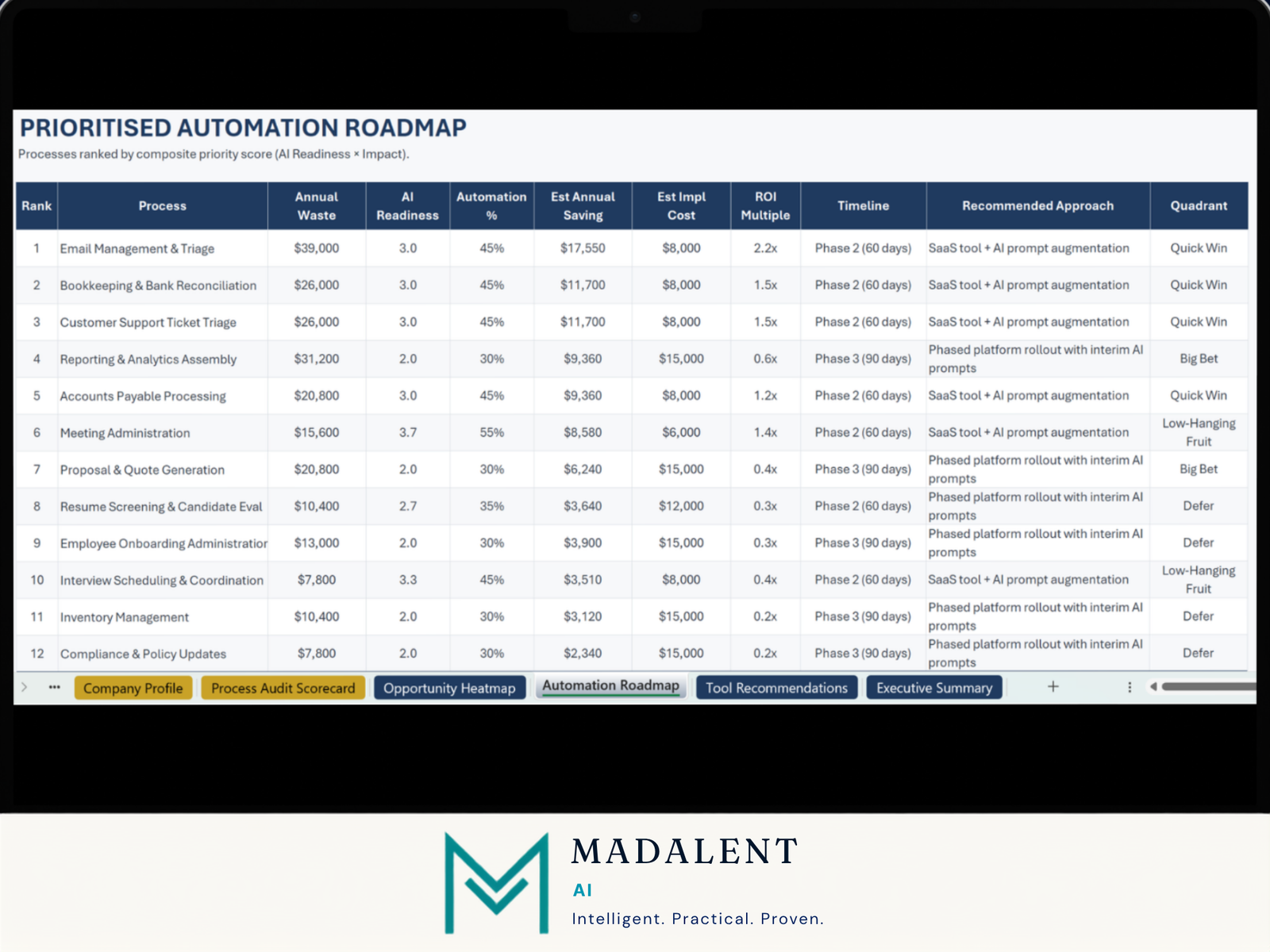
- Prioritised Automation Roadmap — ranked by saving potential, ROI multiple, and timeline
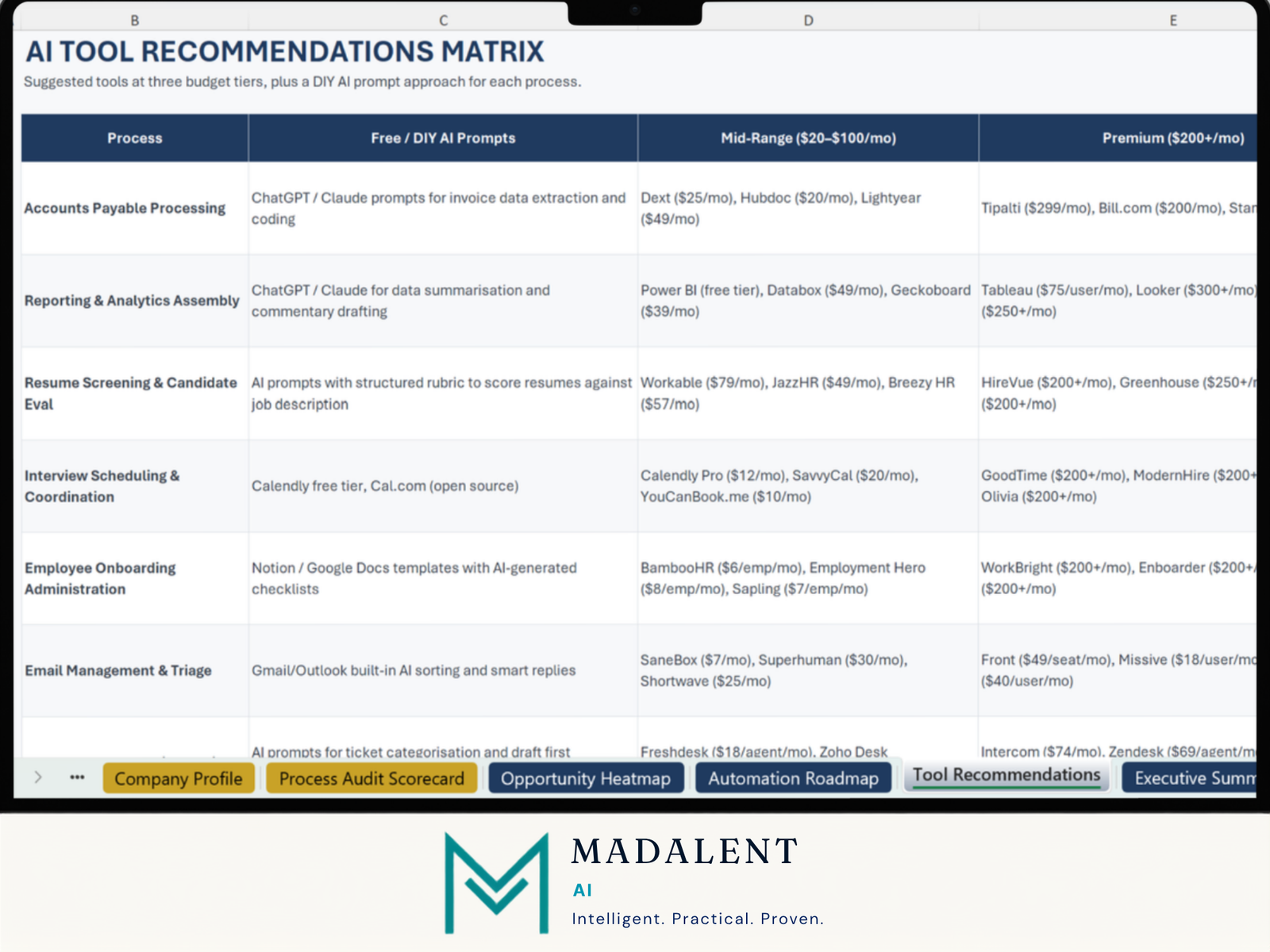
- AI Tool Recommendations Matrix — Free / Mid / Premium tool tiers per process
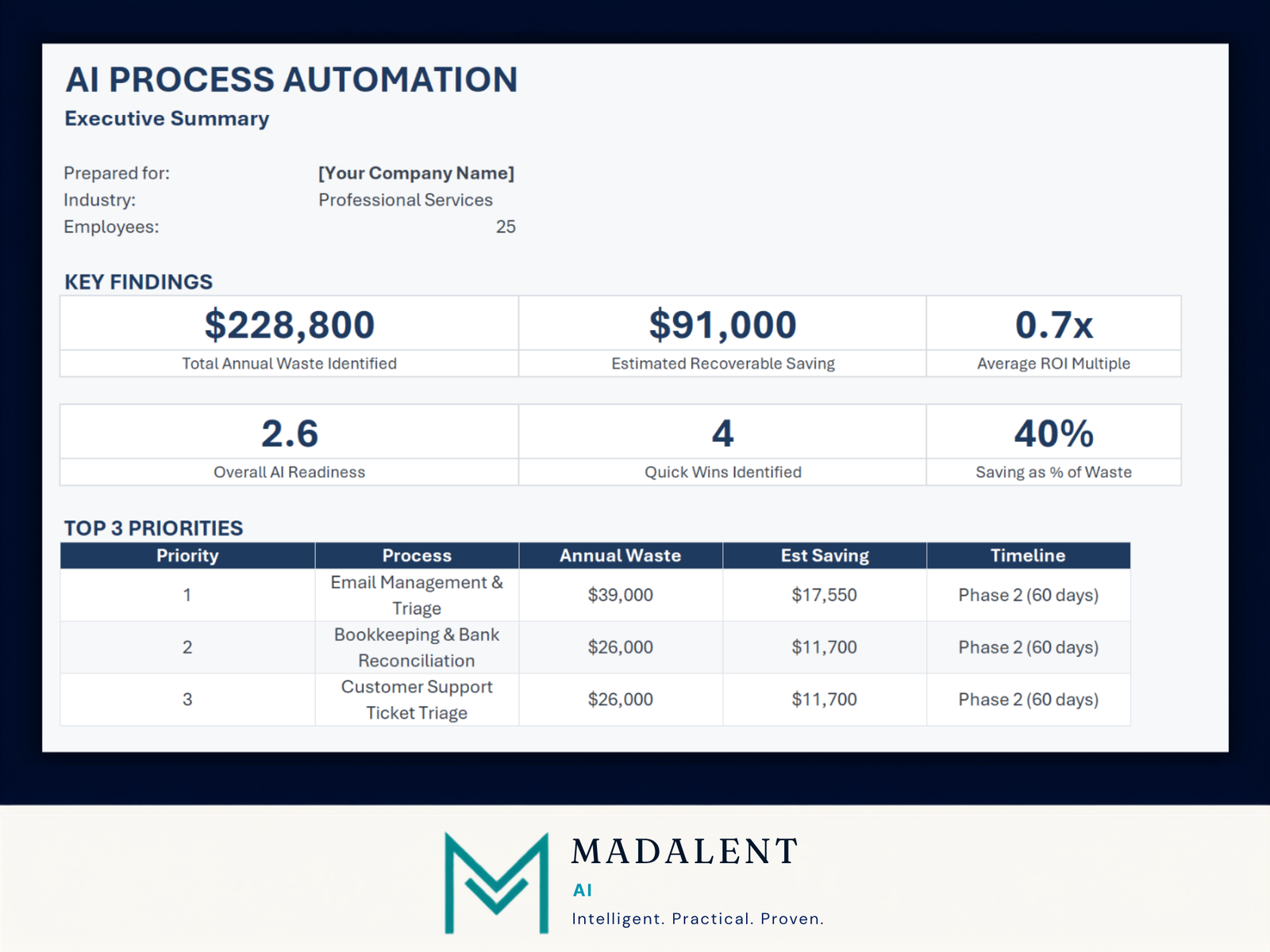
- Executive Summary — auto-generated, board-ready one-pager
How the AI Process Automation Assessment Tool works
You start by entering basic company details — headcount, industry, and your average fully-loaded hourly cost. From there, you work through the 12 built-in process categories (things like invoicing, scheduling, reporting, and customer follow-up) and answer a short set of diagnostic questions for each. The workbook does the rest: it converts your answers into a waste score and an AI-readiness score per process, plots them on the Opportunity Heatmap so you can see at a glance where the quick wins sit, and generates a ranked roadmap with estimated dollar savings and a suggested implementation order.
Who it’s for
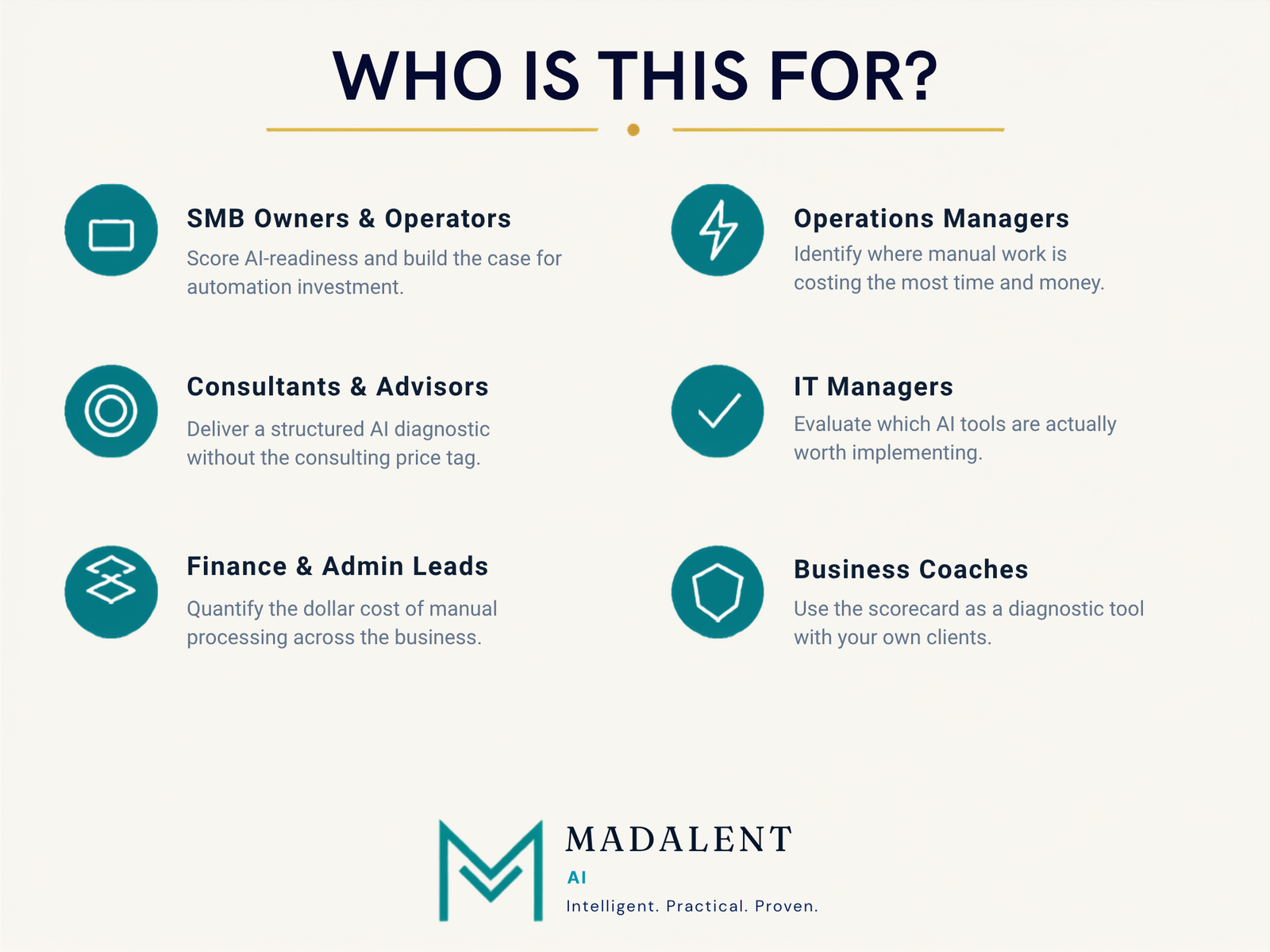
SMB owners and operations managers building the case for AI automation investment; consultants and advisors delivering a structured diagnostic to clients; anyone who wants a data-backed answer to “where should we automate first?”
Frequently asked questions
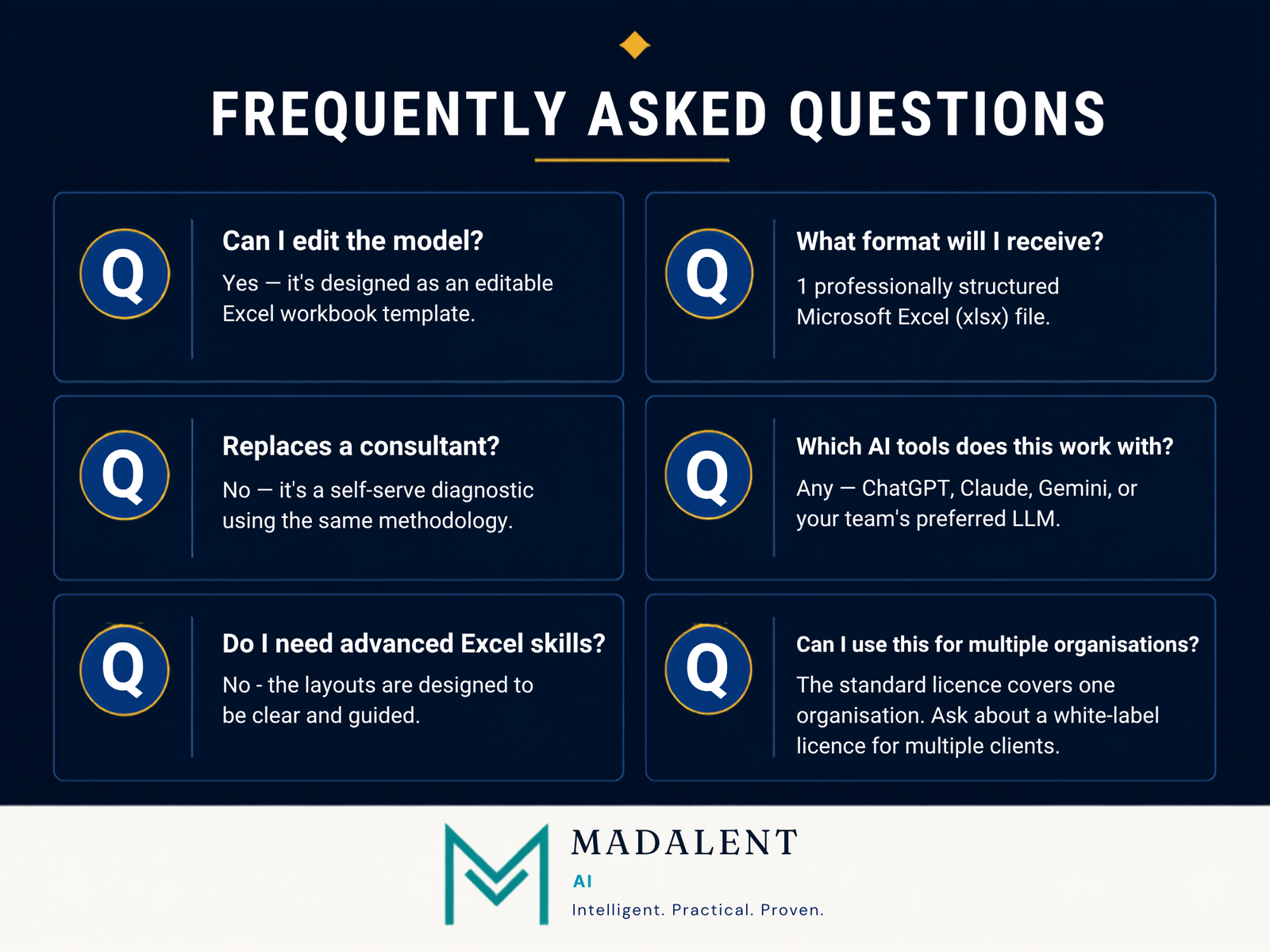
Do I need any AI or automation experience to use this?
No. The AI Process Automation Assessment Tool is built for business owners and operators, not technologists — every input is a plain-language question, and the scoring logic runs automatically in the background.
Which processes does the assessment cover?
The 12 categories span the highest-waste areas most SMBs and mid-sized teams deal with day to day, from admin and reporting through to customer-facing workflows — see the Process Audit Scorecard tab for the full list once downloaded.
Instant digital download. Fully editable Excel workbook (.xlsx) — add your logo, company name, and customise every section. Looking for the next step after the assessment? Browse the rest of the Madalent AI toolkit for implementation-stage resources.
Why an assessment tool instead of a consultant
A traditional AI automation assessment involves scoping calls, weeks of stakeholder interviews, and a five-figure invoice before you see a single recommendation. This tool compresses that process into a single sitting. You get the same structured methodology — process-by-process scoring, waste quantification, and a prioritised roadmap — without the lead time or the retainer. It won’t replace a consultant for complex, multi-site transformation programs, but for the “where do we even start” question most growing businesses are stuck on, it gets you a defensible, board-ready answer today.
Related toolkits: once you know where to automate first, log the AI tools you adopt in the AI system inventory template so governance keeps pace with rollout. Once you’ve prioritised your roadmap, the AI Automation Bundle pairs this assessment with a step-by-step implementation playbook. If any of these processes touch EU users — a chatbot, AI-generated marketing content, or automated decisions — the EU AI Act Article 50 Transparency Compliance Toolkit covers the disclosure obligations that come with automating them.