Description
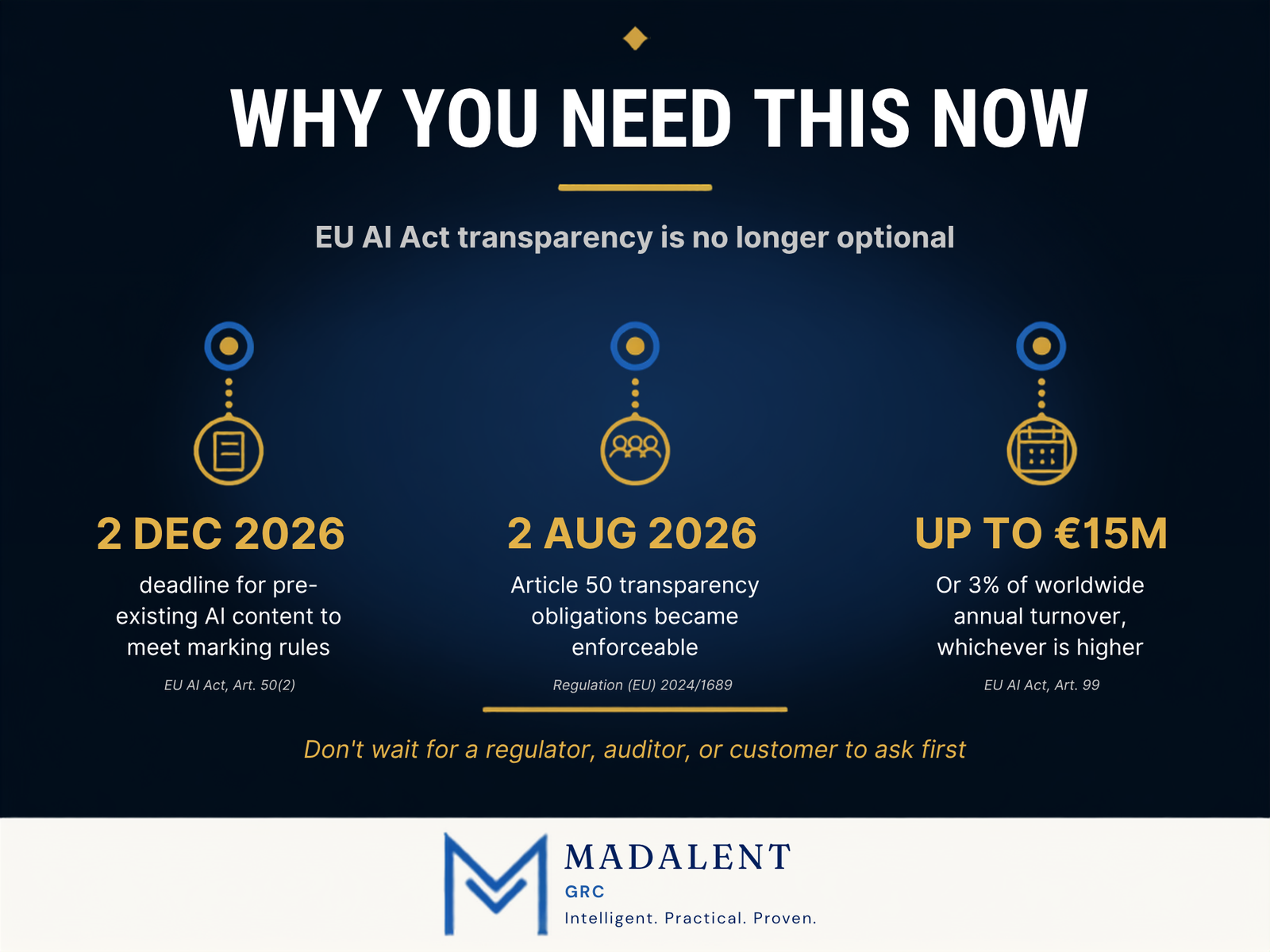
EU AI Act Article 50 compliance became mandatory on 2 August 2026, with fines of up to €15 million or 3% of worldwide annual turnover for organisations that fail to meet its transparency obligations. The rule applies to any organisation — UK, US, Australian or otherwise — that places an AI system on the EU market, or whose AI system outputs are used by or affect people located in the EU. If your chatbot talks to customers, your marketing team generates AI images, or you run sentiment analysis on calls, EU AI Act Article 50 compliance already applies to your organisation.
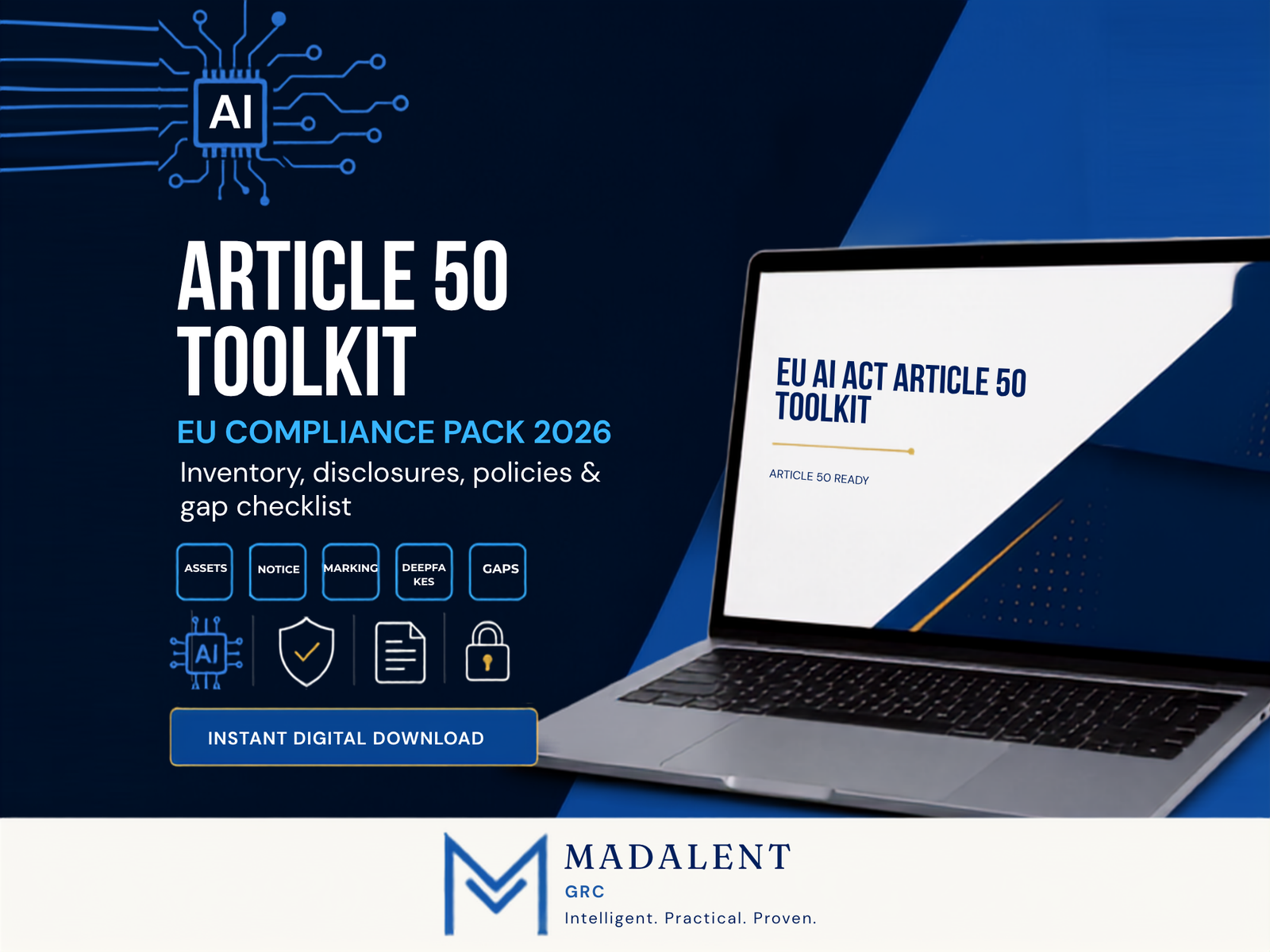
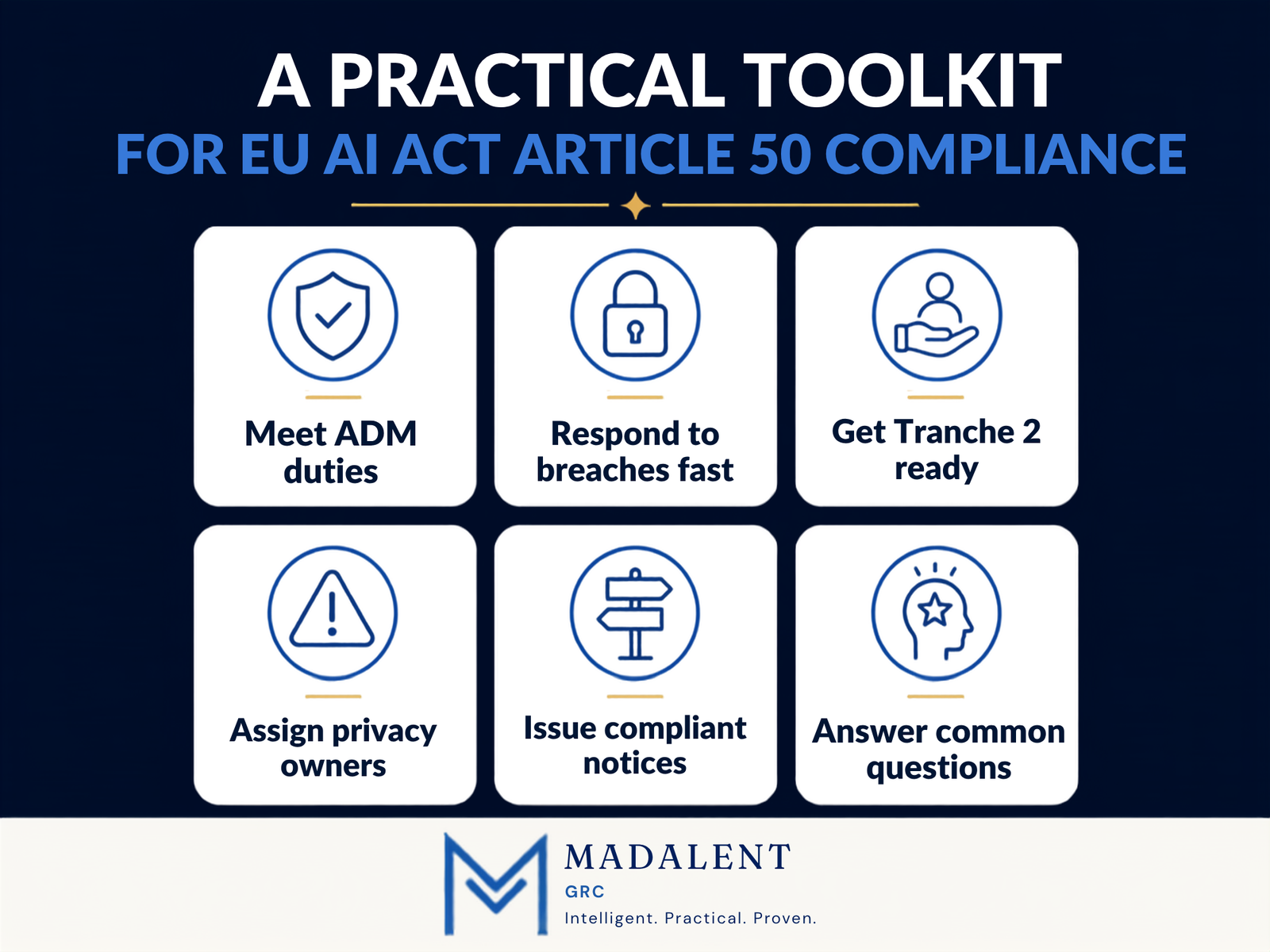
This toolkit gives you everything needed to assess, disclose, and document EU AI Act Article 50 compliance: an AI system inventory that auto-classifies which obligation applies to each system, six ready-to-adapt disclosure templates, two governance policies, and a 24-point compliance gap assessment cross-referenced to the EU Code of Practice on Transparency and the underlying Regulation (EU) 2024/1689.
Why EU AI Act Article 50 compliance matters right now
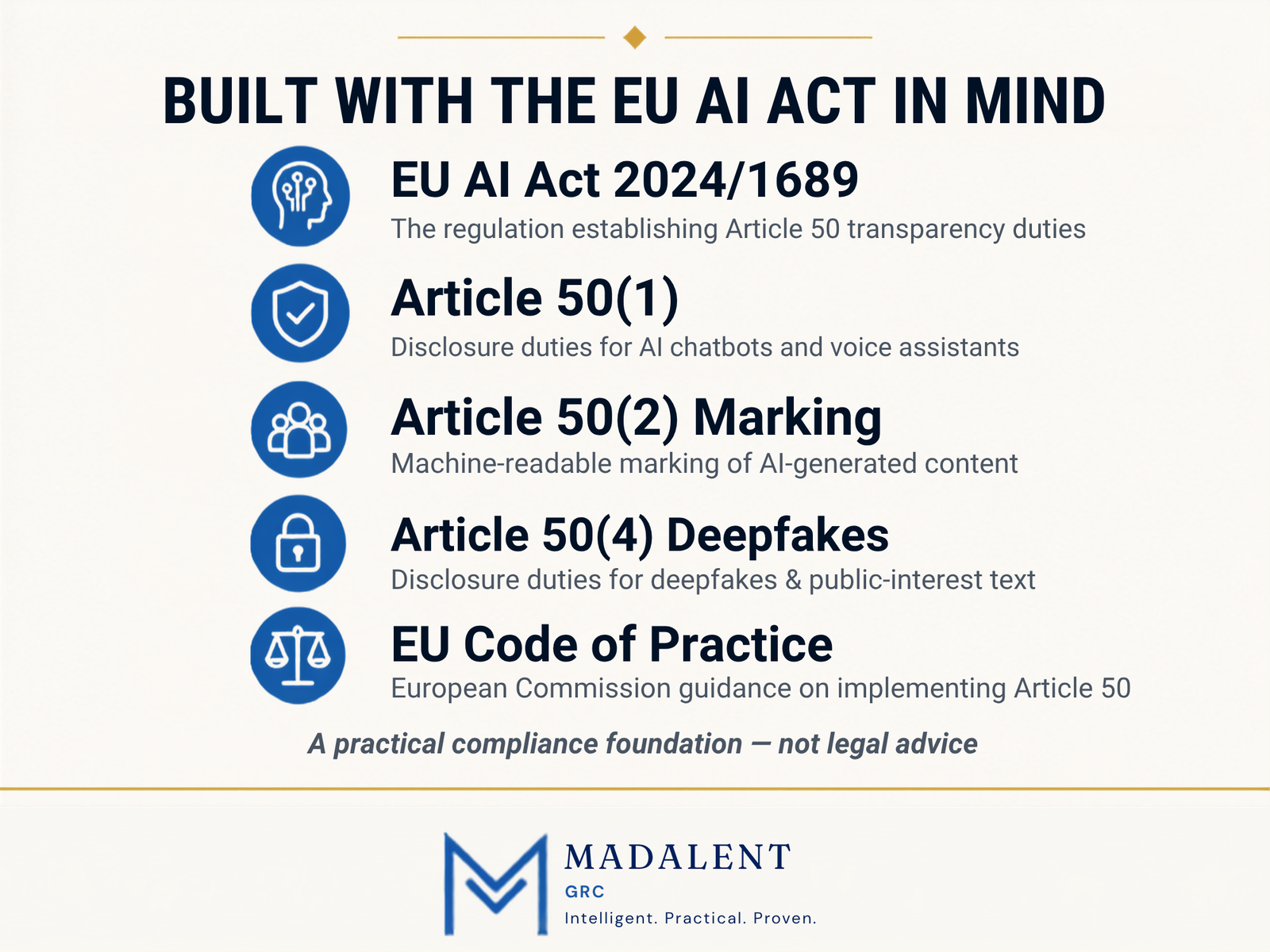
Article 50 sets out four distinct transparency obligations, and most organisations are only compliant with, at best, one of them: disclosing AI interaction in chatbots and voice assistants, marking AI-generated content with visible labels and machine-readable metadata, disclosing emotion recognition and biometric categorisation systems, and disclosing deepfakes or AI-generated public-interest text. Pre-existing AI content still in circulation has until 2 December 2026 to be brought into line with the content-marking rule — a second, narrower deadline that is easy to miss if the first one has already passed you by.
The obligations sit across departments: marketing typically owns the content-marking piece, product or IT owns the chatbot disclosure, HR may own workplace AI notifications, and legal owns any exemption assessments. Without one shared reference point, it is easy for each team to assume someone else has it covered — which is usually how a compliance gap surfaces during an audit, not before one.
What’s included
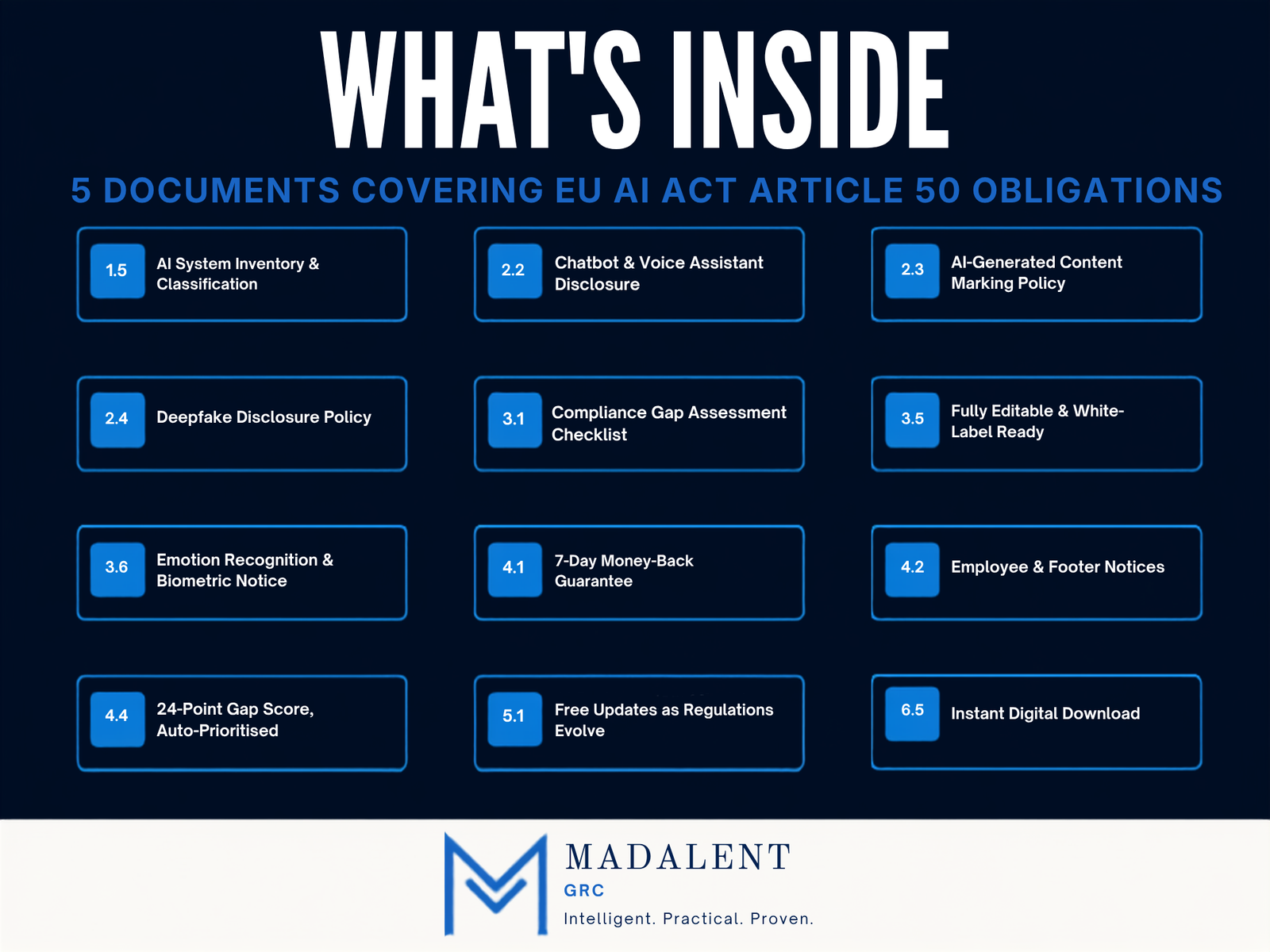
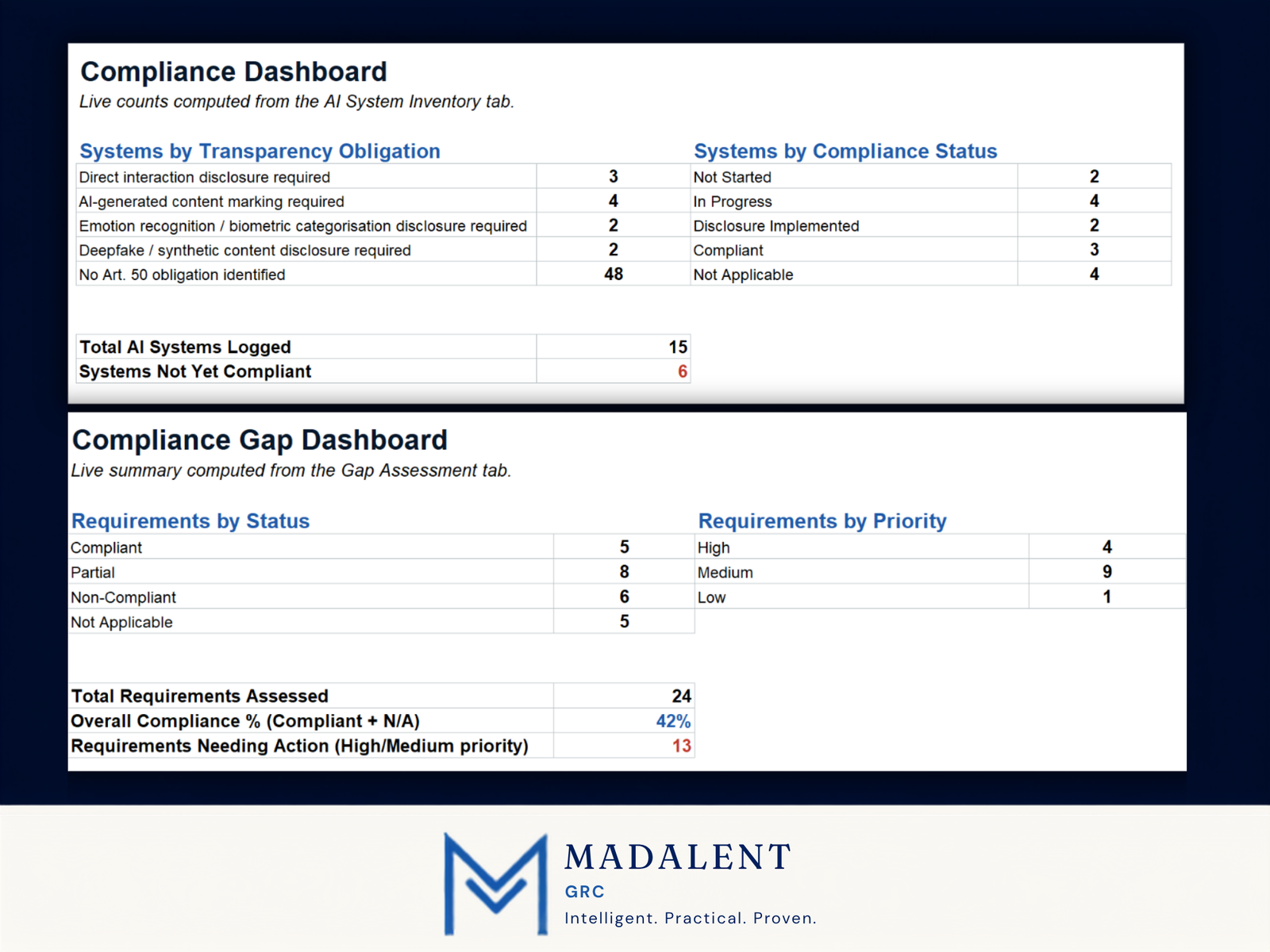
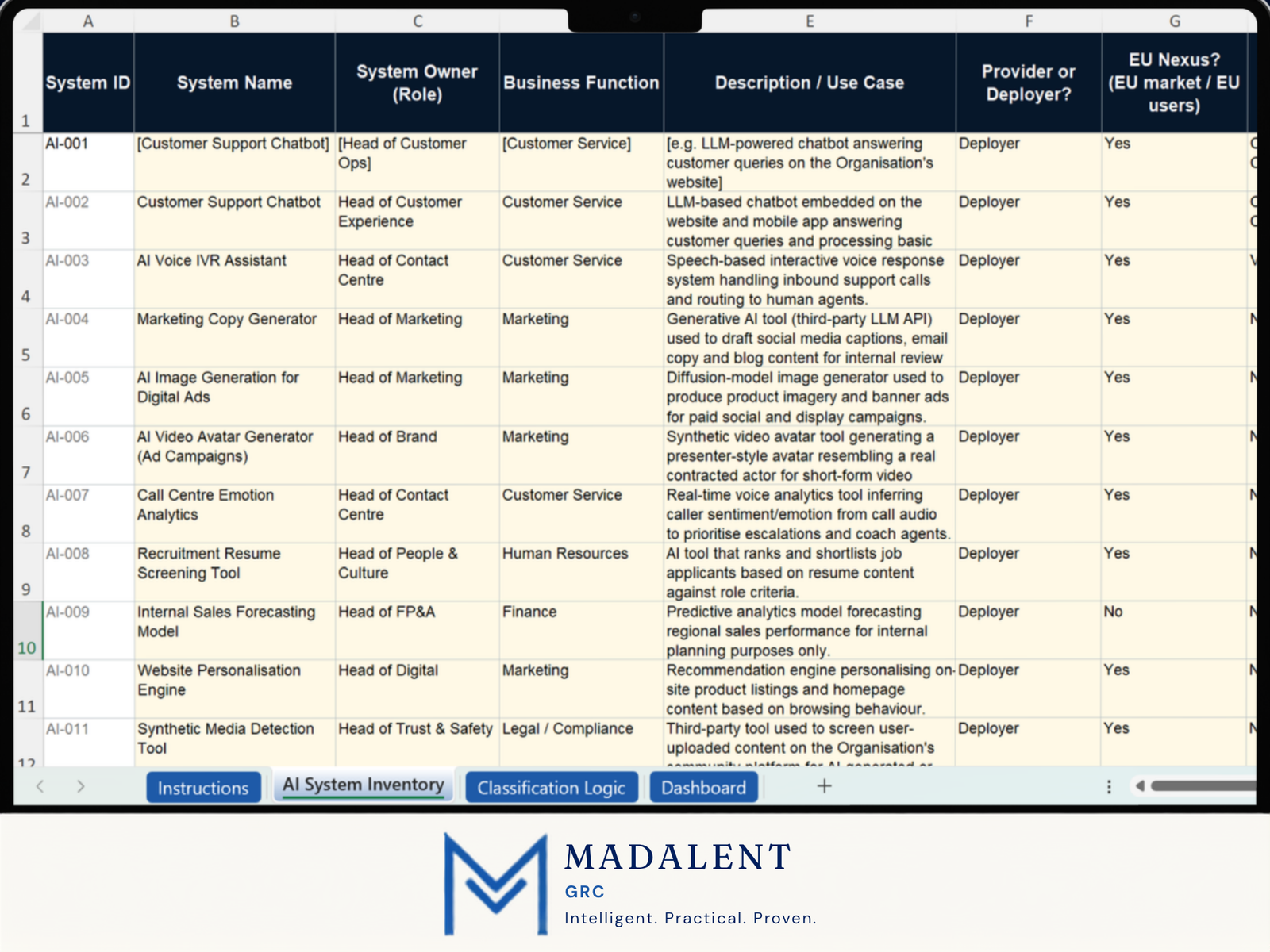
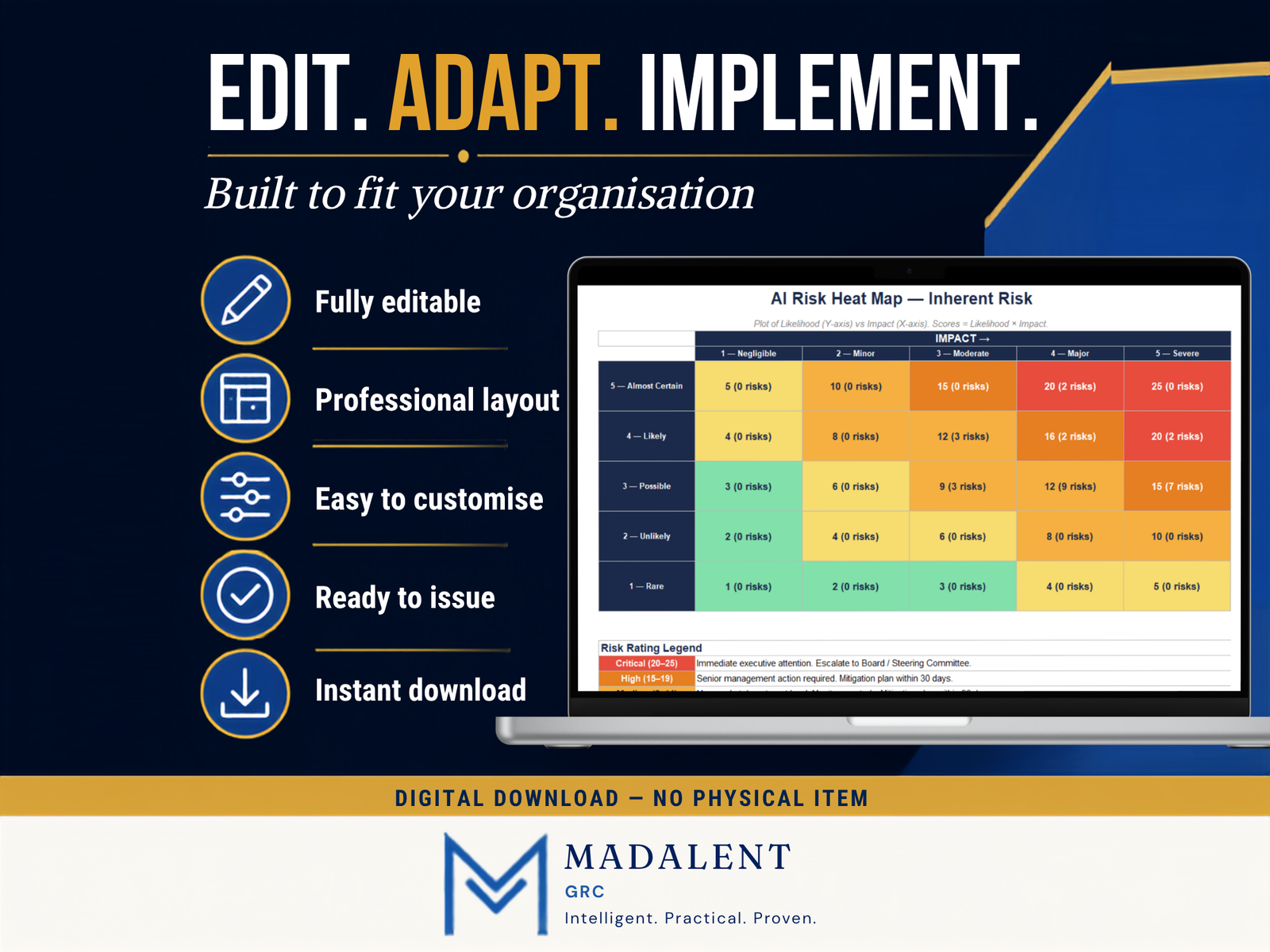
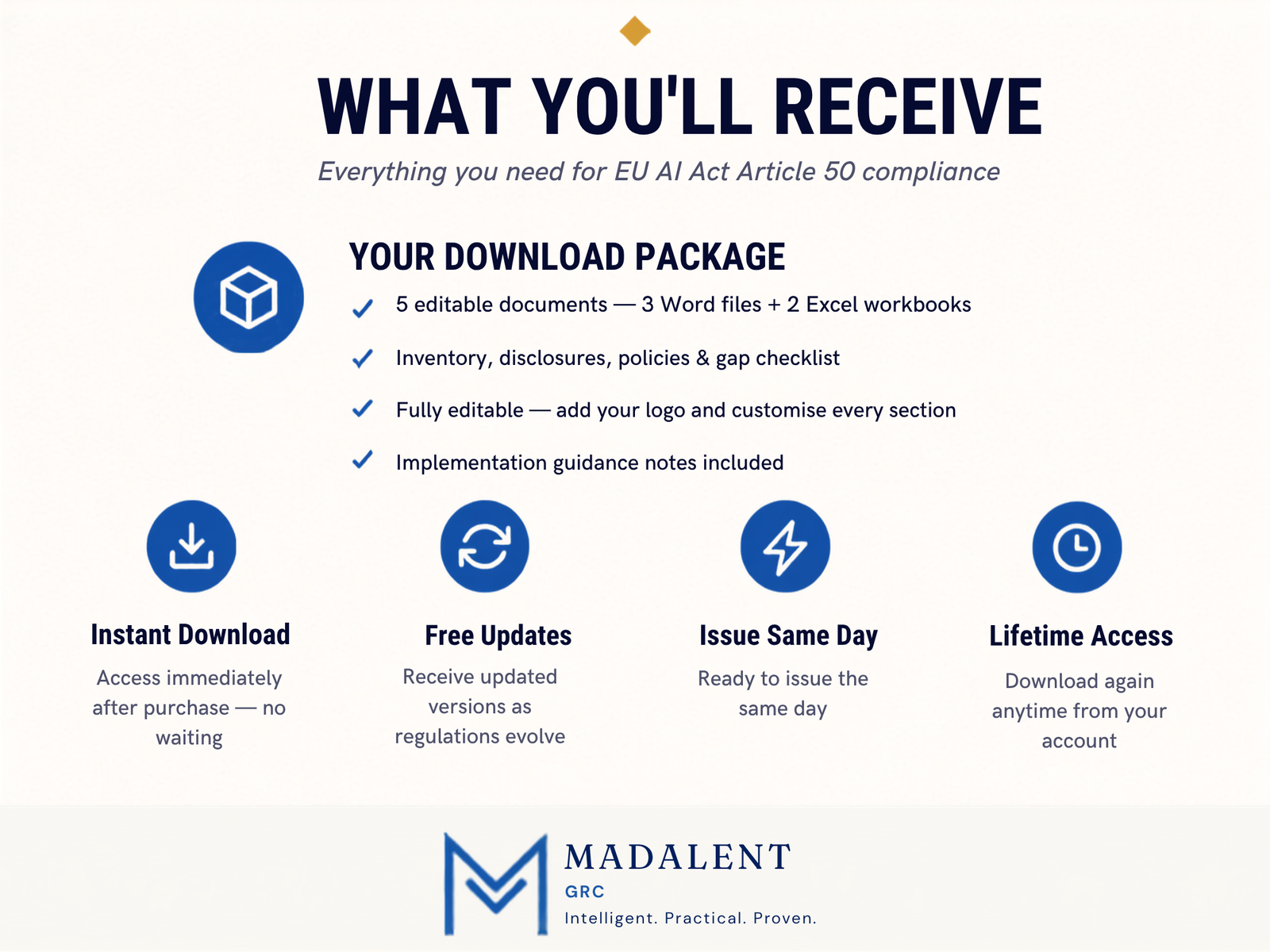
- AI System Inventory & Classification Template (Excel) — logs every AI system in use, auto-classifies which Article 50 sub-article applies, and tracks compliance status on a live dashboard
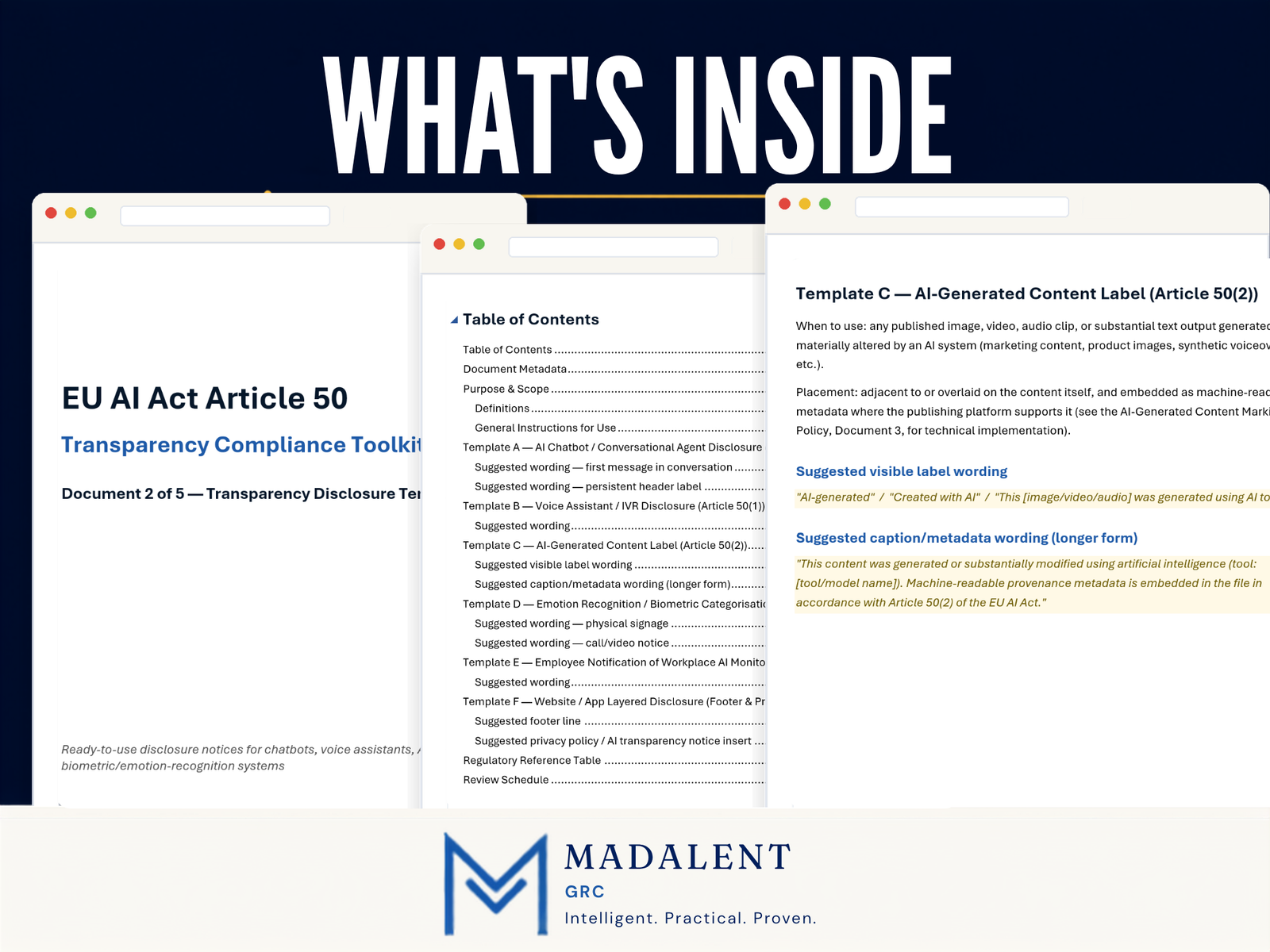
- Transparency Disclosure Templates (Word) — six ready-to-use notices: chatbot/conversational agent, voice assistant/IVR, AI-generated content label, emotion recognition/biometric categorisation, employee notification, and website footer disclosure
- AI-Generated Content Marking Policy (Word) — governs machine-readable marking and visible labelling of AI-generated content under Article 50(2)
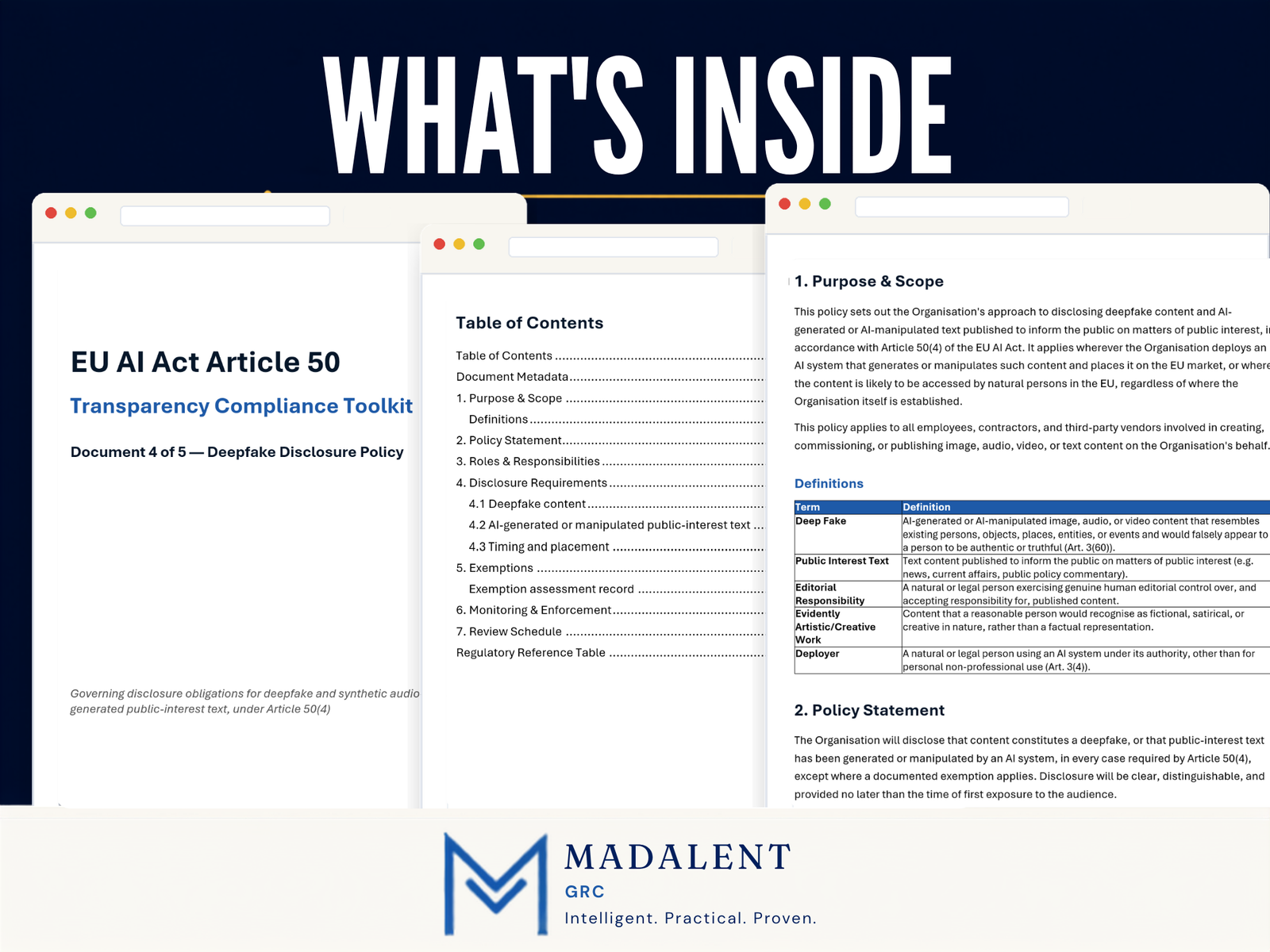
- Deepfake Disclosure Policy (Word) — governs disclosure of deepfake content and AI-generated public-interest text under Article 50(4), including a documented exemption-assessment process
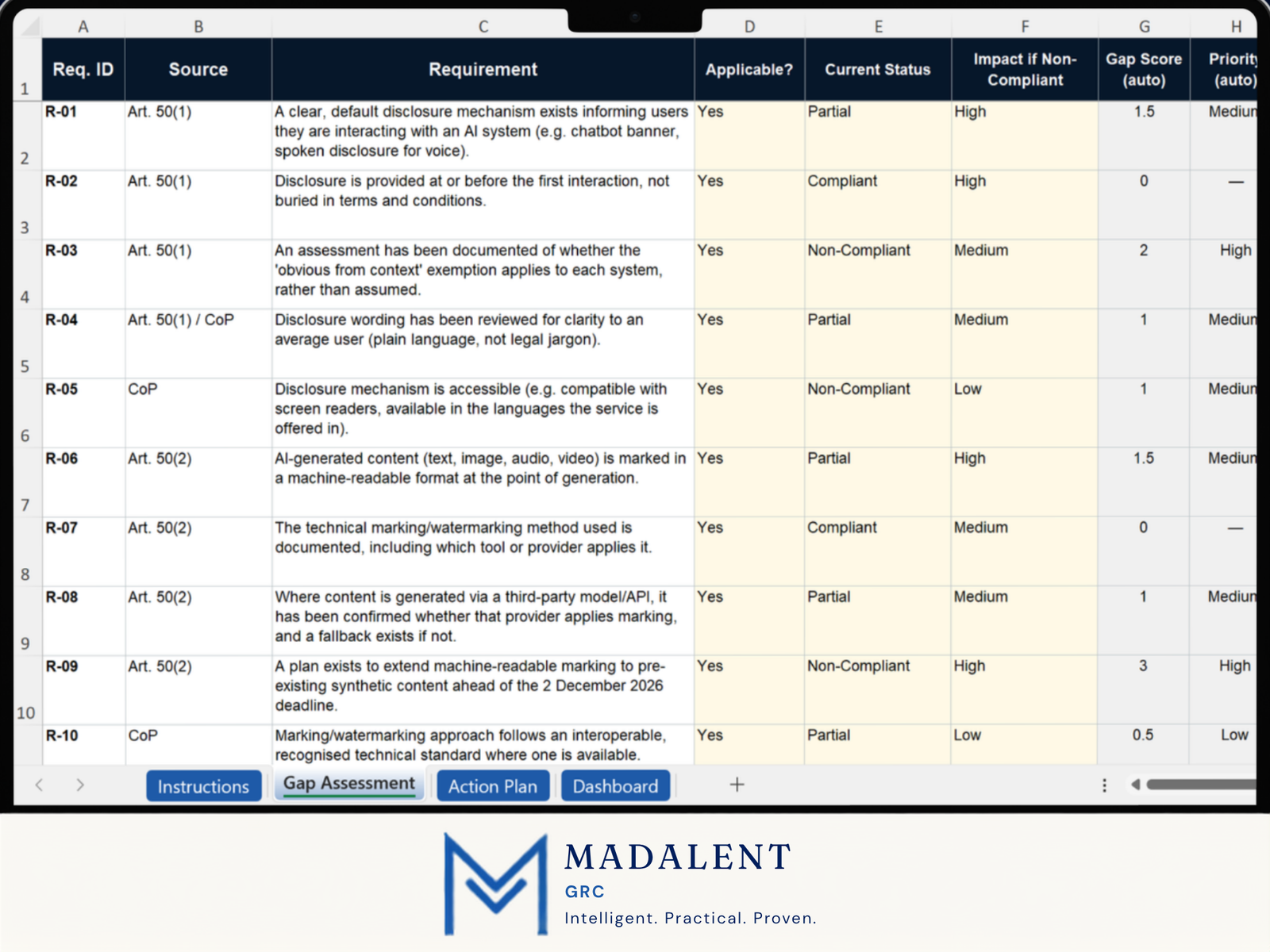
- Compliance Gap Assessment Checklist (Excel) — 24 requirements cross-referenced to Article 50 and the EU Code of Practice on Transparency, with auto-scored priority and a linked action plan tracker
Who it’s for
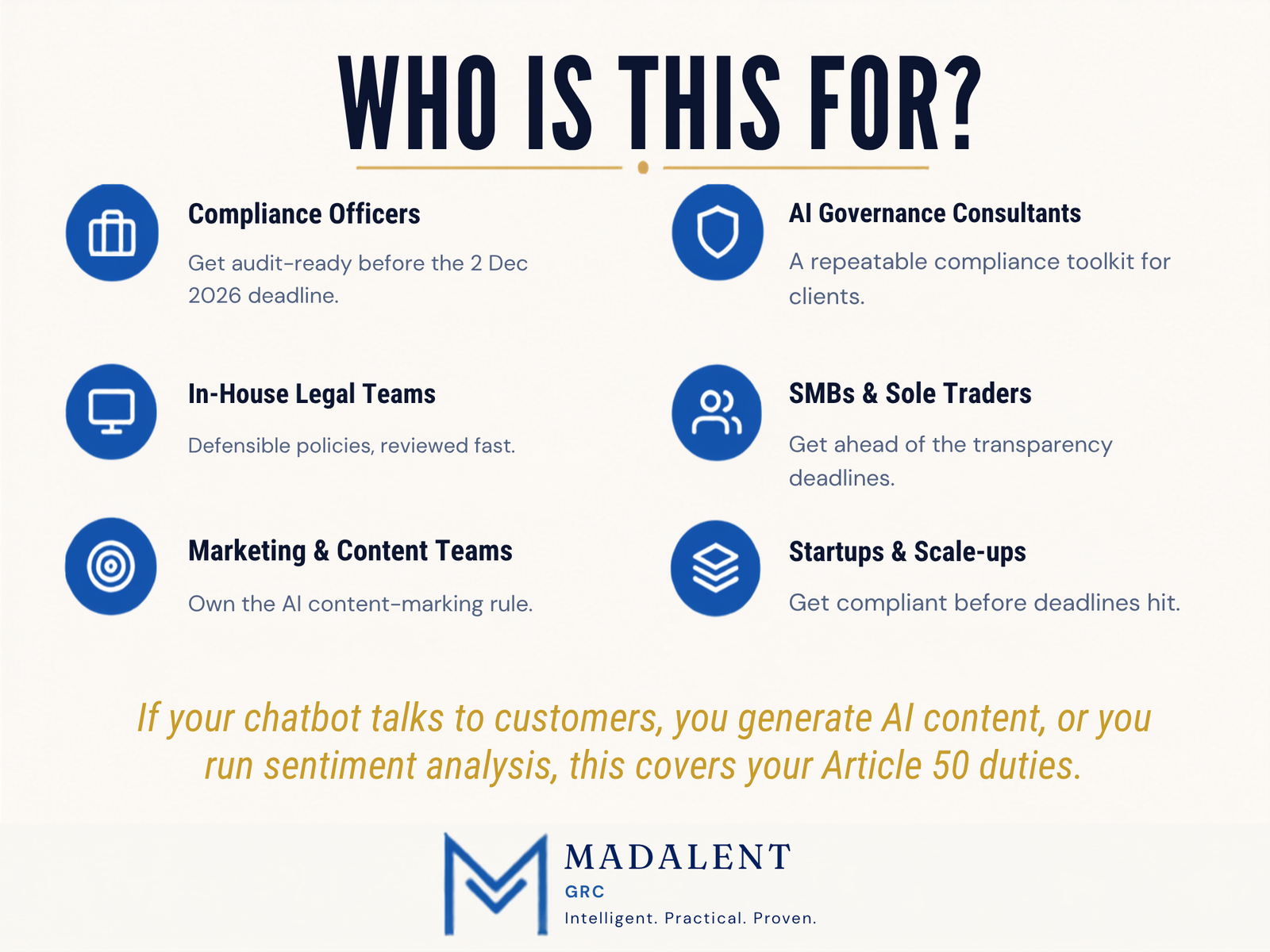
Compliance officers, Data Protection Officers, and AI Governance Leads at SMB organisations that provide or deploy AI systems reaching EU users need EU AI Act Article 50 compliance evidence they can produce on demand — whether or not the organisation itself is based in the EU. This toolkit pairs naturally with our AI Governance Framework and AI Process Automation Assessment Tool for organisations building a fuller AI governance programme.
Where to start
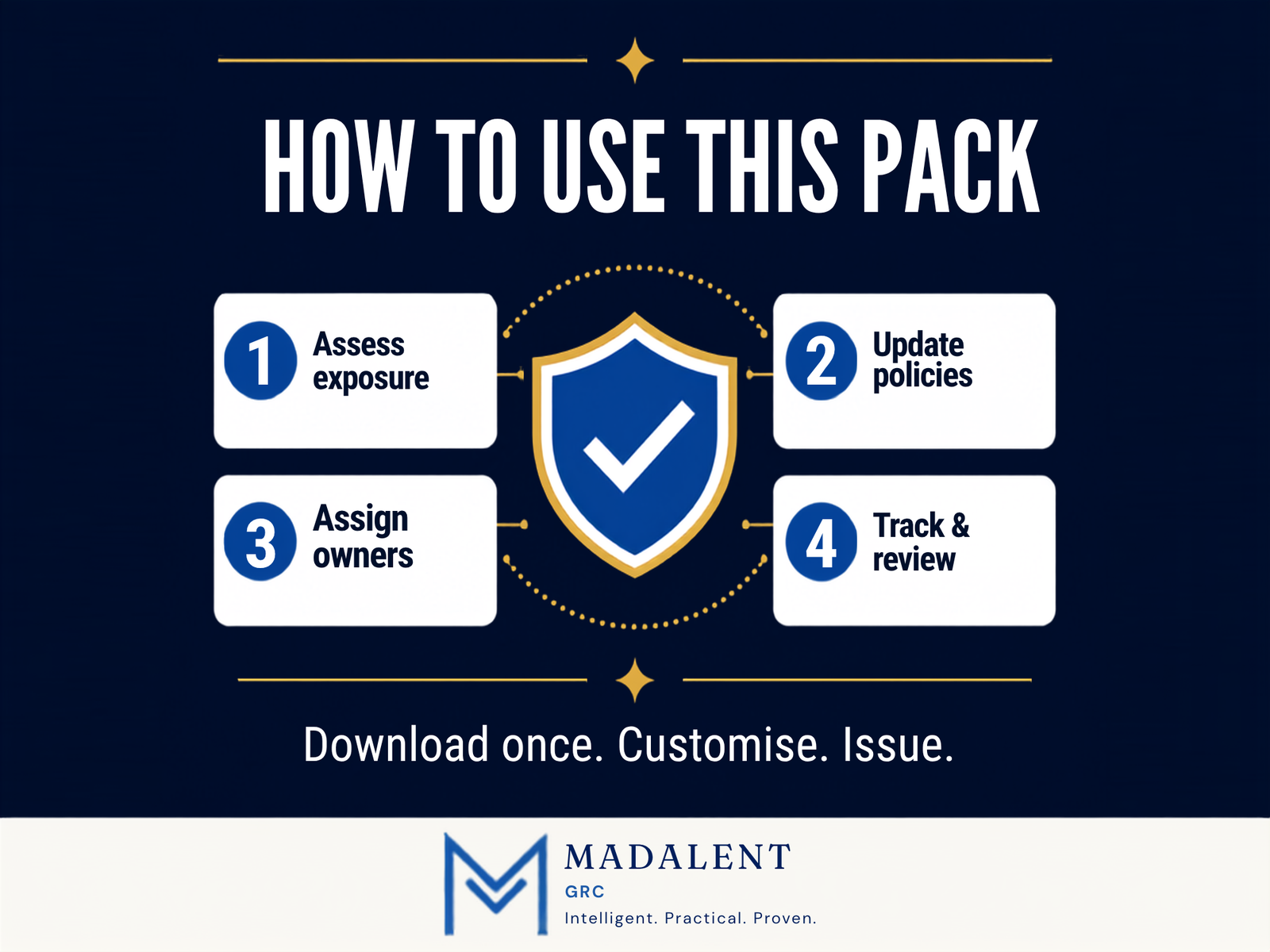
If you are not sure how exposed your organisation is, start with the inventory. Fifteen minutes logging your AI systems against the built-in classification logic will tell you, concretely, whether EU AI Act Article 50 compliance means one disclosure update or a genuine gap-remediation project — before a regulator, auditor, or customer asks first. Regulators across the EU have signalled that early enforcement will focus on organisations with no documented compliance process at all, rather than minor wording issues in an existing disclosure — so having the inventory and gap assessment in place matters more than getting every sentence perfect on day one.
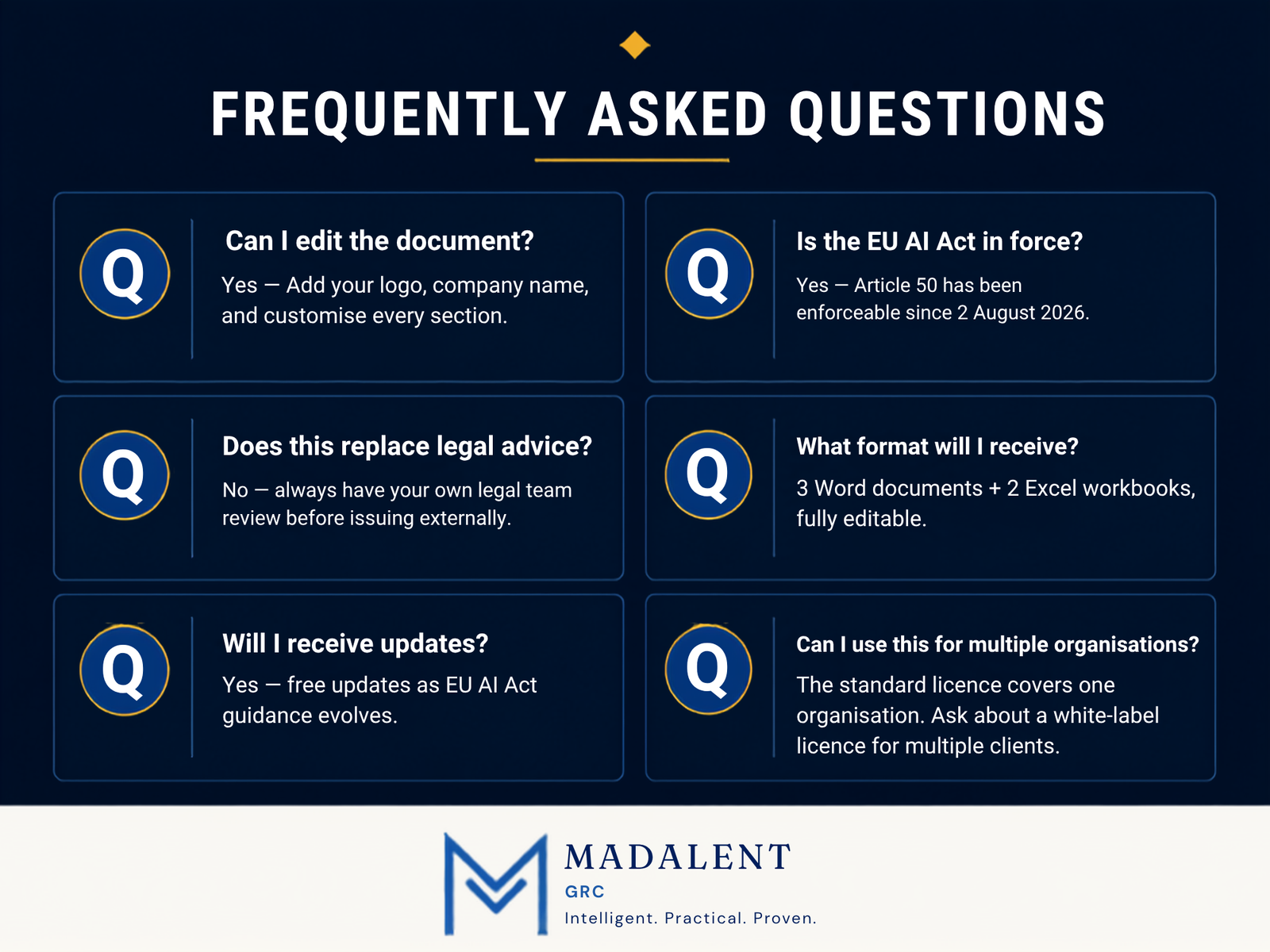
Instant digital download. White-label and fully editable — insert your own branding and adapt every template to your organisation.
Further reading: our guide on what EU AI Act Article 50 actually requires, and the two deadlines that matter walks through the four transparency obligations in plain English before you dig into the templates.