Description
The Intellectual Property AI Policy sets out who owns what when staff use AI tools to generate content, code, or designs — and how to avoid feeding confidential IP into third-party AI models in the first place.
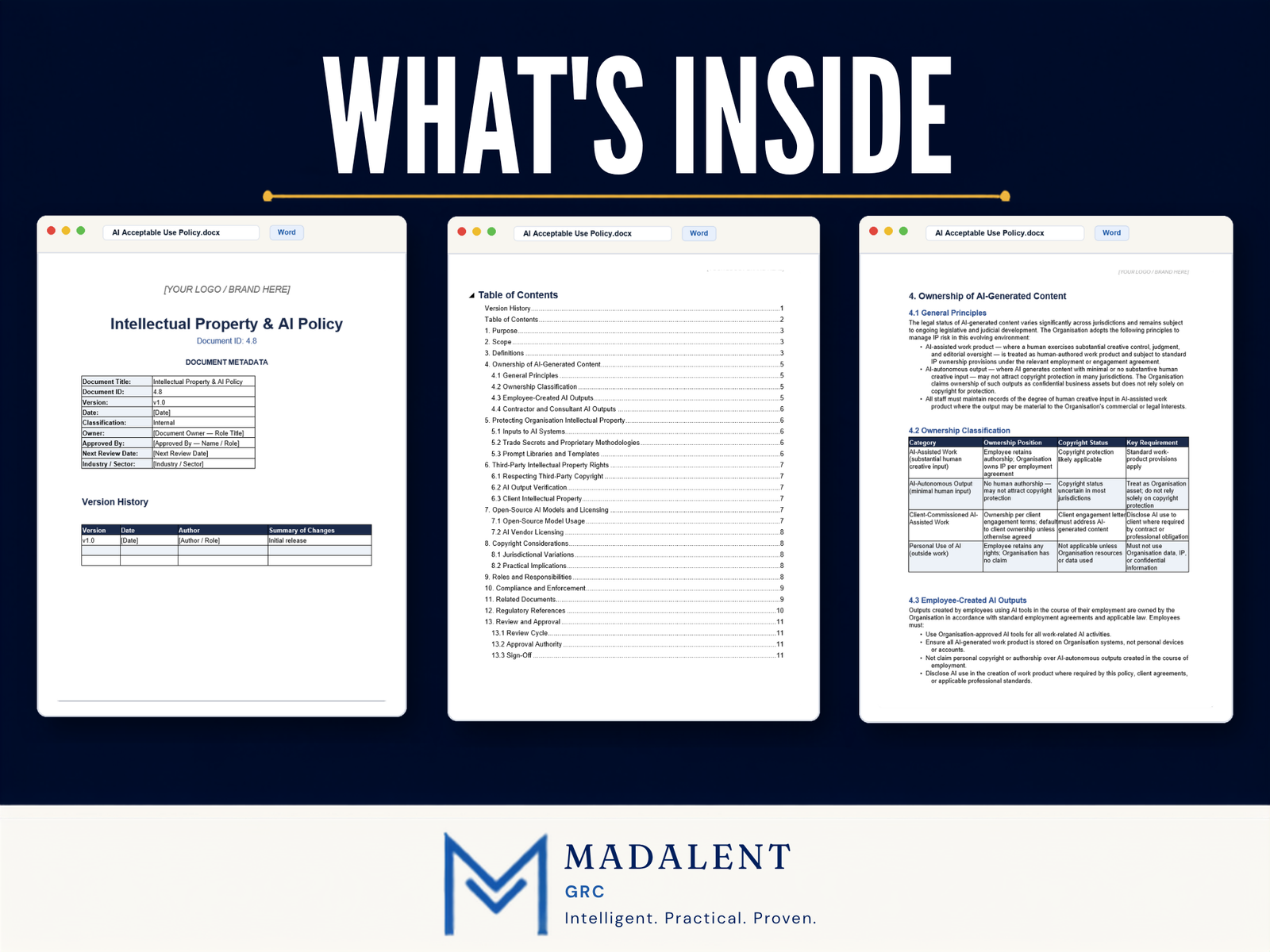
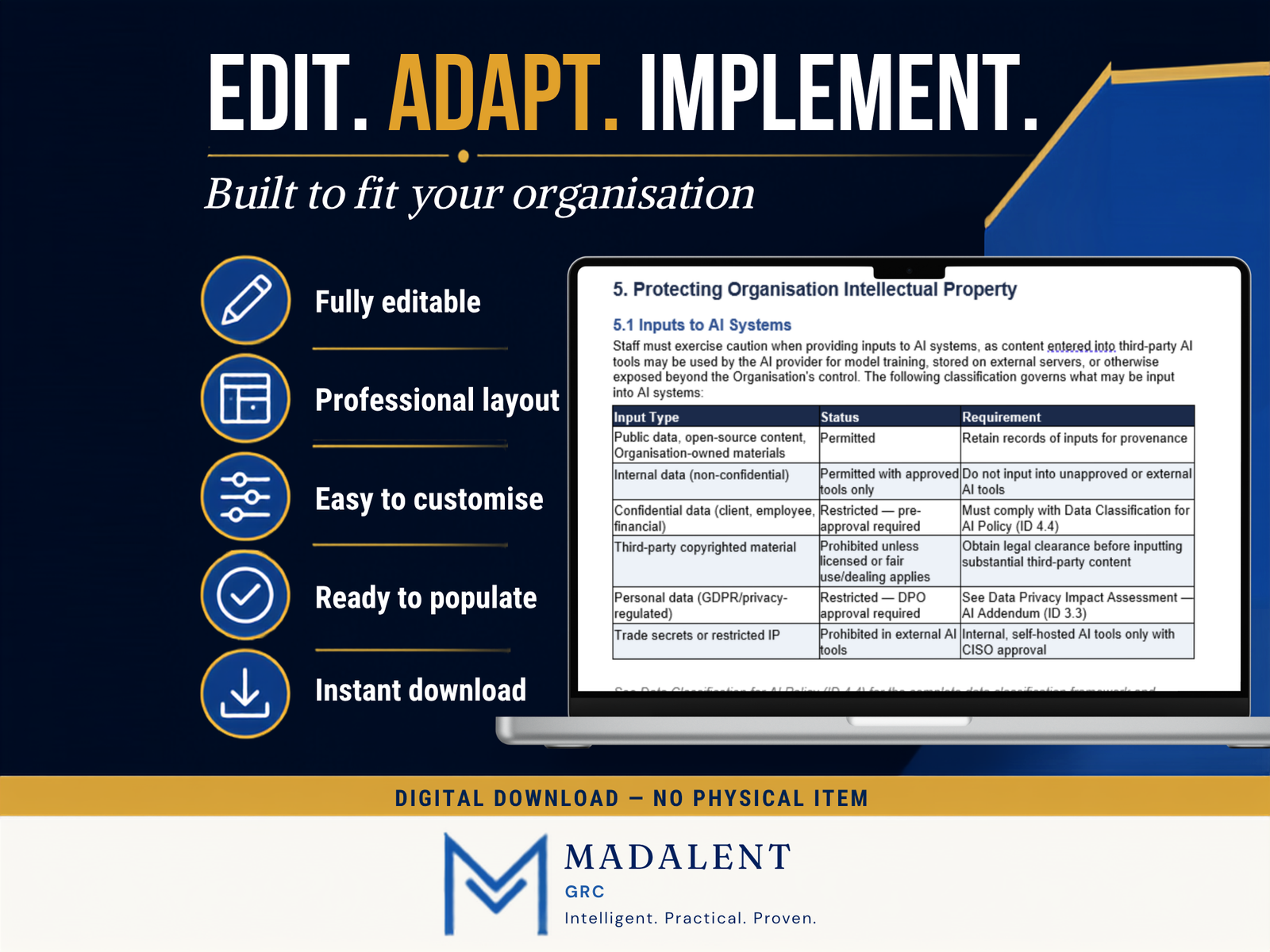
Built to the standard a Big-4 advisor would deliver, this editable Word document covers ownership of AI-assisted output, third-party IP infringement risk, and safe handling of proprietary material — complementing your AI Acceptable Use Policy with IP-specific detail.
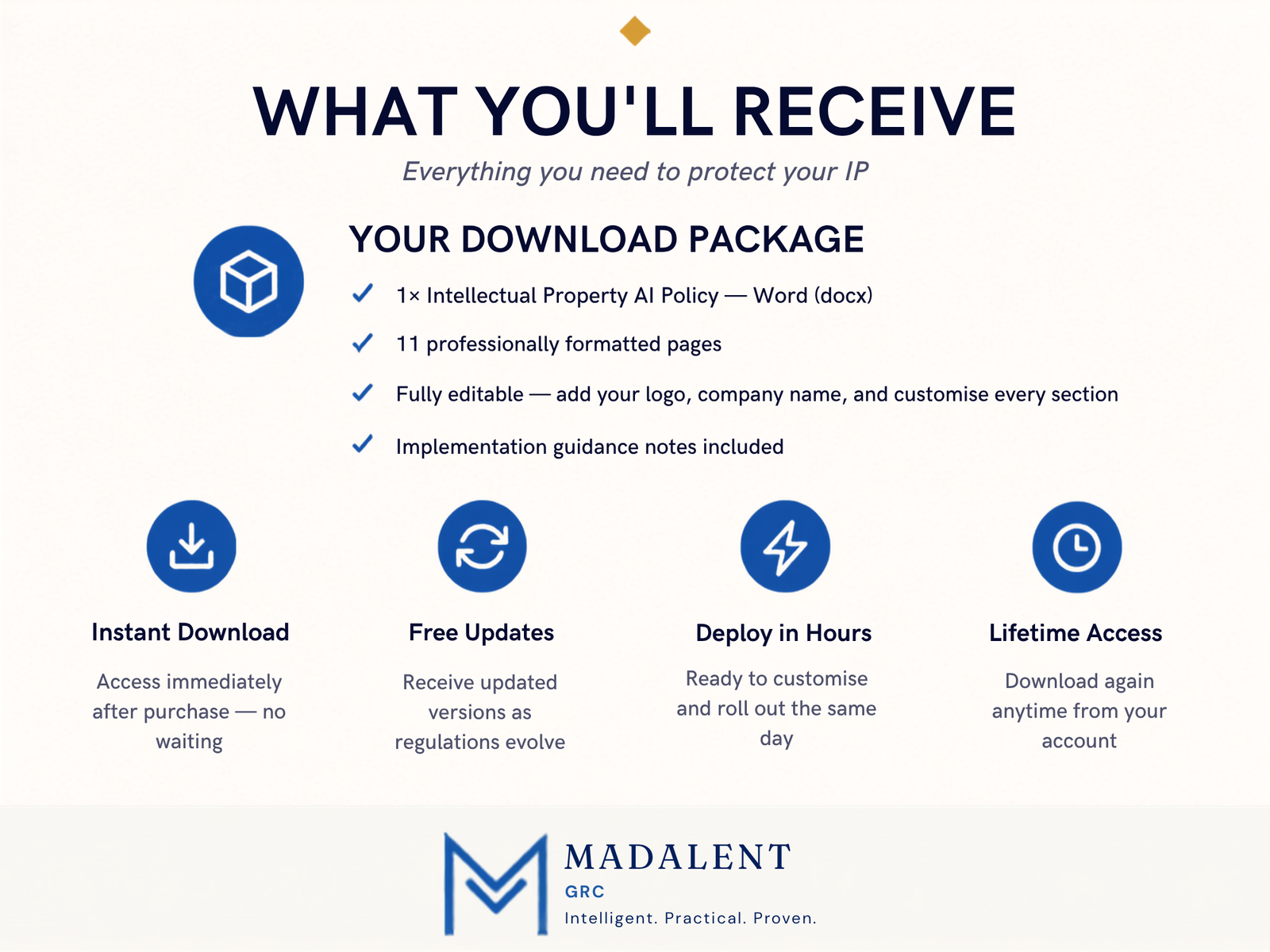
What’s included
- Fully editable Word document (.docx)
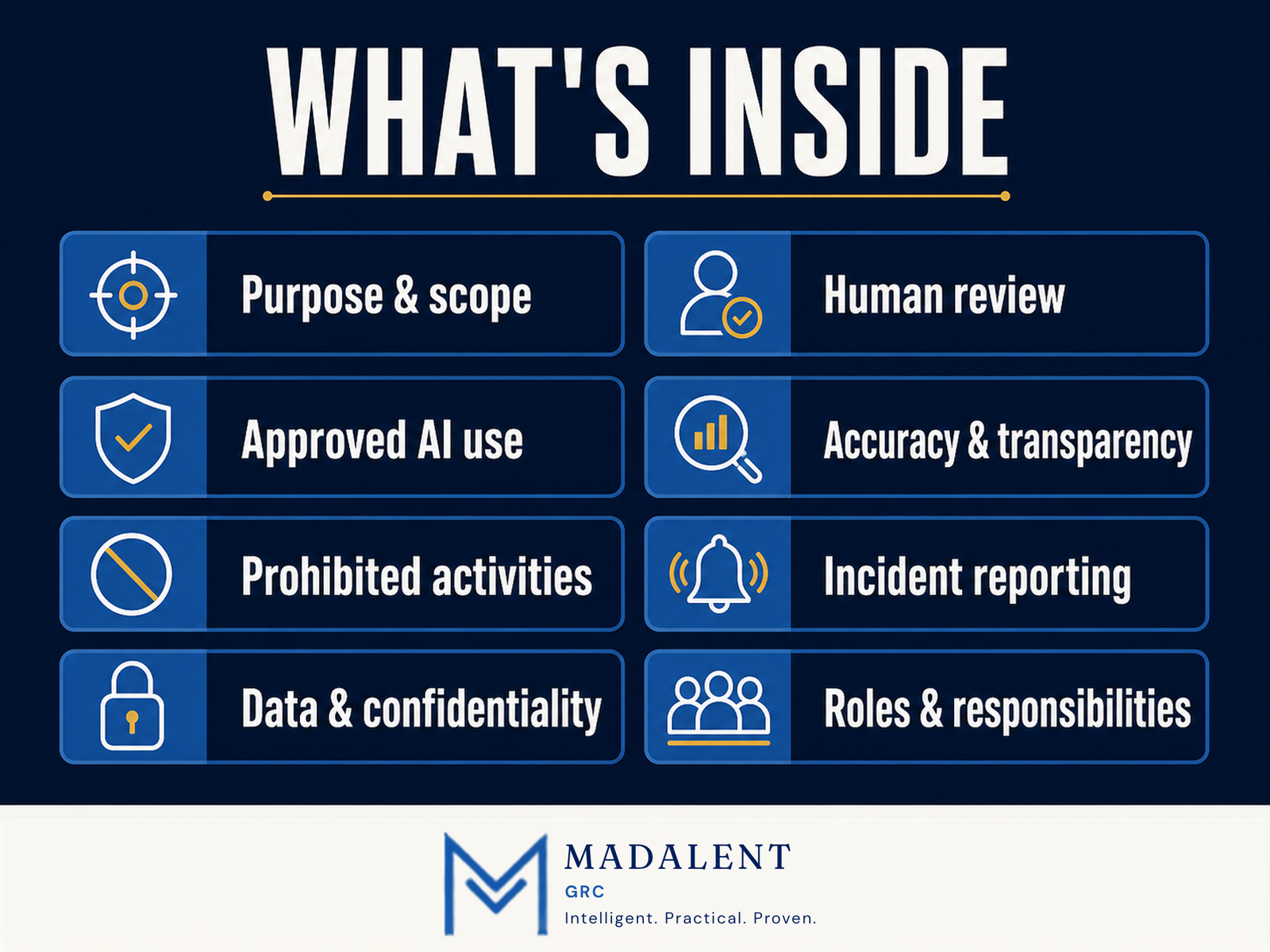
- Ownership rules for AI-generated content and code
- Guidance on avoiding third-party IP infringement and confidential data exposure
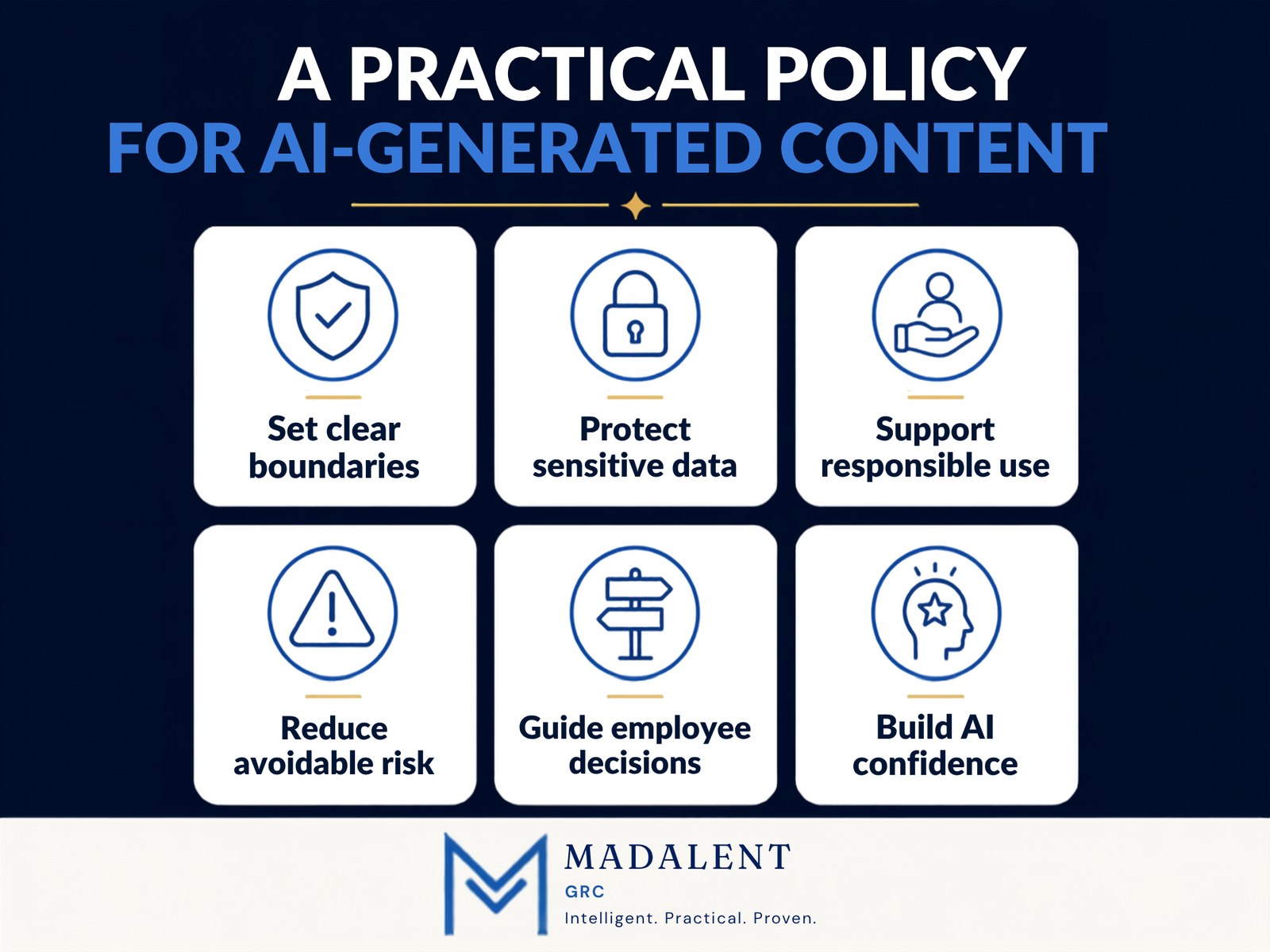
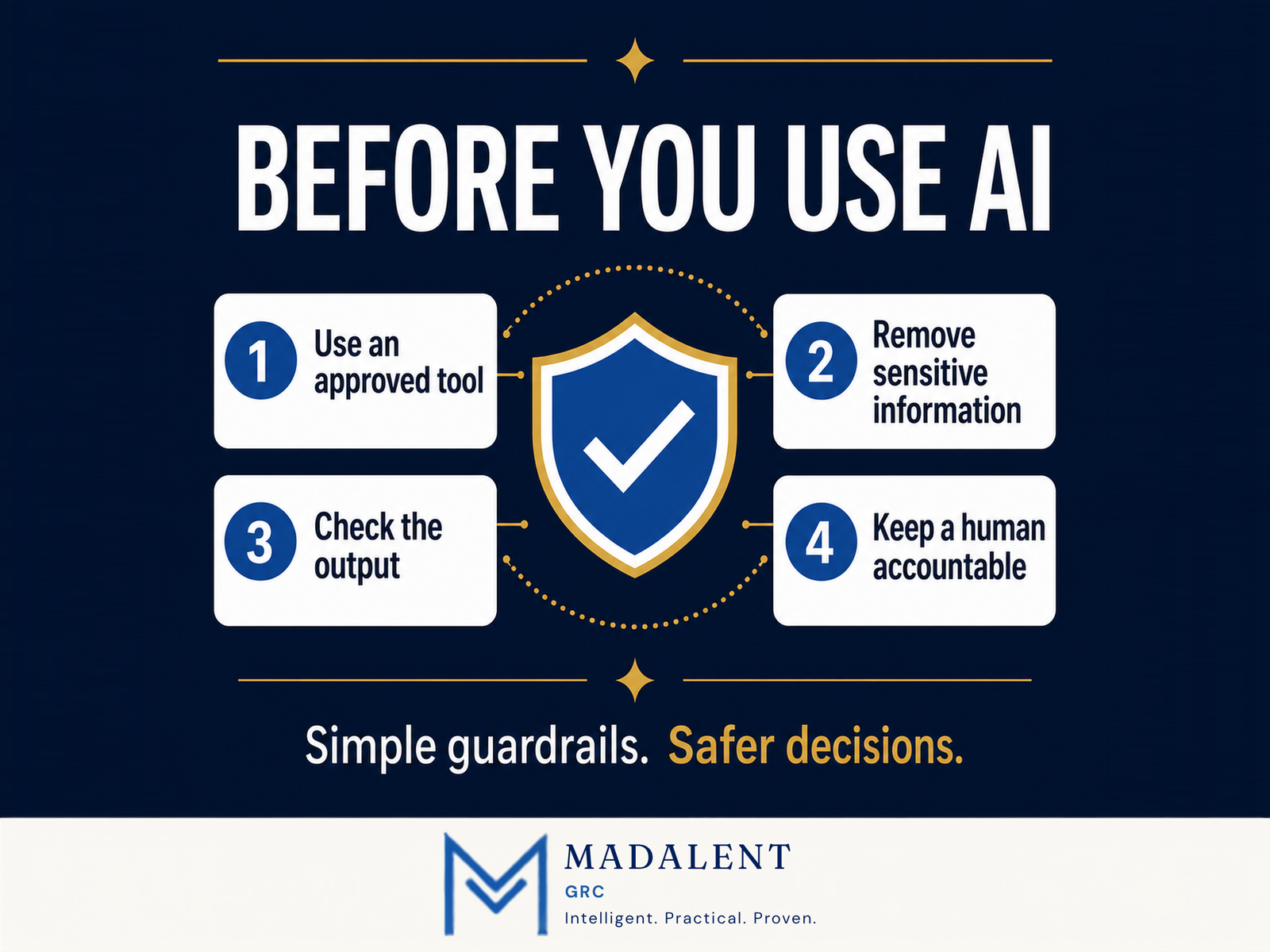
- Plain-English rules staff can actually follow
Who it’s for
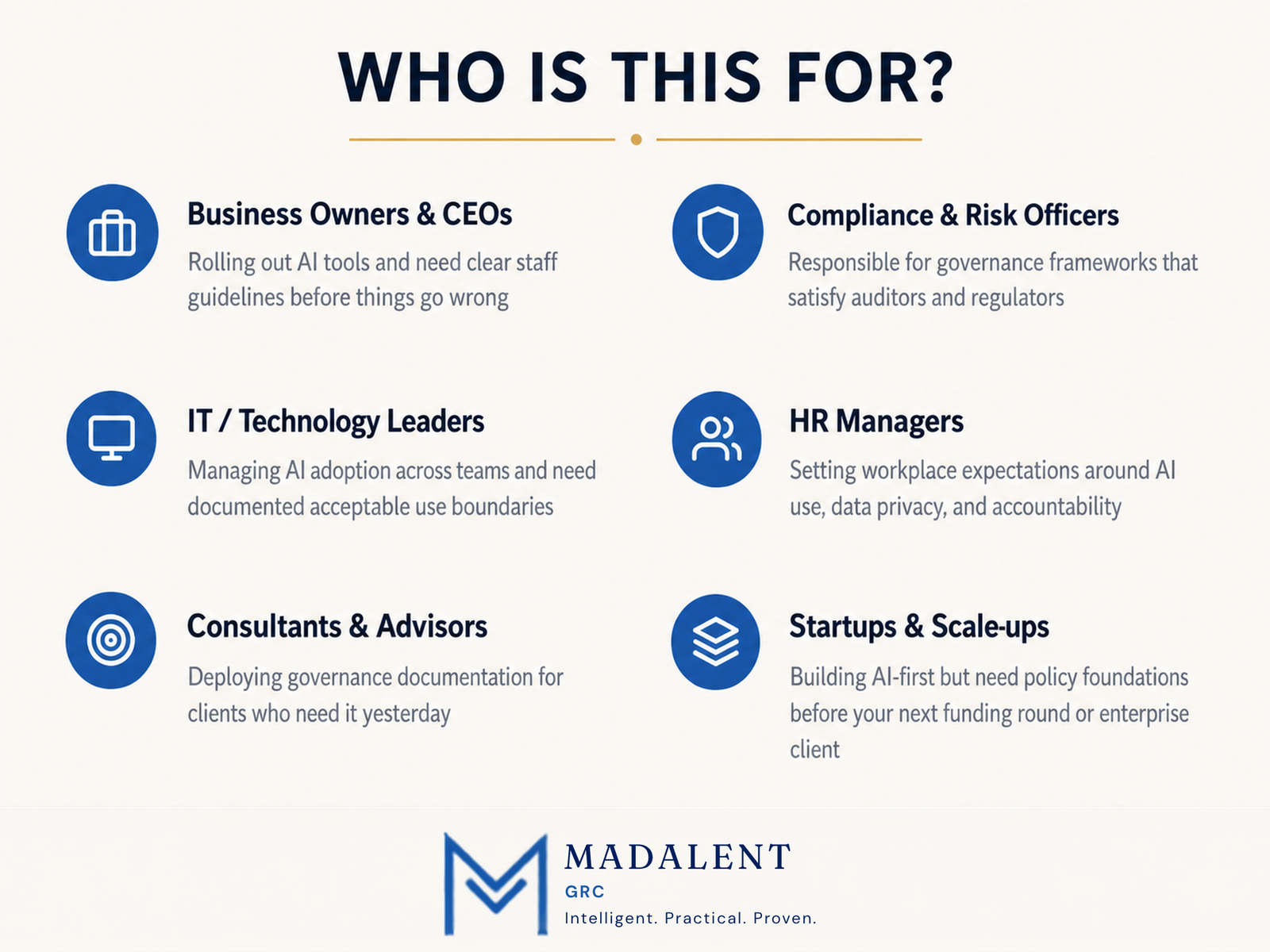
Legal, compliance officers, and business owners who need clear IP rules for AI use without drafting them from scratch.
Key features of this intellectual property AI policy
Generative AI blurs ownership in ways most standard IP policies never anticipated — a question WIPO has been actively examining as AI-generated works challenge existing frameworks — who owns a logo an AI tool drafted, or code a copilot suggested? This policy answers those questions directly, rather than leaving staff to guess or legal to fight it out after the fact.
It also covers the reverse risk: staff accidentally feeding your proprietary designs, code, or trade secrets into a third-party AI model where they could be retained or exposed. The policy sets clear rules on what can and can’t be pasted into external AI tools.
Unlike generic AI policy templates, this document is scoped specifically to intellectual property — ownership, infringement risk, and confidentiality — so it can sit alongside your broader Acceptable Use Policy rather than duplicating it.
Frequently asked questions
What file format is this in?
A fully editable Microsoft Word (.docx) document, ready to add your branding.
Does this replace legal advice on IP ownership?
No — it’s a practical policy template based on common industry practice, not a substitute for jurisdiction-specific legal advice.
Can I use this alongside my existing AI Acceptable Use Policy?
Yes. It’s designed to complement, not duplicate, a broader Acceptable Use Policy.
Instant digital download. Delivered as an editable Word document. 7-day guarantee — if the document doesn’t fit your needs, let us know.
Why a dedicated policy instead of relying on your general AI policy
A general AI Acceptable Use Policy tells staff when they can and can’t use AI tools, but it rarely answers the ownership questions that come up once they do: who owns code generated with Copilot, what happens when a designer feeds a client’s brand assets into an image generator, and how do you stop confidential IP from being pasted into a public chatbot in the first place. The Intellectual Property AI Policy answers those questions directly, closing a gap that most general AI policies leave open.
Frequently asked questions
What file format is this policy in?
A fully editable Word (.docx) document, ready to add your branding and issue to staff.
Does this replace our general AI Acceptable Use Policy?
No — it’s designed to sit alongside a broader Acceptable Use Policy and cover IP ownership and confidentiality in more depth than a general policy typically does.
Does this cover code generated by AI coding assistants?
Yes. The policy addresses ownership of AI-generated content broadly, including code, written content, and designs.
Instant digital download. Delivered as an editable Word document. 7-day guarantee.
Who should issue this policy
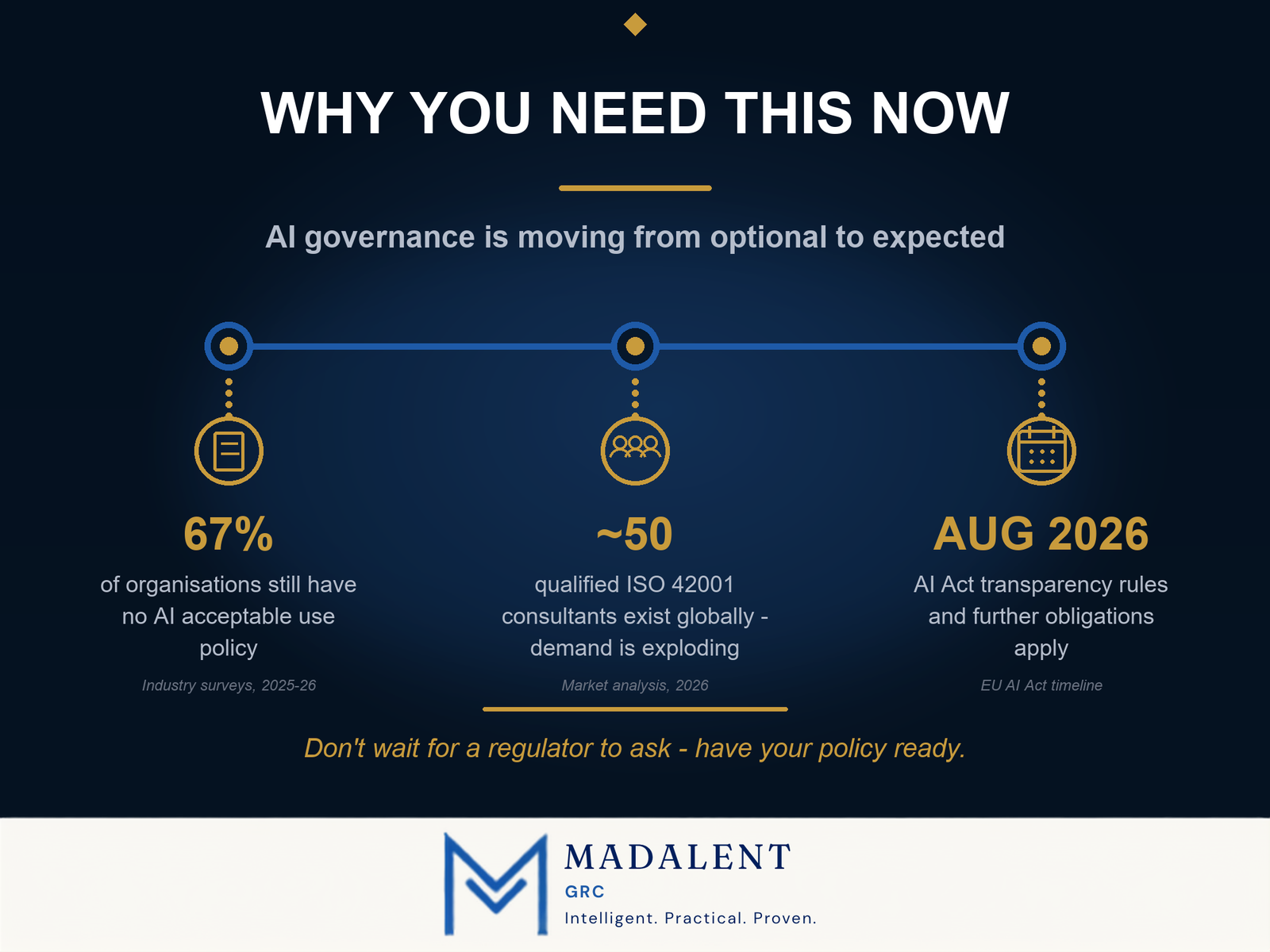
Any organisation where staff use generative AI tools for content, code, or design work should have this policy in place before a dispute arises over ownership of AI-assisted output. It’s particularly relevant for agencies, software teams, and consultancies producing client-facing deliverables with AI assistance, where IP ownership questions carry real commercial weight.